
 E-Paper



What India’s Arctic policy aims to do
The 27-page policy, a product of inter-ministerial and inter-disciplinary thinking, reflects, at one level, that developments in the Arctic need to be seen through diverse perspectives. At another, it marks a culmination of India’s polar legacy

 Prefer HTon Google


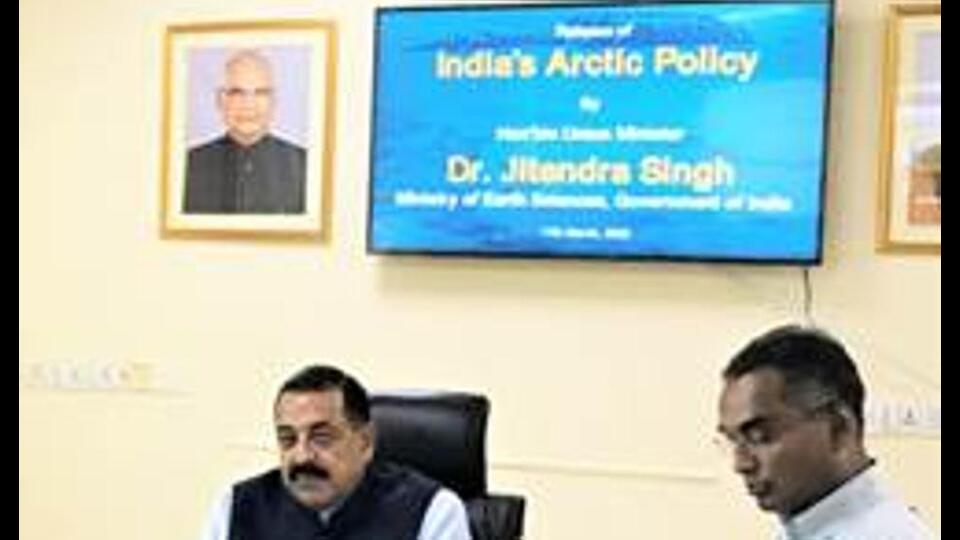
India recently unveiled its Arctic policy. The document lays down six pillars of engagement: Science and research; climate and environmental protection; economic and human development; transportation and connectivity; governance and international cooperation; and national capacity building. In sum, it expresses India’s intent and readiness to “play its part and contribute to the global good” by involving “all stakeholders including academia; the research community; and business and industry.”
The 27-page policy, a product of inter-ministerial and inter-disciplinary thinking, reflects, at one level, that developments in the Arctic need to be seen through diverse perspectives. At another, it marks a culmination of India’s polar legacy — the long years of participation and expertise in the Antarctic Treaty System, to which India acceded in 1983; the first scientific expedition to the Arctic Ocean in 2007, followed a year later by the setting up of the Arctic research station (Himadri) in the Svalbard archipelago; and subsequently its election to the Council of the International Arctic Science Committee in 2012 before being granted Permanent Observer status in the Arctic Council in 2013 along with other Asian states, China, Japan, Singapore and South Korea.
Without de-emphasising the exceptionalism of polar research, the document factors the reality of economic and strategic issues. The Arctic is a region of high-risk climate vulnerability and high-reward economic development. The Arctic sea-ice has thinned 1.5 metres between 2018 and 2021, opening potential commercial ventures, from harnessing onshore and offshore oil and gas finds to the opening of the northern sea route for shipping and trade.
The document comes at a time when seven of the eight permanent members of the Arctic Council (Finland, Norway, Sweden, Iceland, the United States, Canada and Denmark) have boycotted future talks with Russia over the Ukraine crisis. Russia holds the rotating chairmanship of the Council until 2023. The fragmenting world order raises uncertainty about development plans, and can push back India’s efforts to scale up its engagement.
As a product of post-Cold War institution building and peace dividend, the Arctic Council, since its inception in 1996, has maintained relative peace and order in the region. Even at the height of the Cold War, calm prevailed on the border between Norway and the former Soviet Union. The spirit of circumpolar cooperation continued to prevail despite Russia’s annexation of Crimea in 2014. But with Russian President Vladimir Putin’s actions in Ukraine, the Arctic has come under jeopardy of becoming a zone of great power rivalry.
How, then, should India navigate its Arctic policy? A principal objective outlined in the document is “pursuing cooperation and partnership.” First, India needs to advocate for sustainable resource development and management. Collaboration in terms of capacity, technology, monetary contribution and incentive-based management to protect the ecosystem in the region should hereon be structured. The outcomes of these engagements can also enhance India’s role in the Hindu Kush and Himalayas, which are undergoing warming.
Second, both in the foreseeable and unforeseeable future, Russia will remain India’s strongest partner in the Arctic. Russia accounts for almost half of the Arctic in terms of area, coastline and hydrocarbons, with the region contributing 12-15% to Russia’s Gross Domestic Product and almost 20% of its exports. Russia has been explicit about its intention in the Arctic, strongly considering it as a sphere of influence with economic, defensive and transport advantages. For example, the vast eastern Arctic area, as it thaws owing to global warming, is giving Russia access to tens of millions of acres of agricultural land.
It is to India’s advantage that it has, over the years, built its strategic partnership with Russia. Resultantly, a strong thrust on the Arctic has emerged with India increasing its investments in promising projects. For Russia, India’s participation in the development of natural resources of the Russian Arctic would be beneficial amid increasing western sanctions. As Russia gains in terms of resource development in the Arctic, so will India. The complex science and the unfolding politico-strategic-economic dynamics make the Arctic not far and away. The document comprehensively expresses it.
Uttam Kumar Sinha works at the Manohar Parrikar Institute for Defence Studies and Analyses The views expressed are personal


