
 E-Paper



When cricket inspired a moment of bonhomie
India-Pakistan cricket match, rained-out, recalls a diplomatic message of felicitations sent by President Venkataraman in 1992


I must start with a full disclosure. I have zero cricket in me. I can barely tell a cricket ball from a pomegranate. But when India and Pakistan play the game, I cannot but tune in. The rained-out match in Pallekelle last Saturday, which left fans of the Indian and Pakistan teams bitterly disappointed, dusted a 31-year-old memory of mine.
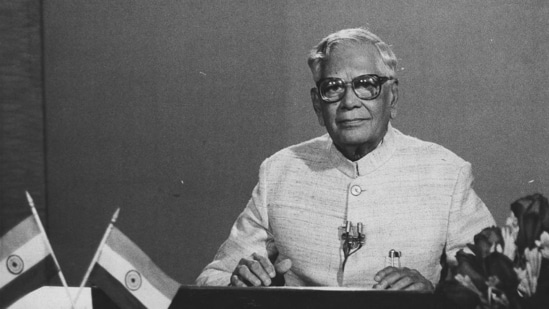
It relates to the spring of 1992.
Ramaswami Venkataraman (1910-2009) was the President and I was his joint secretary. India-Pakistan relations, never unstrained, were particularly tense at that point, with the agitation over the Babri Masjid in Ayodhya gaining momentum and the Jammu and Kashmir Liberation Force (JKLF) trying to cross the Line of Control. India’s ace diplomat and foreign policy strategist, JN Dixit, in his seminal book India-Pakistan in War and Peace, talks of the failure of discussions between Prime Minister (PM) Narasimha Rao and PM Nawaz Sharif in Davos on February 3, 1992, and says: “Nawaz Sharif (then) gave a call for a strike all over Pakistan to express solidarity with Kashmir. The strike was observed on February 5. The very next day, the National Assembly of Pakistan adopted a resolution critical of India on Kashmir and reiterated support to the separatists. Anti-Indian activities did not stop there. JKLF cadre attempted to cross the LoC on February 11 and 12. Fourteen people were killed and 115 injured in this attempt. Sharif sent six ministers to mobilise international opinion against India.” It was in the midst of all this, on March 25, that Pakistan won the World Cup. After the last Englishman got out, Ravi Dayal, a valued friend, rang me and suggested that it would be good if President Venkataraman sent a message of felicitations to his counterpart in Islamabad. Ravi was an independent publisher, not a dyed-in-the-wool diplomat. He was the son-in-law of another highly independent person, Khushwant Singh, author most famously of Train to Pakistan.
Aftab Seth was joint secretary XP, that spooky sounding abbreviation standing for nothing more innocuous than external publicity. I rang Aftab not just as joint secretary to joint secretary but as a friend of many years, going back to a shared college and a shared probation at the Academy of Administration, Mussoorie, to tell him of Ravi’s suggestion. The splendid thespian, great raconteur, and warm human being, Aftab responded positively. But that – positively – is a trite phrase to describe what Aftab said: “Gopal, that will be a coup.” I was delighted. He was most certainly going to check the suggestion out with his colleague Naresh Dayal, who, if I remember right, was then handling Pakistan. He would have done the same with Dixit. But for starters, Aftab’s was a good response to get. Armed with that initial opinion I asked the President if he would consider the suggestion. His face lighting up, he said ‘Yes, yes…very good…Prepare a draft and show it to me after getting the external affairs people to vet it…’
Joint secretaries are in their element phoning other joint secretaries. And so, while I did prepare a draft I next rang in MEA, Naresh Dayal who then suggested a draft which must have been approved by Dixit. It was an essentially correct and quintessentially conservative draft. I toned up Naresh’s draft with elements from mine and put it up to President Venkataraman who, to my surprise, toned it up even more, repeating the word “victorious” twice. Our high commissioner in Islamabad at the time, the late Satinder Lambah , author of the major book In Pursuit of Peace: India-Pakistan Relations Under Six Prime Ministers handed over President Venkataraman’s message with one of his own, to its high destination.
Dixit, who knew the interstices of India-Pakistan relations, was not exactly pleased. In his book mentioned earlier, Dixit was to say a decade later “Thinking back, I wonder whether such exchanges between heads of State serve any useful purpose. In my opinion, they only serve to increase the scepticism of public opinion in both countries about the incongruity of it all.”
So, was RV’s gentle message in mutual civility a futile step by the canons of diplomacy? It would seem so, yes. Did his message have any long-standing impact on India-Pakistan ties? Of course not. It has gone into the chortling labyrinths of diplomatic used paper. But at that particular moment, it showed the possibility of a sheaf of wheat growing in a field barren of any hope of grain. Were it not for an independent citizen – Ravi Dayal – suggesting this, and an imaginative diplomat – Aftab Seth – liking the out-of-the-box suggestion and taking it further, President Venkataraman’s receptive and sporty mind may not have considered sending that coup of a message.
Seth has just published a delightful memoir – A Diplomat’s Garden – which describes, among other experiences, those from his time in Karachi as India’s consul-general when the brilliantly imaginative SK Singh was our high commissioner in Islamabad. Scholar-diplomat TCA Raghavan, who served in Pakistan twice (as deputy high commissioner (2003–07) and high commissioner (2013–15) has earlier given us a deeply instructive and greatly to-be-cherished book of all-time value, The People Next Door, on India’s relations with that country.
Gopalaswamy Parthasarathy who was high commissioner to Pakistan (1998-2000) has contributed a reflective essay titled Memories of Pakistan in the book Diplomatic Divide, jointly compiled by him and the Pakistani diplomat Humayun Khan. The veteran K Natwar Singh and Mani Shankar Aiyar’s memoirs (Memoirs of a Maverick, just out) have, of course, had invaluable recollections to share on the subject. We have Shivshankar Menon’s outstanding book Choices, on the making of foreign policy. And Rajiv Dogra’s book of biting truths, Where Borders Bleed. It is a thousand pities that our brilliant diplomat Satyabrata Pal (high commissioner in Pakistan from 2006 to 2009) who wrote tellingly on India-Pakistan ties did not live to write a full book on it. All of these ‘External Affairs people’, to use President Venkataraman’s phrase, portray the parabolae of fears and wishes, suspicions and hopes in India-Pakistan equations. They know too much of diplomatic history to trust blindly, but they also know when and how much to try a sporting chance for peace.
I wish a Ravi Dayal-like original thinker in Islamabad might have suggested to President Arif Alvi last Saturday that a message to his counterpart in Delhi, post-Pallekelle, might be sent saying, “Rain pelted our cricketers out in the Asia Cup match, your Excellency, but may a rainbow appear on the turf of our cricketing ties and shine there forever!” And an Aftab Seth-equivalent had taken it further.
Gopalkrishna Gandhi, a former administrator, is a student of modern Indian history The views expressed are personal
 ABOUT THE AUTHORGopalkrishna Gandhi
Gopalkrishna Gandhi read English Literature at St Stephen’s College, Delhi. A civil servant and diplomat, he was Governor of West Bengal, 2004-2009. He is currently Distinguished Professor of History and Politics at Ashoka UniversityRead More


