
 E-Paper



Photos: As redevelopment begins, Delhi’s Kathputli Colony over the years
As the slum redevelopment project of Delhi’s Kathputli Colony in Shadipur takes course, a look back at a series of events from their settlement in the area, nearly 50 years ago, to their homes being razed to the ground in a demolition drive by Delhi Development Authority (DDA) last year, as work on redevelopment begins aiming at handing over homes to residents early next year. The colony has been home and livelihood space to generations of puppeteers, jugglers, folk singers, musicians, drummers, dancers and other traditional performing artists from across India.
Updated on: Apr 25, 2018 2:50 PM IST

Share via


Copy link

1/9
 View Photos in a new improved layout
Updated on Apr 25, 2018 2:50 PM
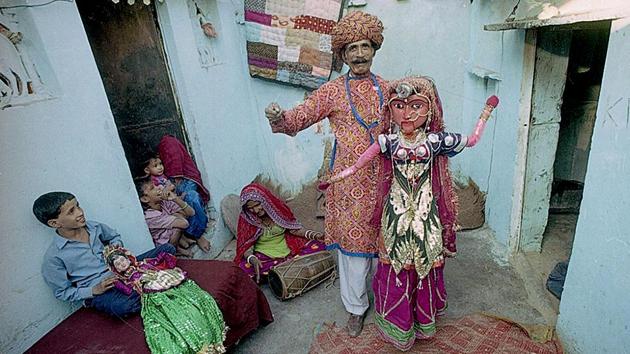
Puppeteers and residents of Kathputli Colony in Delhi’s Shadipur seen in November 1999. In the early 1970s this largely uninhabited area in West Delhi, with its proximity to Connaught Place, became home to migrating performers from Rajasthan in the form of encampments. (Pradeep Bhatia / HT Archive)
2/9
 View Photos in a new improved layout
Updated on Apr 25, 2018 2:50 PM
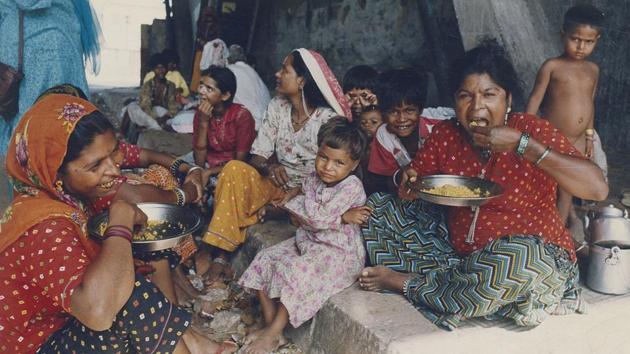
At the periphery of Delhi’s urban settlements, Kathputli Colony had over the decades become home to generations of performers and street artists and grew into brick dwellings. While its name derives from string puppets, it has come to represent a wide range of artists, performers and related crafts. (Girish Srivastava / HT Archive)
3/9
 View Photos in a new improved layout
Updated on Apr 25, 2018 2:50 PM
The nearly 13-acre Kathputli Colony was the first of Delhi’s slums taken up for in-situ redevelopment, as part of the regularization of illegal colonies, on a public-private partnership plan by the Delhi Government. Seen here is a puppetry performance on the foundation laying ceremony of the event on February 15, 2009 at Shadipur. (Arvind Yadav / HT Archive)
4/9
 View Photos in a new improved layout
Updated on Apr 25, 2018 2:50 PM
According to Delhi Development Authority’s (DDA) redevelopment plans of 2009, the artists were shifted temporarily to transit camps nearby at Anand Parbhat in 2014, until flats were built in high-rises for the residents on 5.2 acres. A portion of the land was set out for private partner Raheja Developers’ own commercial and residential construction. (Subrata Biswas / HT Archive)
5/9
 View Photos in a new improved layout
Updated on Apr 25, 2018 2:50 PM
A boy looks at a model of the buildings planned for Kathputli Colony residents. Displacement from decades old homes, the involvement of private enterprise in the process, and delays in implementation led to growing anxiety among residents. Many chose to stay on in their Kathputli Colony homes even as others moved to the transit camp. (Subrata Biswas / HT Archive)
6/9
 View Photos in a new improved layout
Updated on Apr 25, 2018 2:50 PM
As residents moved out, demolitions in the colony took their place, paving the way for the redevelopment. In October 2017, a demolition drive seeking to relocate the 1,355 families who had stayed put over the years razed hundreds of homes. Residents were apprehensive of shifting to transit camps or further to Narela citing inconveniences to livelihood. (Sanchit Khanna / HT Archive)
7/9
 View Photos in a new improved layout
Updated on Apr 25, 2018 2:50 PM
Angry at the evictions, many residents chose to live in the open by the Shadipur flyover or on the pavements with the sum of their belongings. The DDA and the Delhi Police denied allegations of the use of force in the evictions that the move drew from some residents. (Arun Sharma / HT Archive)
8/9
 View Photos in a new improved layout
Updated on Apr 25, 2018 2:50 PM
Anil Baijal, Lieutenant Governor of Delhi along with Hardeep Singh Puri, Urban Development Minister during the stone-laying ceremony of Kathputli colony at Shadipur, on April 24, 2018. Puri said at the event that the project, in progress since 2009, will give homes over to the residents by the beginning of next year. (Sanchit Khanna / HT Photo)
9/9
 View Photos in a new improved layout
Updated on Apr 25, 2018 2:50 PM


