
 E-Paper



Photos: Stroll through photography’s past at Gurugram’s Museo Camera
With the inauguration of the Museo Camera, an 18,000-square-foot camera and photography museum in DLF-3, the city of Gurugram has become host to the largest dedicated camera museum in the country. The museum, a joint venture between the Municipal Corporation of Gurugram (MCG) and photographer Aditya Arya, has a distinct industrial feel to it, with its high ceilings and, iron and wood staircases. While the land and infrastructure were provided by the MCG, the colossal collection of 2,500 cameras and photography equipment belongs to Arya, a visual historian.
Updated on: Aug 29, 2019 4:32 PM IST


Share via


Copy link

1/10
 View Photos in a new improved layout
Updated on Aug 29, 2019 4:32 PM
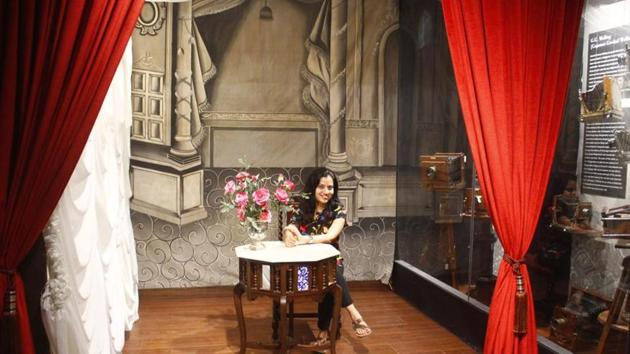
With the inauguration of the Museo Camera, an 18,000-square-foot space, Gurugram has turned host to the largest dedicated camera and photography museum in the country. Transporting one to a different era, visitors can take photographs in its recreated 19th century photography studio. It mimics an age before the flash was invented, when curtains like these would be drawn up or down to get the ideal light for a photograph. (Yogendra Kumar / HT Photo)
2/10
 View Photos in a new improved layout
Updated on Aug 29, 2019 4:32 PM
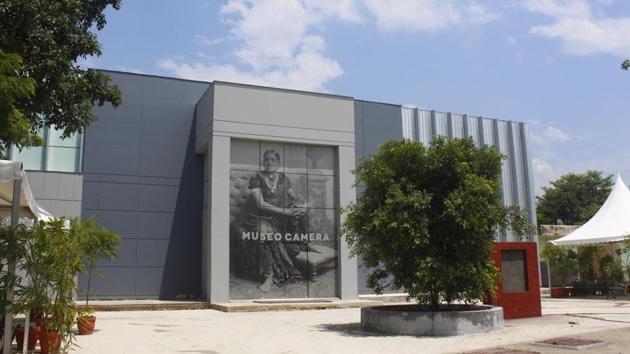
The image of a dancer that adorns the entrance was taken in 1870 and originally in possession of French collectors. Photographer Aditya Arya, enamoured when he saw it, was convinced that its place was in India. He negotiated, convinced and struck an incredible deal with the French curator to get this photograph back, which he believes shows how detailed and nuanced Indian photography was in the 1800s. (Yogendra Kumar / HT Photo)
3/10
 View Photos in a new improved layout
Updated on Aug 29, 2019 4:32 PM
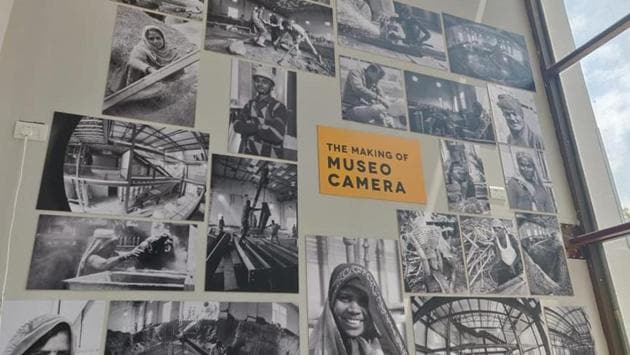
When one enters the museum, on both sides, are two huge walls with a number of portraits of people, those of people at work. The photos are of the over 50 workers, who worked day and night for the last one and a half years, to bring the camera museum into existence. Arya has personally taken all the photographs and designed the wall as an ode to the workers and their contribution. (HT Photo)
4/10
 View Photos in a new improved layout
Updated on Aug 29, 2019 4:32 PM
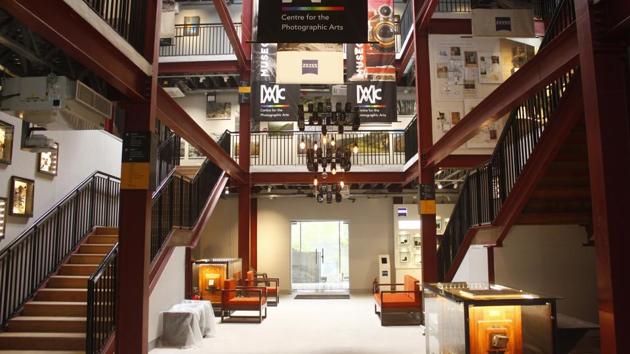
At the entrance is a statement chandelier, made out of over 50-odd cameras.The museum, a joint venture between the Municipal Corporation of Gurugram (MCG) and Aditya Arya and has a distinct industrial feel to it, with its high ceilings and, iron and wood staircases. While the land and infrastructure were provided by the MCG, the colossal collection of 2,500 cameras and photography equipment belongs to Arya, a visual historian. (Yogendra Kumar / HT Photo)
5/10
 View Photos in a new improved layout
Updated on Aug 29, 2019 4:32 PM
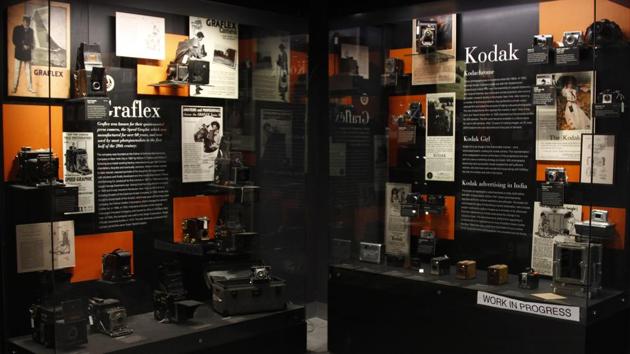
The ground floor is dedicated to the history of photography. Visitors can see a vividly illustrated timeline and milestones in the journey of photography, from the first camera obscura to the current digital cameras. From Eastman Kodak’s multiple folding brownies and the 50-kg, five-foot lacquered brass studio outfit cameras to Thornton-Pickard’s iconic imperial triple extension cameras. (Yogendra Kumar / HT Photo)
6/10
 View Photos in a new improved layout
Updated on Aug 29, 2019 4:32 PM
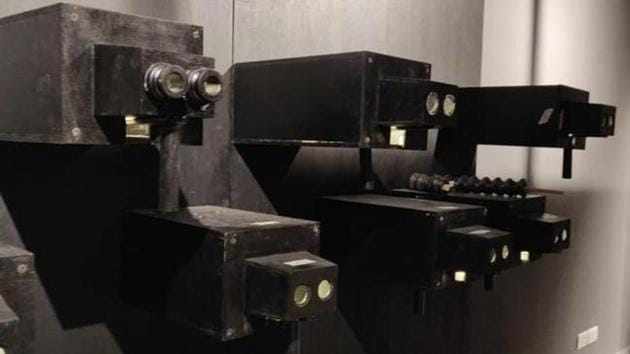
Created by Jules Richard Verascope in the late 1880s, the museum also shelters the world’s oldest 3D camera. This camera comprises dual lenses and a lever that allows one to manoeuvre it and take three dimensional photos. These cameras, which came to be known as stereoscopic cameras, were used way back in the first World War to take 3D photographs. (HT Photo)
7/10
 View Photos in a new improved layout
Updated on Aug 29, 2019 4:32 PM
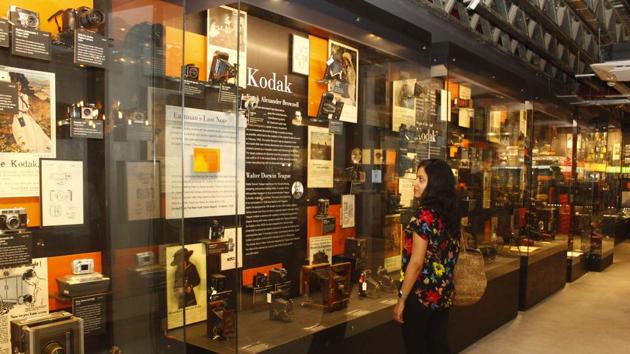
The first floor of the museum houses two exhibition galleries and a lecture hall. The wooden walls lining the staircase contain back-lit shelves, glass cases of sepia-toned and black-and-white portraits of actors, politicians, royalty and other eminent Indian personalities from bygone eras. While the climb takes visitors through another era, the first floor of the museum is a space for budding as well as veteran photographers. (Yogendra Kumar / HT Photo)
8/10
 View Photos in a new improved layout
Updated on Aug 29, 2019 4:32 PM
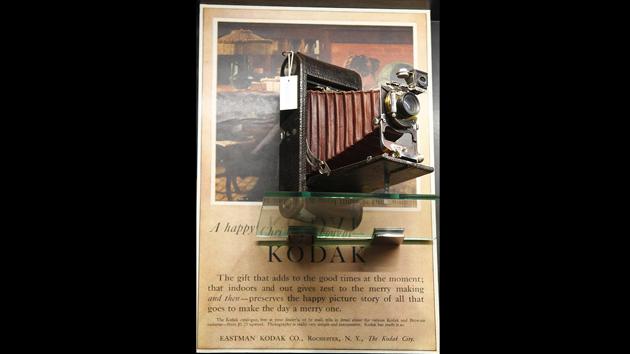
One can also view the different apertures, shutters, lenses, photographic film, enlargers, light meters, some of the first-ever photographic images referred to as daguerreotypes and tintypes, and the once-indispensable semi-centennial stands used with early 19th-century grand portrait cameras. Arya said he collected all the equipment over a span of 35 years, from various countries, including England, France, Germany and Japan. (Yogendra Kumar / HT Photo)
9/10
 View Photos in a new improved layout
Updated on Aug 29, 2019 4:32 PM
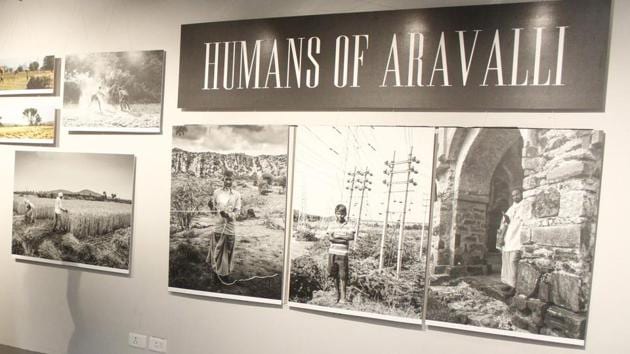
A collection of photographs by 14 different photographers on different aspects of the Aravallis, from the terrain and wildlife to the people and problems of the Aravallis, is being exhibited at the museum. Arya, who has also curated the exhibition titled Aravalli scapes, said he always wanted this to be the first exhibition as Aravallis hold unprecedented importance for the city. (Yogendra Kumar / HT Photo)
10/10
 View Photos in a new improved layout
Updated on Aug 29, 2019 4:32 PM


