

 E-Paper


Olive Ridley turtles in Odisha
1 / 9
 View Photos in a new improved layout
Updated on Mar 01, 2017 09:18 am IST
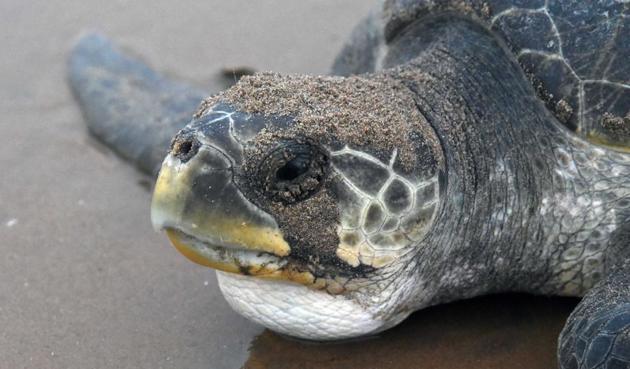
Rushikulya rookery off the coast of Odisha is home to the world famous Olive Ridley sea turtles nesting sites where a record of sorts has been created recently of mass nesting from mid- February to March second week this year. (Arabinda Mohapatra)
2 / 9
 View Photos in a new improved layout
Updated on Mar 01, 2017 09:18 am IST
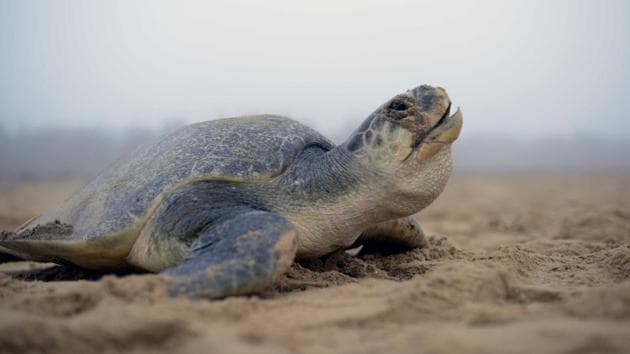
A female Olive Ridley sea turtle covers sand over her eggs during nesting at Rushikulya rookery near the fishermen’s village in Ganjam district, Odisha. They are also known as the Pacific Ridley sea turtle. (Arabinda Mohapatra)
3 / 9
 View Photos in a new improved layout
Updated on Mar 01, 2017 09:18 am IST
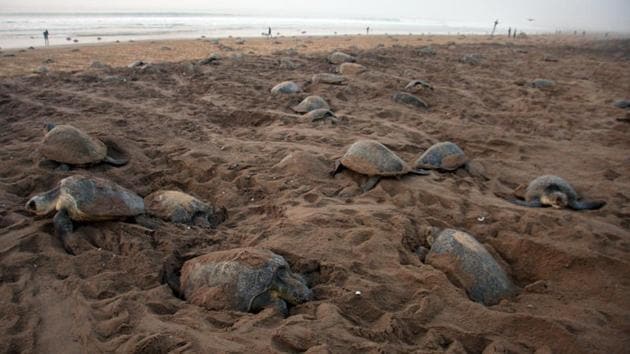
The coast of Odisha in India is the largest mass nesting site for the Olive Ridley in the world, followed by the coasts of Mexico and Costa Rica. (HT PHOTO)
4 / 9
 View Photos in a new improved layout
Updated on Mar 01, 2017 09:18 am IST
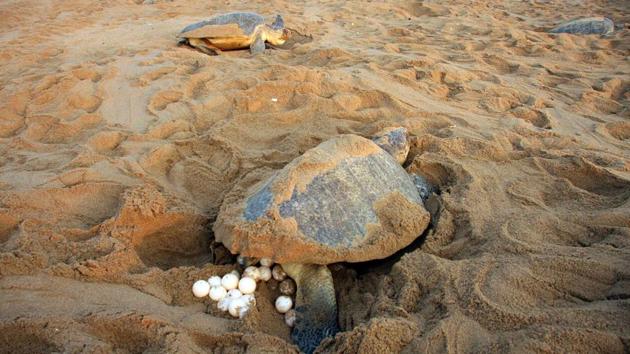
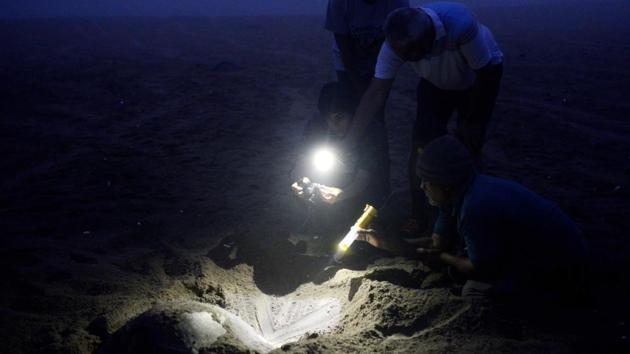
On an average, around 100 to 150 eggs are laid by each female turtle in the nests. The Olive Ridley is classified as Vulnerable according to the International Union for Conservation of Nature and Natural Resources (IUCN). (HT PHOTO)
5 / 9
 View Photos in a new improved layout
Updated on Mar 01, 2017 09:18 am IST
Of late there has been increased awareness and the beaches of Odisha receive tourists who are seen observing clicking photos of the nesting sites. (Arabinda Mohapatra)
6 / 9
 View Photos in a new improved layout
Updated on Mar 01, 2017 09:18 am IST
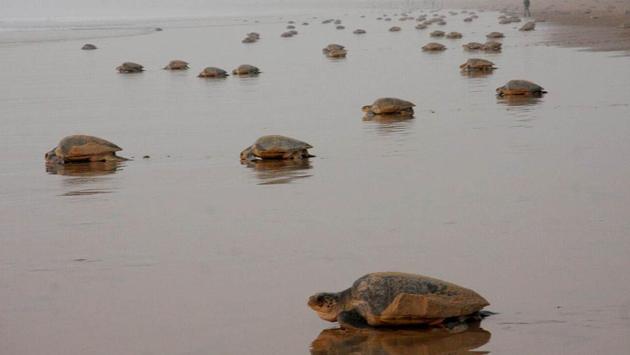
A mass of turtles prepare to return to the sea after nesting. (HT PHOTO)
7 / 9
 View Photos in a new improved layout
Updated on Mar 01, 2017 09:18 am IST
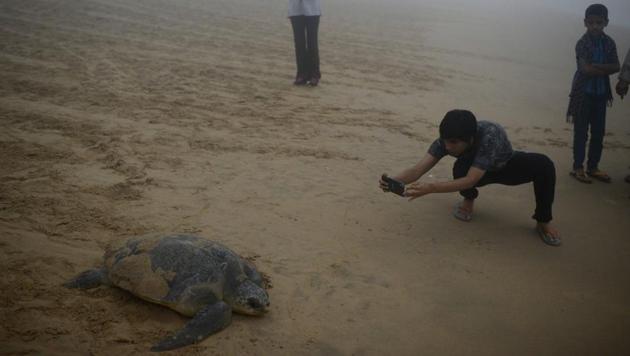
Visitors click photos of the turtles as they pull themselves to the sea. (Arabinda Mohapatra)
8 / 9
 View Photos in a new improved layout
Updated on Mar 01, 2017 09:18 am IST
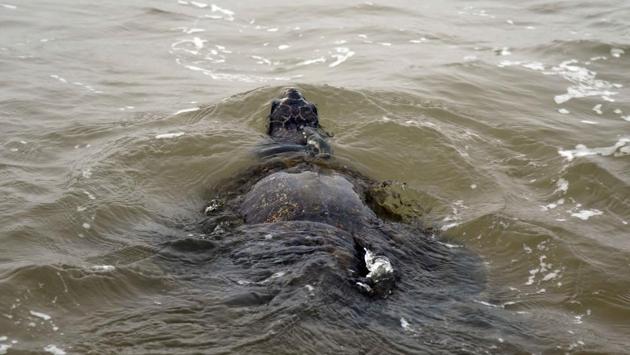
The mother turtles however do not wait to see the baby turtles emerging as hatchlings and continue back into the sea. (HT PHOTO)
9 / 9
 View Photos in a new improved layout
Updated on Mar 01, 2017 09:18 am IST