
 E-Paper



Photos: 6.4 million might’ve had Covid-19 by May, shows ICMR sero survey
Findings of the first national serological survey conducted by the ICMR and published in the Indian Journal of Medical Research, indicated that 0.73% adults in India were exposed to SARS-CoV-2, the pathogen that causes Covid-19, amounting to a total of 6.4 million infections by early May. The survey was conducted from May 11 to June 4 and covered 28,000 individuals whose blood samples were tested for IgG antibodies using COVID Kavach ELISA kit.
Updated on: Sept 12, 2020 6:03 PM IST


Share via


Copy link

1/9
 View Photos in a new improved layout
Updated on Sept 12, 2020 6:03 PM
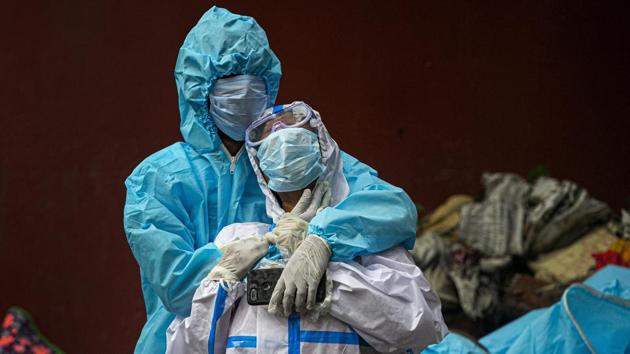
A woman (foreground) is consoled at a cremation site in Guwahati, Assam, on September 10, after she lost her husband to COVID 19. An estimated 6.4 million people were infected with the coronavirus disease (Covid -19) in India by early May, findings of the first national sero survey conducted by the Indian Council of Medical Research show. (Anupam Nath / AP)
2/9
 View Photos in a new improved layout
Updated on Sept 12, 2020 6:03 PM
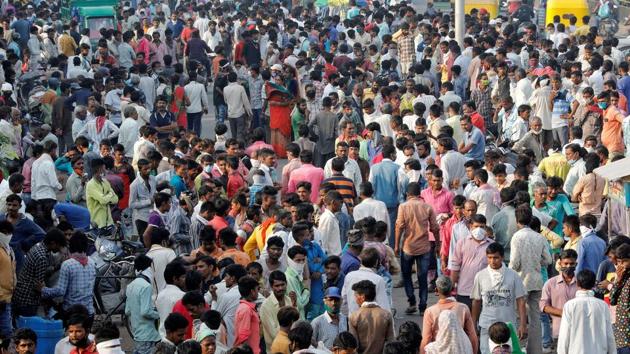
Daily wagers and migrant labourers gather alongside a road as they wait for work in Ahmedabad on September 10. “Males, living in urban slums and occupation with high risk of exposure to potentially infected persons were associated with seropositivity. A cumulative 6,468,388… adult infections were estimated in India by the early May,” said the findings published in the Indian Journal of Medical Research (IJMR). (Amit Dave / REUTERS)
3/9
 View Photos in a new improved layout
Updated on Sept 12, 2020 6:03 PM
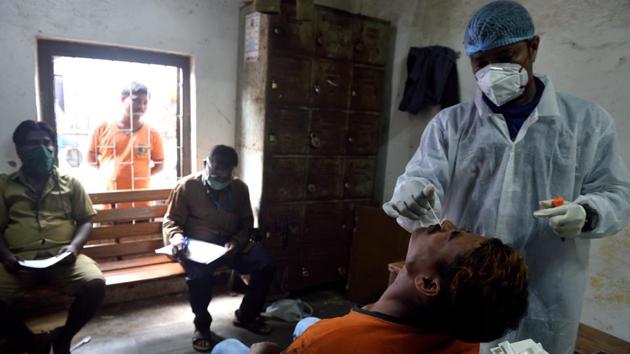
BMC health workers test a person for Covid-19 in Mumbai on September 10. For perspective, until the end of May, India’s official caseload was about 200,000, which is roughly 3% of the estimated cases found in the ICMR survey. The country’s current case load is over 4.6 million, hinting at inadequate testing for the disease, experts told HT. (Satish Bate / HT Photo)
4/9
 View Photos in a new improved layout
Updated on Sept 12, 2020 6:03 PM
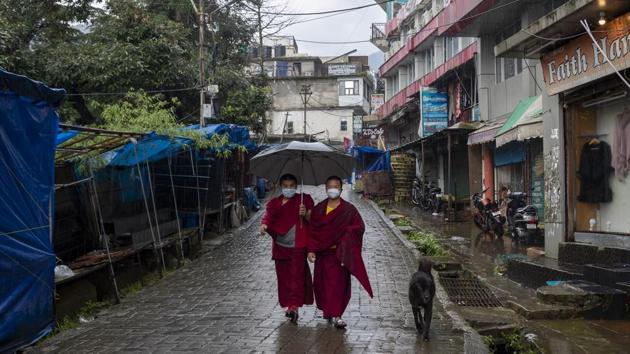
Tibetan Buddhist monks wearing face masks walk in a deserted market area in Dharamshala on September 11. “That has always been the concern that testing was not adequate as India was largely testing symptomatic cases and asymptomatic positives is a huge number that may have been missed,” said Dr Lalit Kant, former head, epidemiology and communicable diseases, ICMR. (Ashwini Bhatia / AP)
5/9
 View Photos in a new improved layout
Updated on Sept 12, 2020 6:03 PM
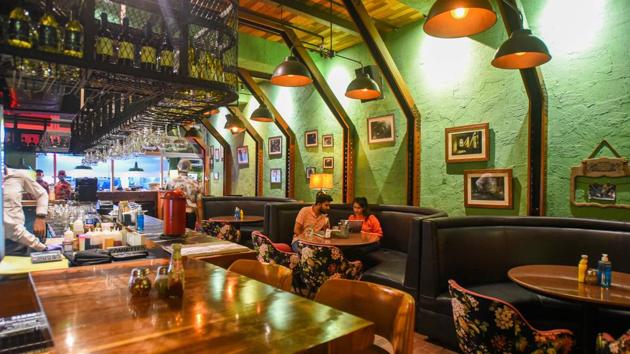
People dining inside a restaurant at Connaught Place in New Delhi on September 10. As part of the community-based survey, which was held from May 11 to June 20, a total of 30,283 households were visited and 28,000 individuals were enrolled for the study across 21 states. (Amal KS / HT PHOTO)
6/9
 View Photos in a new improved layout
Updated on Sept 12, 2020 6:03 PM
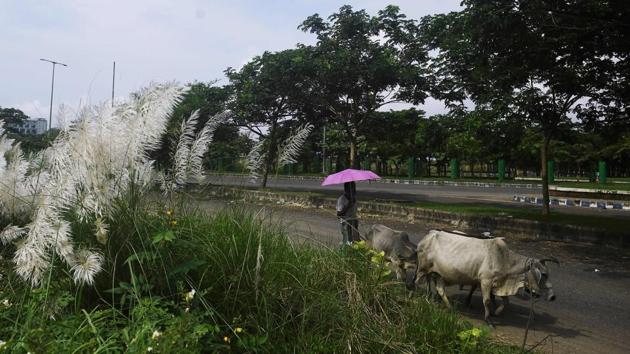
A man guides cattle along a road during a day-long state-imposed lockdown in Kolkata on September 11. According to the survey, those between the age group of 18-45 years were the worst-affected with 43.3% of them having developed antibodies against SARS-CoV-2, the virus that causes Covid-19. Those with a past infection between 46 and 60 years of age comprised 39.5% of the sampled individuals. (Dibyangshu Sarkar / AFP)
7/9
 View Photos in a new improved layout
Updated on Sept 12, 2020 6:03 PM
A man wearing a protective mask walks in between parked passenger buses during a lockdown in Kolkata on September 11. ICMR literature indicates that the IgG antibodies against SARS-CoV-2 infection start appearing by the end of the first week after symptom onset and most cases are IgG positive by the end of second week, according to the researchers. (Rupak De Chowdhuri / REUTERS)
8/9
 View Photos in a new improved layout
Updated on Sept 12, 2020 6:03 PM
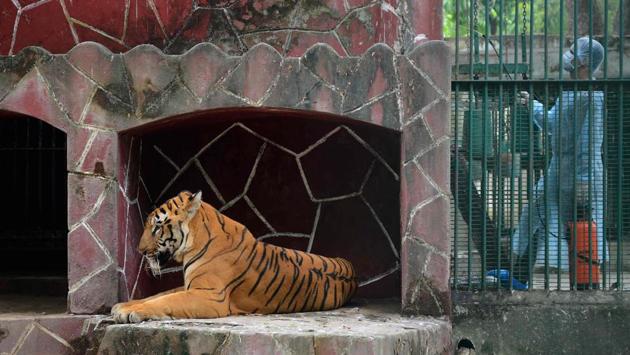
A Royal Bengal tiger rests as a health worker sprays disinfectants at the Kamla Nehru Zoological Garden in Ahmedabad on September 11. India is now the second-worst hit country in the world after the United States and ahead of Brazil. (Sam Panthaky / AFP)
9/9
 View Photos in a new improved layout
Updated on Sept 12, 2020 6:03 PM


