
 E-Paper



Photos: Active Covid-19 cases in Delhi lowest since June 1, beds up 42%
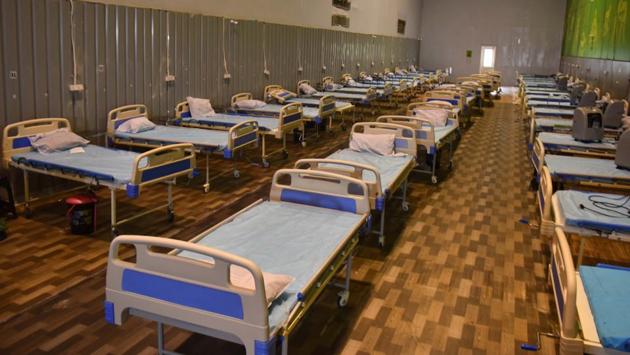
Data from the Delhi government for Covid-19 infections over the past month and a half shows a consistent drop in the number of active cases. Simultaneous to the decline is a reduction in the number of beds earmarked for Covid-19 in various hospitals across the city. With around a fifth of allotted beds currently under use, figures suggest Delhi is prepared to handle surges in cases.
Updated on: Jul 29, 2020 11:02 AM IST


Share via


Copy link

1/7
 View Photos in a new improved layout
Updated on Jul 29, 2020 11:02 AM
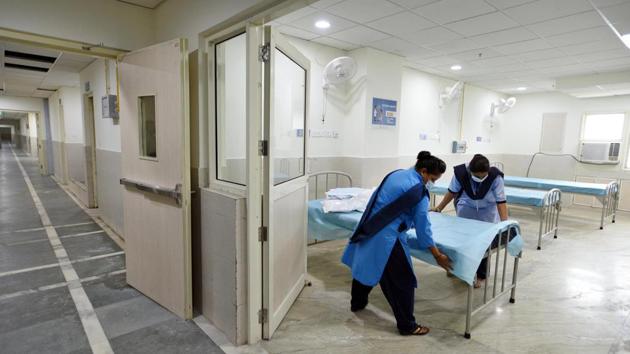
Beds being prepared at the 450-bed Burari Hospital for Covid-19 patients in New Delhi on July 25. The national capital now has less than 11,000 active cases of Covid-19, a number that is the lowest since June 1, according to data by the Delhi government from July 28. Delhi now also has 42% more beds than it had a month ago, suggesting it is amply prepared in case of a resurgence of cases. (Ajay Aggarwal / HT Photo)
2/7
 View Photos in a new improved layout
Updated on Jul 29, 2020 11:02 AM
People wearing protective masks and face coverings wait in line for rapid-antigen methodology Covid-19 tests at a health care centre in New Delhi on July 27. According to data released by the Delhi government, the 10,887 active cases as of July 28 are roughly two-fifths of what they were a month ago on June 27 (28,329). The capital during that period was in the middle of what is now believed to be a peak in the trajectory of the epidemic. (T. Narayan / Bloomberg)
3/7
 View Photos in a new improved layout
Updated on Jul 29, 2020 11:02 AM
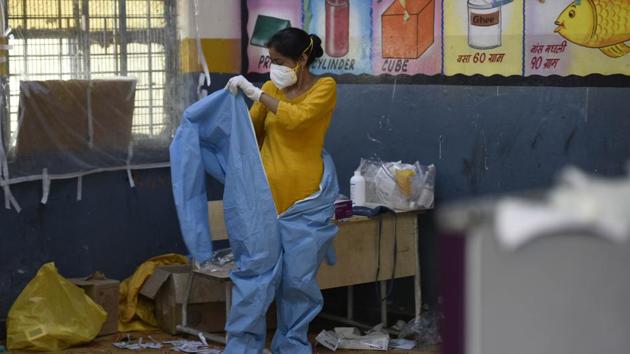
A health worker prepares for sample collection in Khajuri Khas on July 27. Delhi conducted its first round of sero-surveillance, where around 22,000 samples were collected between June 27 and July 5. The survey found almost 23% of the city’s residents had antibodies. A decision on future strategy is likely after the second round of sero-surveillance scheduled between August 1 and 5, senior officials from Delhi’s health department told HT. (Biplov Bhuyan / HT Photo)
4/7
 View Photos in a new improved layout
Updated on Jul 29, 2020 11:02 AM
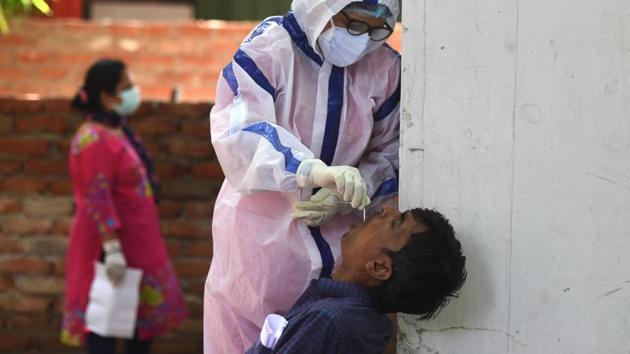
A health worker collects a swab sample for rapid antigen testing at Aruna Asaf Ali Hospital in New Delhi on July 27. A serological survey involves randomised sampling of people from whom blood is collected to check for antibodies to the Sars-Cov-2, which would indicate how many people may have been infected and silently recovered – and thus immune to the disease for the time being. (Sonu Mehta / HT Photo)
5/7
 View Photos in a new improved layout
Updated on Jul 29, 2020 11:02 AM
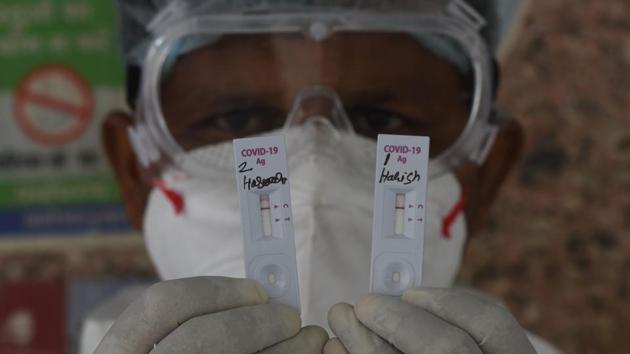
A health worker holds up rapid antigen based Covid-19 test kits in Dev Nagar, New Delhi on July 27. “If the sero-surveillance shows that we are moving towards herd immunity then it will give people as well as the government some assurance,” a health department official told HT. Herd immunity is the level of immunity prevalence that causes an outbreak to die out as the virus fails to find enough new vulnerable hosts. (Vipin Kumar / HT Photo)
6/7
 View Photos in a new improved layout
Updated on Jul 29, 2020 11:02 AM
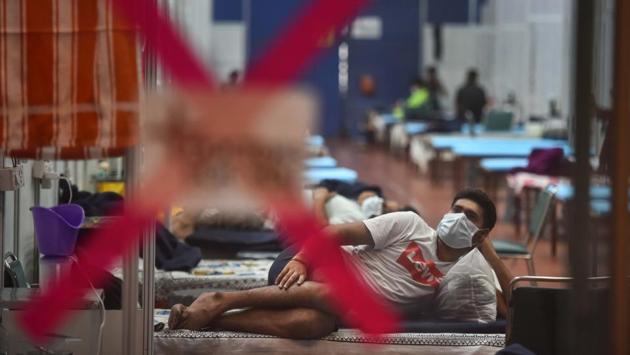
A view inside a High Dependancy Unit at the Commonwealth Games Sports Complex Covid-19 Care Centre on July 26. The city currently has 15,438 beds earmarked for Covid-19 in various hospitals. Of these, 2,158 beds are intensive care units, which had 33% occupancy as on July 28 evening, according to the Delhi government’s dashboard. (Sanchit Khanna / HT Photo)
7/7
 View Photos in a new improved layout
Updated on Jul 29, 2020 11:02 AM


