
 E-Paper



Photos: BV Doshi becomes first Indian architect to win Pritzker Prize
Balkrishna Vithaldas Doshi, on Wednesday became the first Indian to win the Pritzker Prize, considered architecture’s ‘Nobel’ equivalent. It will be conferred on the ‘Laureate’ at the Aga Khan Museum in Toronto in May. A look at BV Doshi’s contribution to post-independence Indian architecture.
Updated on: Mar 09, 2018 4:05 PM IST

Share via


Copy link

1/8
 View Photos in a new improved layout
Updated on Mar 09, 2018 4:05 PM
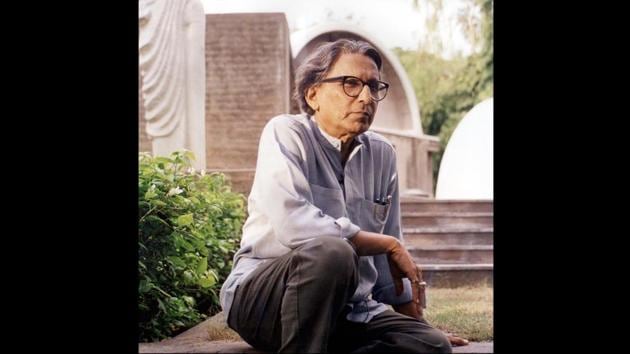
Balkrishna Vithaldas Doshi, 90, on Wednesday became the first Indian to win the Pritzker Prize, considered architecture’s ‘Nobel’ equivalent. An architect, urban planner and educator, Doshi’s work over 70 years has shaped the discourse of architecture in post-Independence India. “This award implies that the direction I have taken in my career is the right one. That direction involves looking at architecture as a living organism and having dialogue with it,” Doshi said. (Vastu Shilpa Foundation / AP)
2/8
 View Photos in a new improved layout
Updated on Mar 09, 2018 4:05 PM
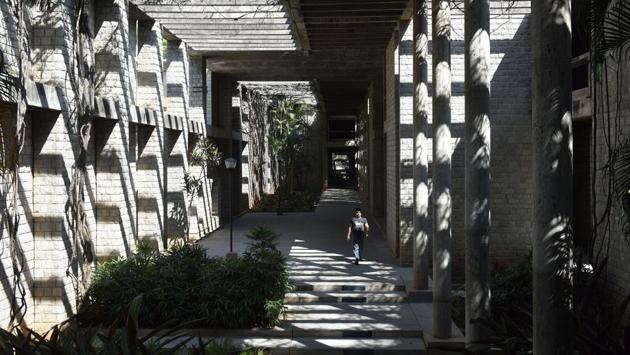
Doshi, a student of Mumbai’s JJ School of Architecture calls working under Le Corbusier in Paris in the 50s the biggest turning point in his life. He returned to Ahmedabad to supervise the legendary Swiss-French architect’s work in that city and later worked closely with Louis Kahn, on the campus of the Indian Institute of Management at Ahmedabad. (Arijit Sen / HT Photo)
3/8
 View Photos in a new improved layout
Updated on Mar 09, 2018 4:05 PM
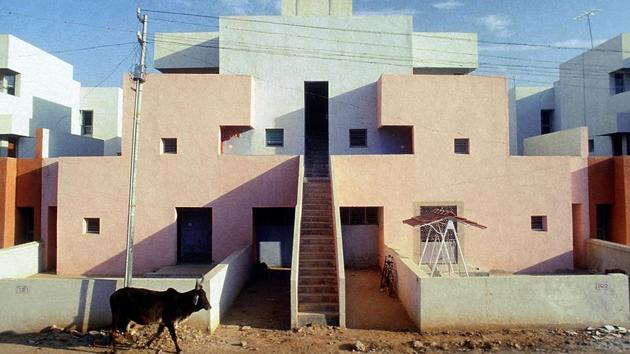
Life Insurance Corporation (LIC) mixed housing building, Ahmedabad. While Corbusier left an indelible impact on him, Doshi, through his own practice, Vastushilpa, established in 1956 was able to interpret architecture and transform it into works that reflect Eastern culture while raising the standard of living in India. (Vastu Shilpa Foundation)
4/8
 View Photos in a new improved layout
Updated on Mar 09, 2018 4:05 PM
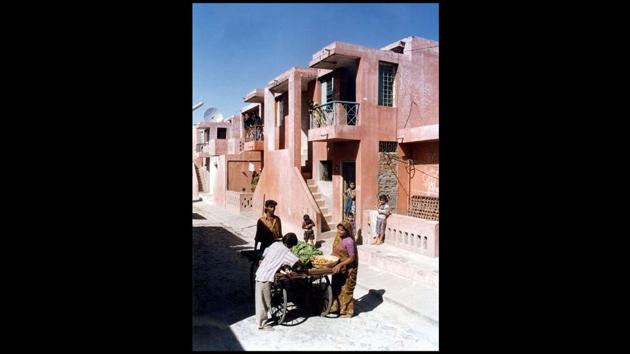
Among his most notable works are Indore’s Aranya Low Cost Housing (seen above), which accommodates over 80,000 people; the Jnana-Pravaha Centre for Cultural Studies in Varanasi, the Sawai Gandharva performing arts centre in Pune, the Tagore Hall on the banks of the Sabarmati in Ahmedabad and Amdavad Ni Gufa, a cave-like underground art gallery. (Vastu Shilpa Foundation)
5/8
 View Photos in a new improved layout
Updated on Mar 09, 2018 4:05 PM
A view of Aranya Nagar Housing as it stands in 2018. The decades of transformation from Doshi’s original style is a statement on architecture as a relationship between a structure and its occupants through the residents’ appropriation of the space over a period of time. (Kamlesh Thakur / HT Photo)
6/8
 View Photos in a new improved layout
Updated on Mar 09, 2018 4:05 PM
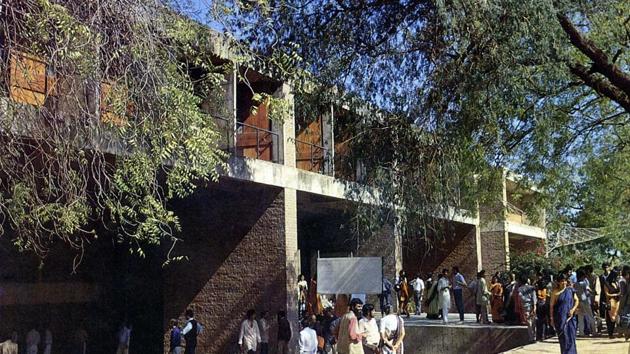
A view of the Centre for Environmental Planning and Technology (CEPT) building in Ahmedabad. “My works are an extension of my life, philosophy and dreams trying to create treasury of the architectural spirit,” Doshi said in a statement thanking the Pritzker jury. The international prize, established by Chicago’s Pritzker family in 1979, bestows laureates with $100,000 along with a bronze medallion. (Vastu Shilpa Foundation)
7/8
 View Photos in a new improved layout
Updated on Mar 09, 2018 4:05 PM
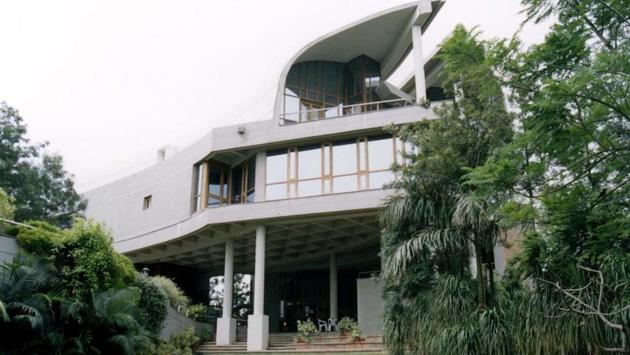
Jnana Pravah Centre for Cultural Studies seen in Varanasi. “Between 1950 and 1980, Doshi’s architecture responded to a need of societies that were changing or growing at a fast rate,” said architect and theorist Kaiwan Mehta. “What’s fascinating is the range of institutional buildings he designed in different cities and the way they’re contemplative, fit into a city’s context and yet stand out as bold statements.” (Vastu Shilpa Foundation)
8/8
 View Photos in a new improved layout
Updated on Mar 09, 2018 4:05 PM


