
 E-Paper



Photos: Climate change and corruption blamed for Venice flood devastation
The high tides in Venice ripped through the historic Italian city, beaching gondolas, trashing hotels and sending tourists fleeing through rapidly rising waters. It was the highest level since the record 194 cm set in 1966.
Updated on: Nov 14, 2019 1:58 PM IST


Share via


Copy link

1/9
 View Photos in a new improved layout
Updated on Nov 14, 2019 1:58 PM
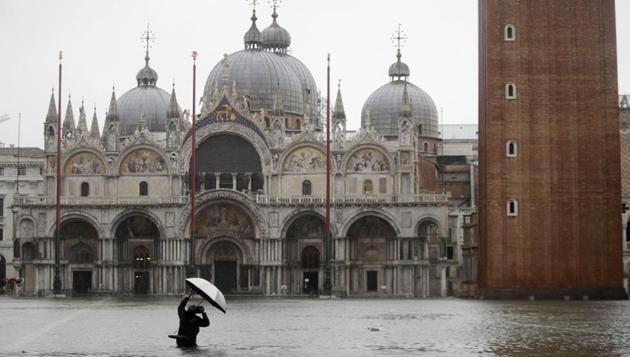
A photographer takes pictures in a flooded St. Mark's Square, in Venice, Italy, Tuesday, November 12, 2019. Much of Venice was under water on Wednesday night after the highest tide in 50 years ripped through the historic Italian city, beaching gondolas, trashing hotels and sending tourists fleeing through rapidly rising waters. (Luca Bruno / AP)
2/9
 View Photos in a new improved layout
Updated on Nov 14, 2019 1:58 PM
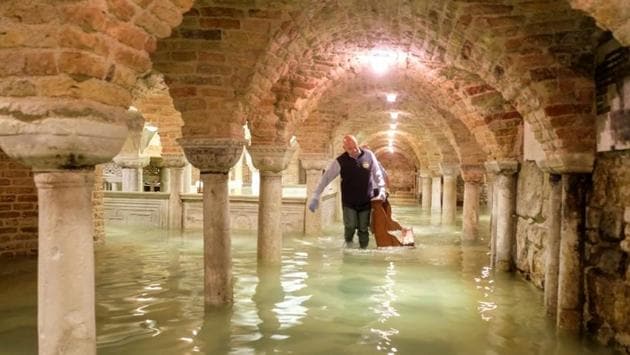
The flooded crypt of St Mark's Basilica seen on November 13. The government in Rome was expected to declare a state of emergency at a cabinet meeting on Thursday after Prime Minister Giuseppe Conte described the flooding as “a blow to the heart of our country”. (Manuel Silvestri / REUTERS)
3/9
 View Photos in a new improved layout
Updated on Nov 14, 2019 1:58 PM
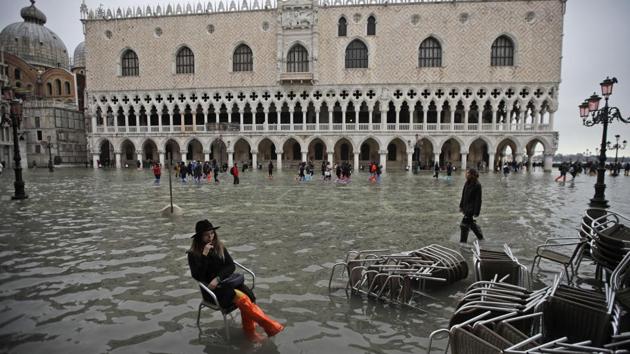
A woman sits in a chair in a flooded St. Mark's Square, in Venice on November 13, 2019. St Mark’s Square was calm on Wednesday evening, with just a smattering of tourists walking through the relatively dry square marked with occasional puddles. (Luca Bruno / AP)
4/9
 View Photos in a new improved layout
Updated on Nov 14, 2019 1:58 PM
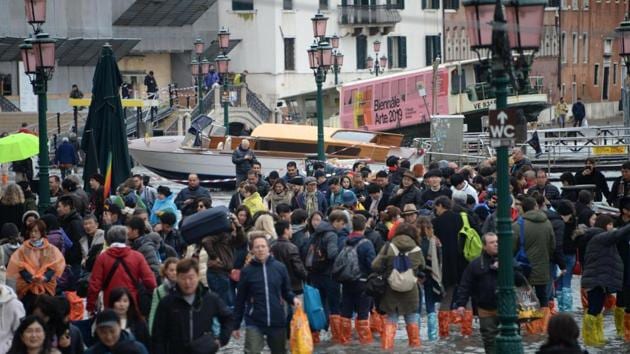
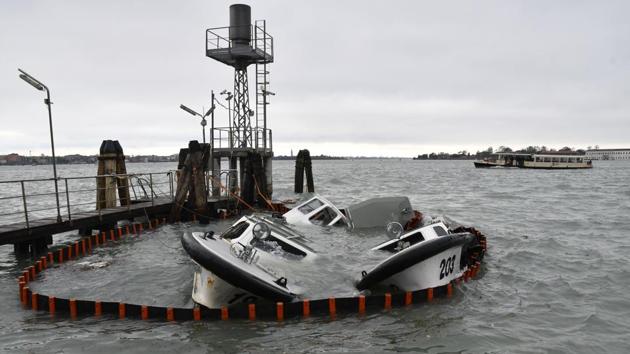
A stranded ferry boat is seen after a high tide. “We ask the government to help us, the costs will be high,” mayor Brugnaro tweeted. “These are the effects of climate change.” “The future of Venice is at stake,” he warned. “We cannot live like this anymore.” (Andrea Merola / AP)
5/9
 View Photos in a new improved layout
Updated on Nov 14, 2019 1:58 PM
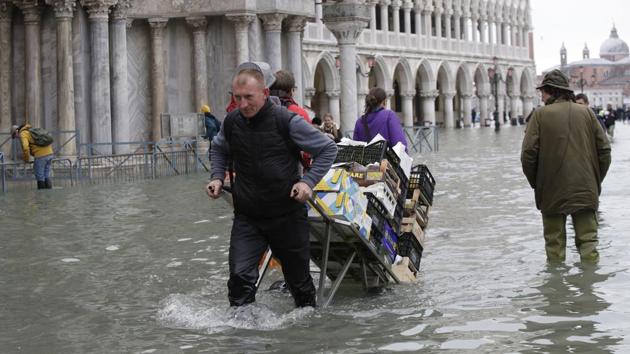
A greengrocer pulls his cart through high water in Venice. Environment Minister Sergio Costa blamed climate change and the “tropicalisation” of violent rainfall and strong winds. “This is what is happening more and more often in the Mediterranean,” Costa said on Facebook. “Global warming will destroy our planet if we do not immediately reverse the direction.” (Luca Bruno / AP)
6/9
 View Photos in a new improved layout
Updated on Nov 14, 2019 1:58 PM
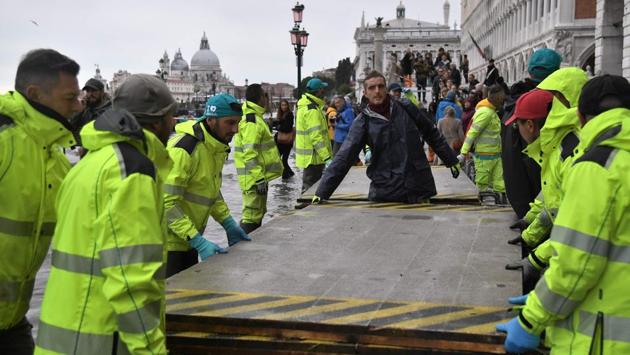
Volunteers set up a footbridge across the flooded Riva degli Schiavoni embankment on November 13. The exceptionally intense “acqua alta,” or high waters, peaked at 1.87 metres (six feet). Only once since records began in 1923 has the water crept even higher, reaching 1.94 metres in 1966. “It was unbelievable. The water rose so quickly,” said resident Tiziano Collarin, 59, as he surveyed the damage. (Marco Bertorello / AFP)
7/9
 View Photos in a new improved layout
Updated on Nov 14, 2019 1:58 PM
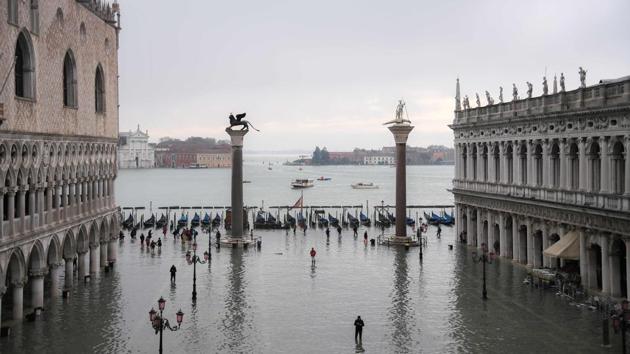
A view of the flooded St. Mark's Square, the Doge's Palace (L), the Lion of St. Mark winged bronze statue and the Venetian lagoon. The fire brigade said it had carried out over 400 operations as well as laying on extra boats as water ambulances. Around 160 firefighters were deployed to rescue people stranded on jetties and to recover boats broken free from their moorings. (Marco Bertorello / AFP)
8/9
 View Photos in a new improved layout
Updated on Nov 14, 2019 1:58 PM
A room seen flooded in the Gritti Palace. President of the Veneto region Luca Zaia said 80 percent of the city had been submerged, causing “unimaginable damage” to the city, which has 50,000 residents but receives 36 million visitors each year. A massive infrastructure project called MOSE has been under way since 2003 to protect the city, but it has been plagued by cost overruns, corruption scandals and delays. (Marco Bertorello / AFP)
9/9
 View Photos in a new improved layout
Updated on Nov 14, 2019 1:58 PM


