
 E-Paper



Photos: Extended rainfall reduces number of migratory birds visiting Bhigwan
Owing to extended rainfall in the region, the wetlands at Bhigwan, situated in Pune district of Maharashtra, are witnessing a decline in the number of migratory flamingos. December and January is the period when the maximum number of visitors and bird watchers visit Bhigwan. For decades together, these natural wetlands have been frequented by a number of migratory birds, especially flamingos, rosy starling, peregrine falcon, osprey and various species of ducks. The extended rainfall has possibly led migratory birds to opt for other places on their migratory path.
Updated on: Dec 20, 2019 3:18 PM IST


Share via


Copy link

1/15
 View Photos in a new improved layout
Updated on Dec 20, 2019 3:18 PM
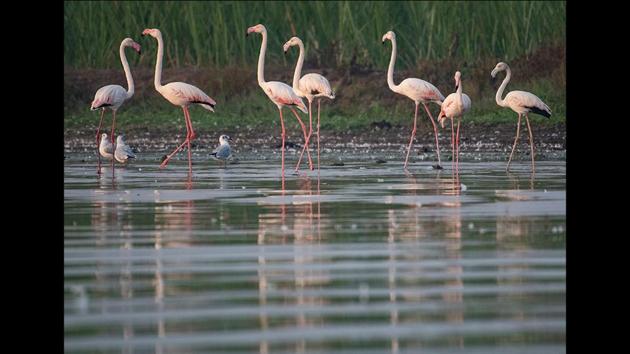
Flamingos spotted at Kumbhargaon, Bhigwan, in Pune district of Maharashtra. The extended rainfall this year has caused a decline in the number of flamingos arriving in the natural wetlands at Bhigwan, according to bird watchers. Flamingos prefer shallow water, and owing to the higher-than-usual water level this year, their numbers dipped. However, other migratory birds have been seen in large numbers. (Pratham Gokhale / HT Photo)
2/15
 View Photos in a new improved layout
Updated on Dec 20, 2019 3:18 PM
Openbill stork (centre), with other migratory birds. The name comes from the distinctive gap formed between the recurved lower and arched upper mandible of the beak in the adult birds. The young ones do not have this gap. December and January is the period when the maximum number of visitors and bird watchers visit Bhigwan, that is about 250 km from Pune. (Pratham Gokhale / HT Photo)
3/15
 View Photos in a new improved layout
Updated on Dec 20, 2019 3:18 PM
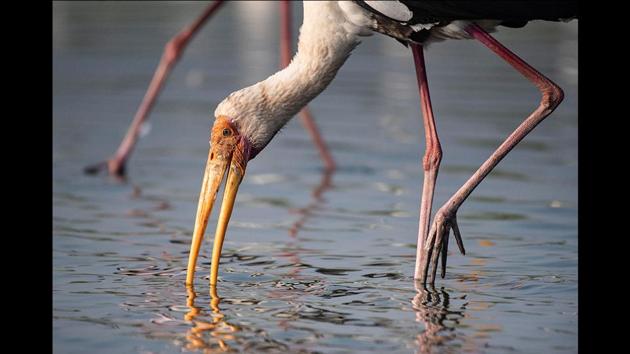
A painted stork searches for prey at Kumbhargaon, Bhigwan. The name of the bird is derived from the distinctive pink tertial (flight) feathers of its wing. Sanjeev Nalavade, an enthusiastic bird watcher and retired professor of Geography at Fergusson College, said that flamingos prefer shallow water, and at Bhigwan, there are lesser sightings of these migratory birds as compared to the previous years. (Pratham Gokhale / HT Photo)
4/15
 View Photos in a new improved layout
Updated on Dec 20, 2019 3:18 PM
A murmuration of rosy starlings, the migratory birds that move from Europe to other places as winter becomes harsher. Moving around in big groups, starlings form different shapes called murmurations. This remarkable quality in forming these swiftly-changing shapes is a mesmerising sight for onlookers. The shapes that starlings produce are arbitrary in form, but the coordination between the birds makes for an awe-inspiring visual treat. (Pratham Gokhale / HT Photo)
5/15
 View Photos in a new improved layout
Updated on Dec 20, 2019 3:18 PM
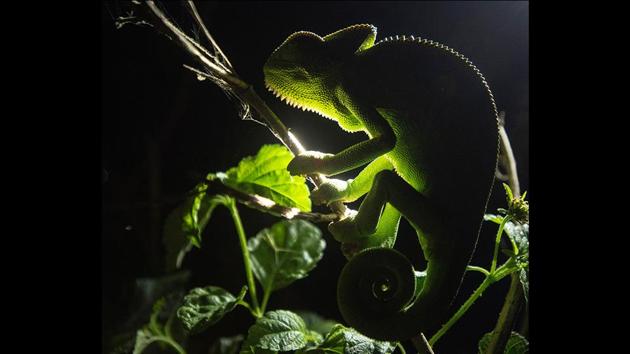
A chameleon holds on to a plant. The species of chameleons come in a range of colours, with many species having the ability to change colour. It is the presence of a large number of migratory waterfowl that has earned the place the nickname of ‘Bharatpur of Maharashtra.’ Bharatpur, in Rajasthan, is where the UNESCO World Heritage Site Keoladeo National Park is situated. (Pratham Gokhale / HT Photo)
6/15
 View Photos in a new improved layout
Updated on Dec 20, 2019 3:18 PM
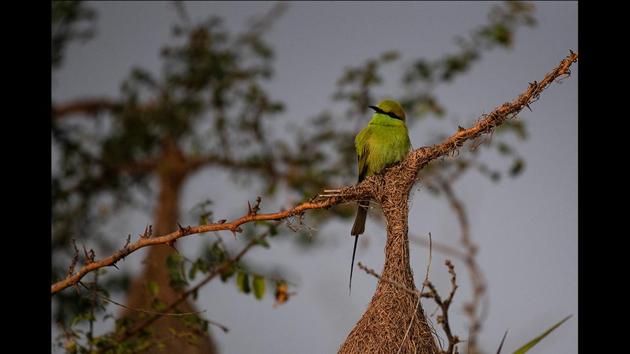
A green bee-eater perches on a branch. Mainly insect eaters, these birds are found in grassland, thin scrub and forest, often quite far from water. Girish Jathar, Assistant Director, Climate Change and Himalaya programme, Bombay Natural History Society (BNHS), said that due to the good rainfall and a lot of water this year, migratory birds are expected to go to other places and return to their regular places once the water recedes. (Pratham Gokhale / HT Photo)
7/15
 View Photos in a new improved layout
Updated on Dec 20, 2019 3:18 PM
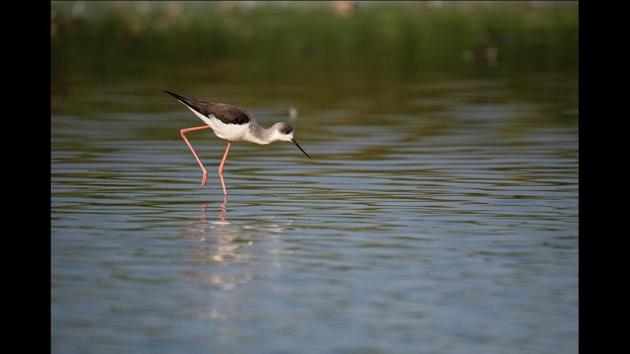
Black-winged stilts are wader birds that favour wetlands with open shallow water. These birds have an elegant shape with long hot-pink legs, and long, very fine bill. “There is no data available on Bhigwan; all we have is anecdotal data, hence to make any comment on population would be wrong,” Jathar said. (Pratham Gokhale / HT Photo)
8/15
 View Photos in a new improved layout
Updated on Dec 20, 2019 3:18 PM
Another wader, glossy ibis, has a long, curved bill. The adults are mostly dark with iridescent green and reddish tones. For decades together, the natural wetlands at Bhigwan have been frequented by a number of migratory birds, especially flamingos, rosy starling, peregrine falcon, osprey and various species of ducks. (Pratham Gokhale / HT Photo)
9/15
 View Photos in a new improved layout
Updated on Dec 20, 2019 3:18 PM
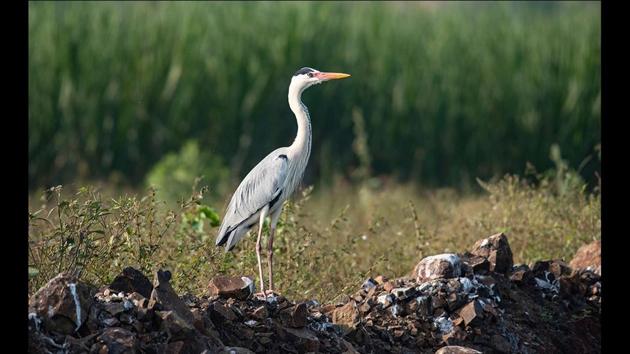
Generally quite common in wetland habitats from marshes and tidal flats to small ponds, ditches, and wet fields, grey herons are usually seen as singles or in small groups, standing quietly in or at the edge of water. According to ebird.org, a website managed by Cornell Lab of Ornithology, during December, 225 species of birds have been spotted at Bhigwan. (Pratham Gokhale / HT Photo)
10/15
 View Photos in a new improved layout
Updated on Dec 20, 2019 3:18 PM
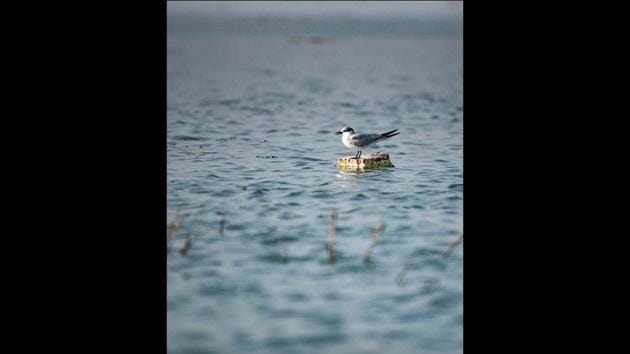
Common around wetlands, lakes, and rivers, whiskered terns have a distinctive dark smoky grey body and contrasting white cheeks underneath a black cap. Unlike typical terns that feed by splash-diving, whiskered terns feed by picking from the surface. The extended rainfall may have led migratory birds to opt for other places on their migratory path, Nalavade said. (Pratham Gokhale / HT Photo)
11/15
 View Photos in a new improved layout
Updated on Dec 20, 2019 3:18 PM
Large, mostly white raptors that cruise over lakes, rivers, and coastal waterways in search of fish, ospreys are impressively widespread. Barring Antarctica, these birds are found in every continent. “This year, the cycle for migratory birds seems to have been disturbed because of late rains and also because the cold is yet to begin,” Nalavade further added. (Pratham Gokhale / HT Photo)
12/15
 View Photos in a new improved layout
Updated on Dec 20, 2019 3:18 PM
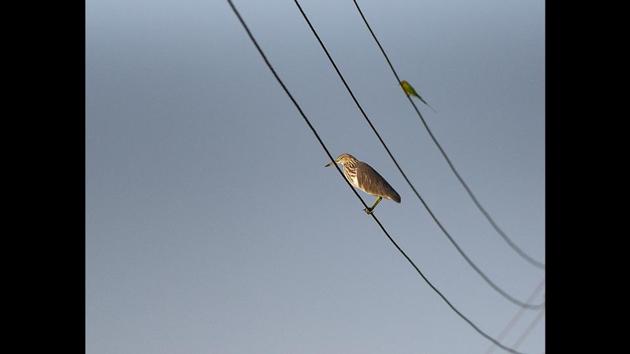
A pond heron (front) and a green bee-eater are seen sitting on wires. Datta Nagare, a local guide who owns a popular bird watching site at Kumbhargaon, Bhigwan, said last year, around 15,000 flamingos were seen at Bhigwan. “As the water level is high this year, there are lesser number of flamingos, but other birds like rosy starling and various ducks like northern shoveler, northern pintail, garganey, eurasian wigeon have been seen in large numbers.” (Pratham Gokhale / HT Photo)
13/15
 View Photos in a new improved layout
Updated on Dec 20, 2019 3:18 PM
A eurasian spoonbill (centre) is surrounded by other migratory birds. These distinctive white waders have a spatula for a bill. Birds such as Skimmer, Demoiselle Crane, Knob-billed duck, Collared Pratincole, Pacific Golden-Plover, Greater Painted-Snipe, Pelican, White stork and Pied Avocet species are yet to arrive at the wetlands this season. (Pratham Gokhale / HT Photo)
14/15
 View Photos in a new improved layout
Updated on Dec 20, 2019 3:18 PM
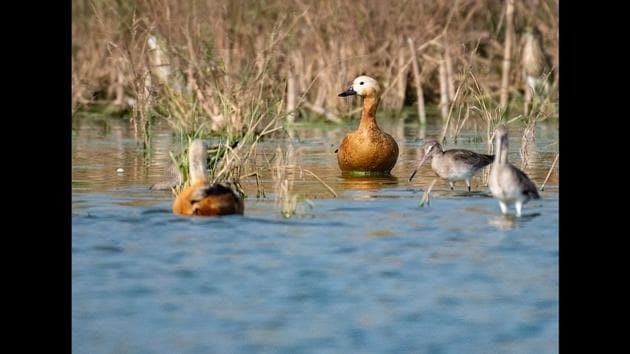
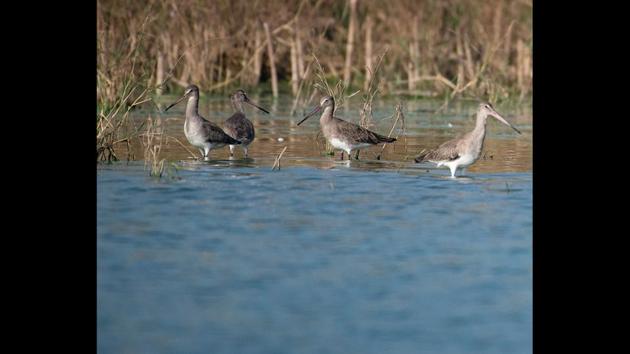
Ruddy shelducks (left) and black-tailed godwits are seen. Known as brahminy ducks in India, ruddy shelducks breed in southeastern Europe and Central Asia, migrating to South Asia in the winter season. Black-tailed godwits, on the other hand, are gregarious medium-sized waders with long bills. Jathar stressed on the need for regular bird count of migratory birds entering from Gujarat and Rajasthan and their dispersal towards south India and Sri Lanka. (Pratham Gokhale / HT Photo)
15/15
 View Photos in a new improved layout
Updated on Dec 20, 2019 3:18 PM


