
 E-Paper



Photos: Gurugram’s 16th-century Qutab Khan Mosque, untouched by prejudice
A small detour from Sohna Road leads to Sanp Ki Nangli, a nondescript village in Sohna. The area is peppered with many historical monuments, some of which are under protection, some encroached upon, and some heavily damaged. Among these monuments is Qutab Khan Ki Masjid, a 16th-century mosque, which stands tall in one corner of an area called Chungi1 in Saini Colony.
Updated on: Jun 04, 2019 10:07 AM IST

Share via


Copy link

1/9
 View Photos in a new improved layout
Updated on Jun 04, 2019 10:07 AM
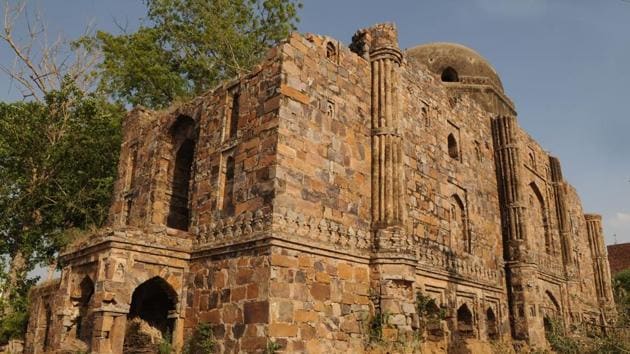
Despite its towering presence, locating the mosque can be a challenge, since it is now overshadowed by newer constructions and houses on the front. Queries to passers-by may also draw a mixed response, since many often end up mistaking the mosque for the Lal and Kaala Gumbad that lie further inside the village. (Parveen Kumar / HT Photo)
2/9
 View Photos in a new improved layout
Updated on Jun 04, 2019 10:07 AM
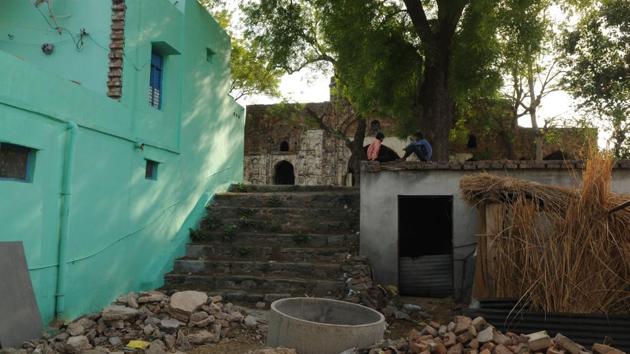
Qutab Khan Ki Masjid, however, is located only a few metres away from the Sohna Road in a small but congested area known as Saini Colony. The main entrance to the mosque lies inside the colony, through cobbled lanes, flanked by houses plastered with cow dung cakes. The mosque’s view is partially blocked by a house to its left and a newly constructed storehouse to its right. (Parveen Kumar / HT Photo)
3/9
 View Photos in a new improved layout
Updated on Jun 04, 2019 10:07 AM
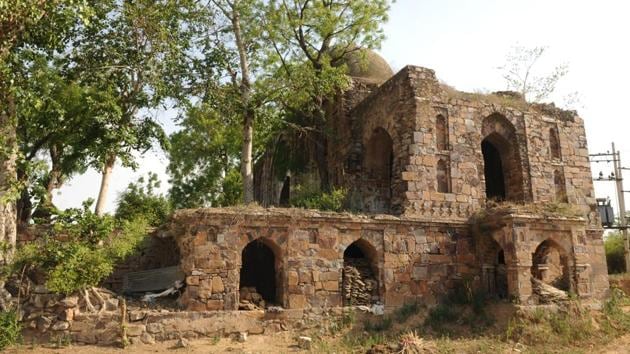
The monument dates back to circa 155O AD, as per the listing of the state department. However, not much is known about its makers. “There is scant information about the mosque in any published material. But, as per the architectural style of the structure…The time of construction almost aligns with the Lodi-sultanate period,” said Banani Bhattacharyya, deputy director, department of archaeology and museums. (Parveen Kumar / HT Photo)
4/9
 View Photos in a new improved layout
Updated on Jun 04, 2019 10:07 AM
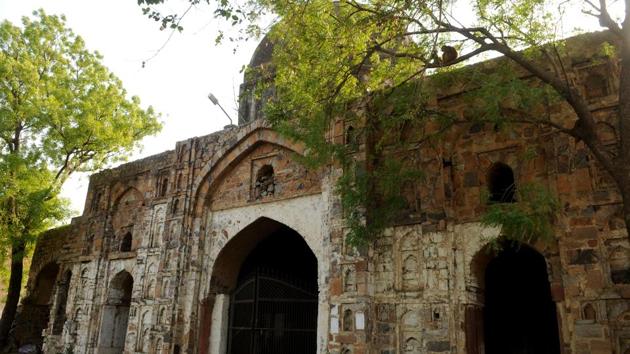
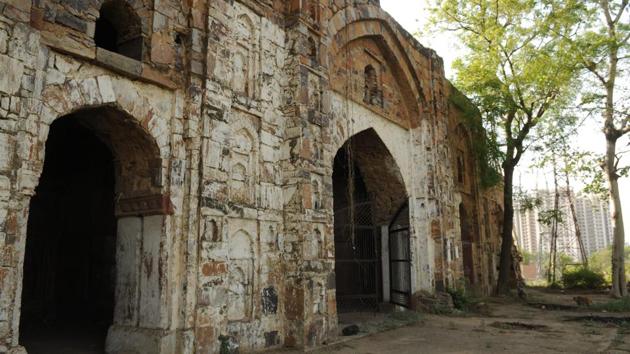
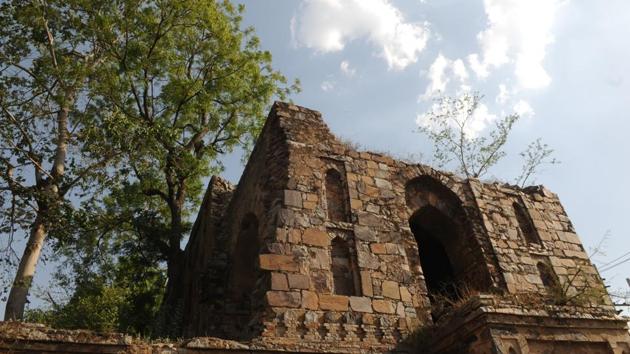
The mosque’s facades are adorned with alcoves. Some minor and major cracks can be found in parts. The outer facade was whitewashed by locals some years back. “The mosque is made of granite and quartzite stones. It also demonstrates a beautiful combination of red and black stones. Most of these stones were locally available since the area falls under the Aravalli mountain ranges,” said Bhattacharyya. (Parveen Kumar / HT Photo)
5/9
 View Photos in a new improved layout
Updated on Jun 04, 2019 10:07 AM
The ceiling of the mosque, in fact, extends into the verandah of the house. Migrants from other states, who work as construction labourers at nearby condominiums, live here on rent. The owner of the house, Lal Singh Saini, however, insists that the mosque and the house are separate. “The house is separate from the mosque, and I don’t live there anymore,” he said. (Parveen Kumar / HT Photo)
6/9
 View Photos in a new improved layout
Updated on Jun 04, 2019 10:07 AM
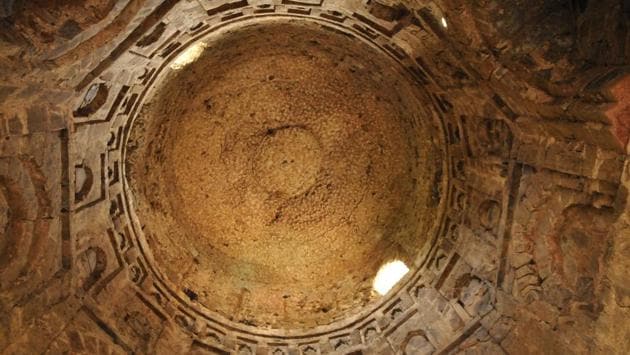
While the mosque has stood the test of time and survived all these years, there have been altercations along communal lines over the ownership of the structure. Until eight or nine years ago, the mosque was being used by locals to host weddings and other community events. Most locals, in fact, don’t identify the structure as a mosque and refer to it as a Gumat (tomb) in the local dialect. (Parveen Kumar / HT Photo)
7/9
 View Photos in a new improved layout
Updated on Jun 04, 2019 10:07 AM
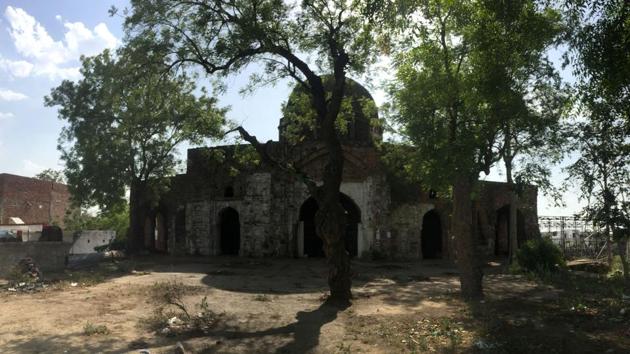
The courtyard of the mosque has a big neem tree at the centre, along with several other smaller ones on the periphery. Local residents said that Muslims wanted to use the structure as a mosque while the Hindu population wanted a temple here. A conflict ensued, and the panchayat decided to use the place as a community space, multiple residents in the vicinity said. (Parveen Kumar / HT Photo)
8/9
 View Photos in a new improved layout
Updated on Jun 04, 2019 10:07 AM
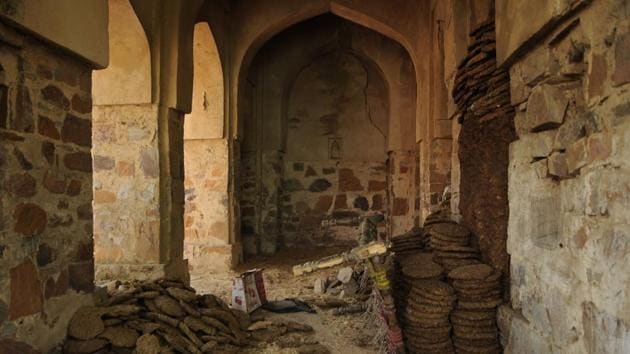
Remnants of the conflict can still be found on the mosque, with faint remains of the word “mandir” written in Devanagari still visible on its dome. While most residents know about the conflict, they are unaware about the historicity of the mosque. The pavilions of the mosque continue to be used for storing cow dung cakes. (Parveen Kumar / HT Photo)
9/9
 View Photos in a new improved layout
Updated on Jun 04, 2019 10:07 AM


