
 E-Paper



Photos: Partial lunar eclipse dazzles night skies from India to Spain
A partial lunar eclipse on August 7th - one of only two observed this year -across Asia, Africa, Australia and Antarctica presented stunnig images of the moon in various stages.
Updated on: Aug 08, 2017 1:06 PM IST

Share via


Copy link

1/11
 View Photos in a new improved layout
Updated on Aug 08, 2017 1:06 PM
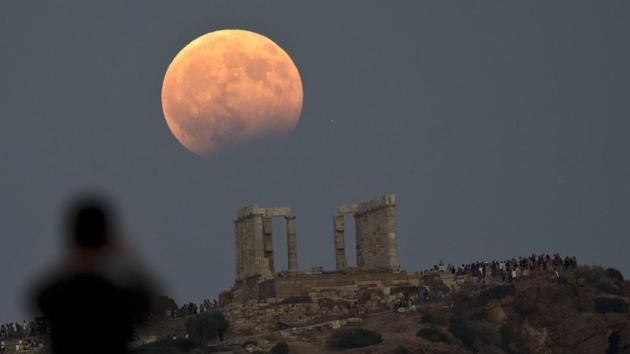
Most of Asia, Africa, Europe, Australia and Antarctica received their own celestial show, a partial lunar eclipse on Monday night. The phenomenon occurs when the moon moves through the outer part of the Earth’s shadow, blocking a part of the sunlight from reaching the moon and causing it to appear larger than normal. An interesting aspect of lunar eclipse is that everywhere on a earth from where the moon is visible during eclipse, the time will be the same. (Petros Giannakouris/AP)
2/11
 View Photos in a new improved layout
Updated on Aug 08, 2017 1:06 PM
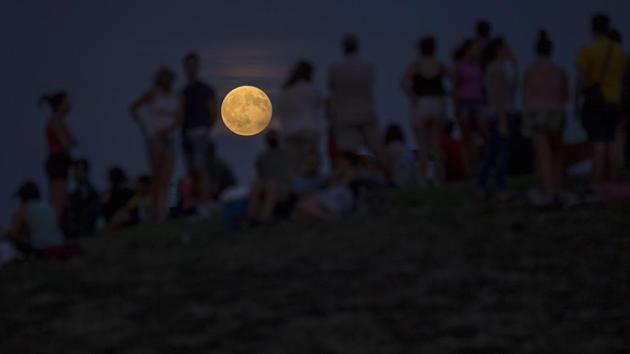
People watch a rising full moon during a partial lunar eclipse atop a hill at the Tio Pio park in Madrid. A lunar eclipse or solar eclipse is not visible every month as the moon’s orbit is tilted about 5 degrees off from Earth’s orbit. (Francisco Seco/AP)
3/11
 View Photos in a new improved layout
Updated on Aug 08, 2017 1:06 PM
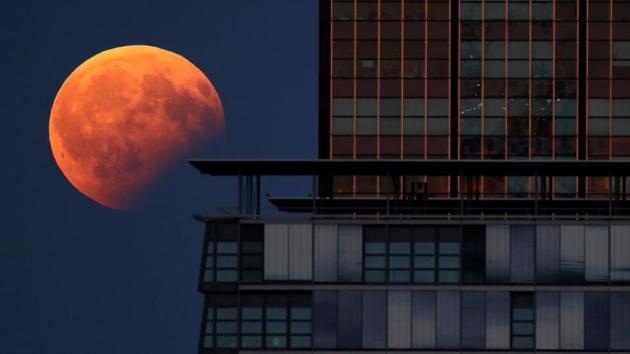
A partial lunar eclipse is pictured beside a building in Berlin, Germany. A penumbral lunar eclipse takes place when the moon moves through the faint, outer part of Earth’s shadow. (REUTERS)
4/11
 View Photos in a new improved layout
Updated on Aug 08, 2017 1:06 PM
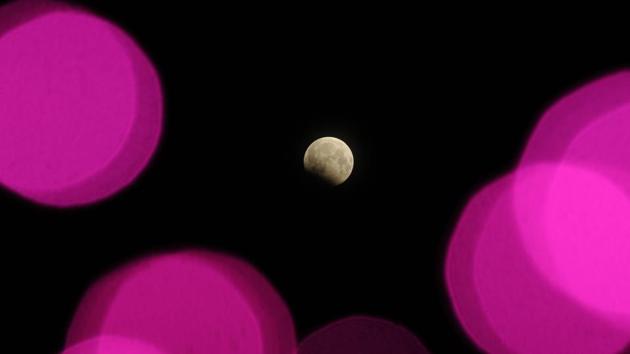
Partial Lunar Eclipse seen in Kolkata. According to SPACE (Science Popularisation Association of Communicators and Educators ), the penumbral eclipse began at 9.22 p.m. on August 7 and ended at 2.20 a.m. on August 8. (Samir Jana/HT PHOTO)
5/11
 View Photos in a new improved layout
Updated on Aug 08, 2017 1:06 PM
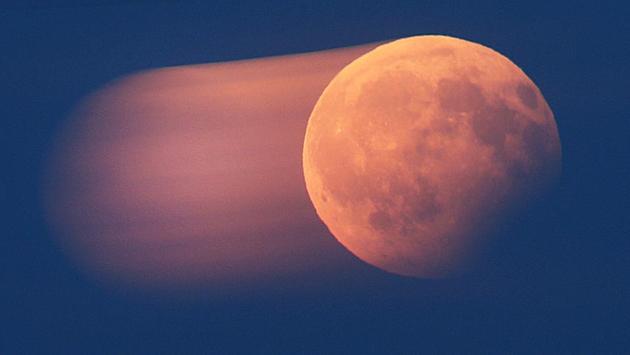
Picture taken with long exposure time shows the rising full moon entering a partial lunar eclipse (right side) over Frankfurt, Germany. (Michael Probs/AP)
6/11
 View Photos in a new improved layout
Updated on Aug 08, 2017 1:06 PM
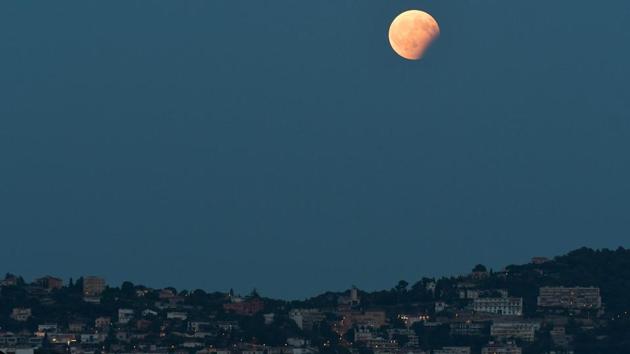
Partial lunar eclipse as seen in Nice southern France. The total duration of the penumbral eclipse was five hours and one minute and that of the partial eclipse one hour and 55 minutes. (YANN COATSALIOUAFP)
7/11
 View Photos in a new improved layout
Updated on Aug 08, 2017 1:06 PM
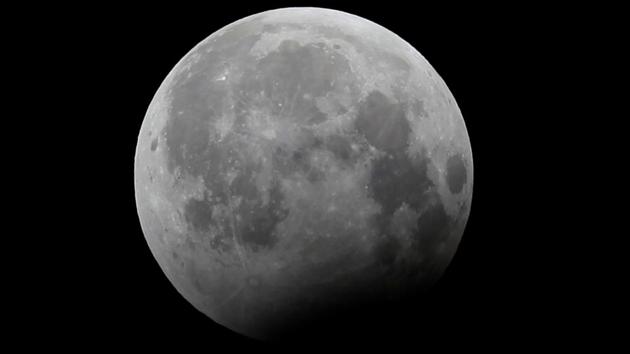
A view of the full moon during the partial lunar eclipse observed from Rawalpindi, Pakistan , a phenomenon that occurred across most of Asia, Africa, Europe, Australia and Antarctica. (Faisal Mahmood/REUTERS)
8/11
 View Photos in a new improved layout
Updated on Aug 08, 2017 1:06 PM
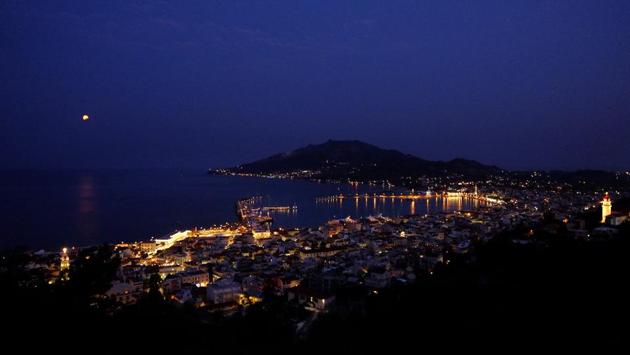
The August moon in seen in a partial lunar eclipse rise over the Ionian sea in Zakynthos island. (Petros Karadjias/AP)
9/11
 View Photos in a new improved layout
Updated on Aug 08, 2017 1:06 PM
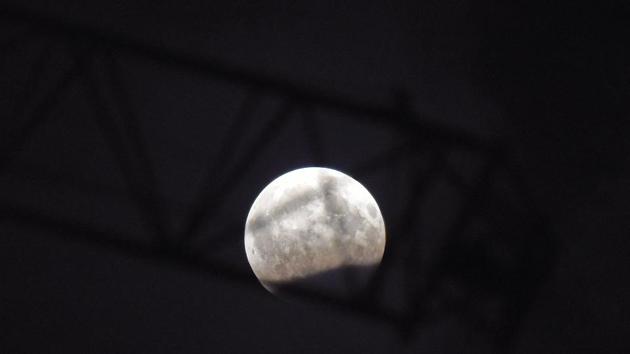
The central part of the eclipse zone where the moon is at the meridian when the eclipse occurs was only seen in Central Asia and India. (Satyabrata Tripathy/HT Photo)
10/11
 View Photos in a new improved layout
Updated on Aug 08, 2017 1:06 PM
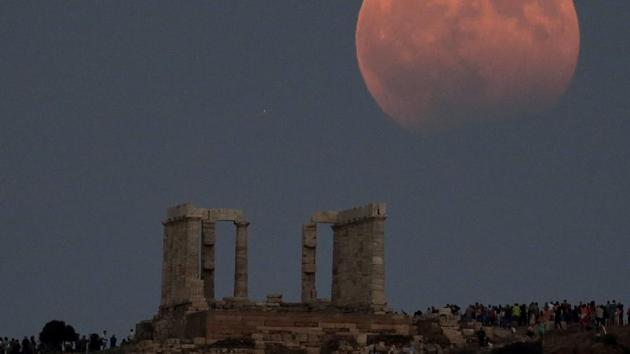
Temple of Poseidon is seen as a full moon is partially covered by the Earth's shadow during a lunar eclipse in east of Athens, Greece. (Costas Baltas/REUTERS)
11/11
 View Photos in a new improved layout
Updated on Aug 08, 2017 1:06 PM


