
 E-Paper



Photos: Restoring Taj Mahal’s delicate dome a dilemma for workers in Agra
The Taj Mahal in Agra typically attracts between 7 and 8 million visitors a year. Over the years air pollution has taken a toll on this structure, resulting is severe discoloration. While years of work has cleaned up its walls and minarets, officials now negotiate a quandary over restoring the Taj Mahal's delicate dome.
Updated on: Dec 08, 2017 1:44 PM IST

Share via


Copy link

1/8
 View Photos in a new improved layout
Updated on Dec 08, 2017 1:44 PM
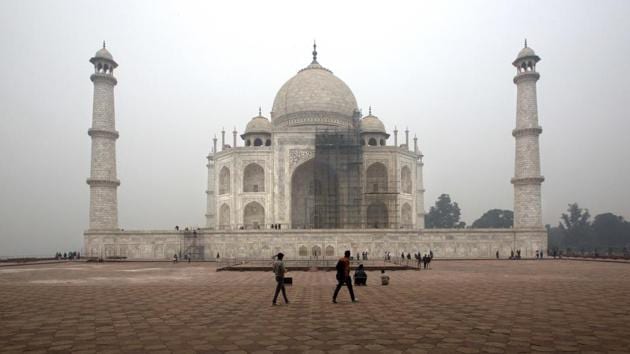
With the first thorough cleaning of the Taj Mahal since its construction in 1648 underway, scaling its majestic but delicate dome is turning out to be an issue for workers. This World Heritage monument in heavily polluted Agra has faced significant discolouration of its once translucent white marble, hauled all the way from Rajasthan. (Manish Swarup / AP)
2/8
 View Photos in a new improved layout
Updated on Dec 08, 2017 1:44 PM
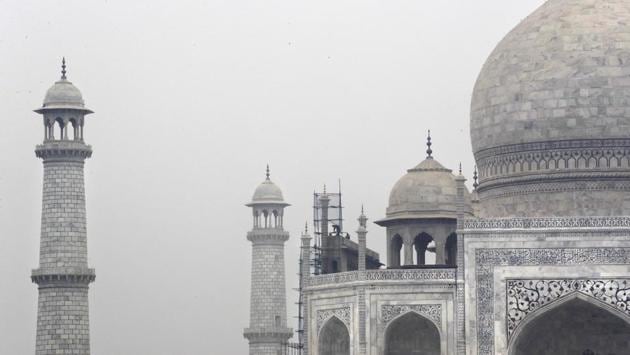
Work on the mausoleum’s minarets and walls now almost complete, commenced in mid-2015. Bhuvan Vikrama, the superintending archaeologist from the Archaeological Survey of India said in the past rain was enough to clean most of the Taj Mahal but air pollution over the last 25 years has taken its toll, visibly turning the structure yellow. (Manish Swarup / AP)
3/8
 View Photos in a new improved layout
Updated on Dec 08, 2017 1:44 PM
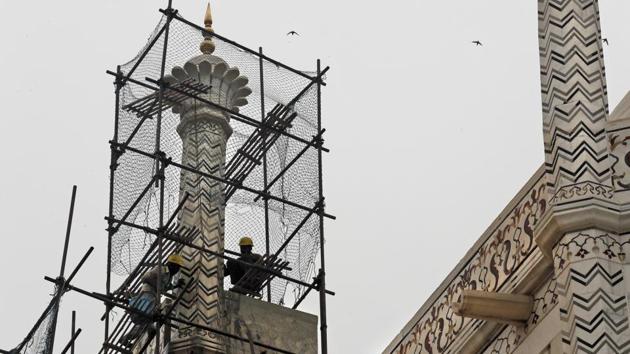
But the metal scaffolding used so far on the minarets and walls is too heavy and rigid for the dome, said Vikrama. He added they’re considering other options, including designing and constructing special bamboo scaffolding. (Manish Swarup / AP)
4/8
 View Photos in a new improved layout
Updated on Dec 08, 2017 1:44 PM
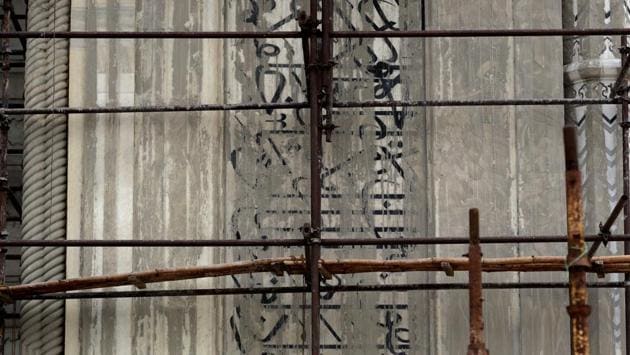
Verses from the Quran inscribed on the walls of the Taj Mahal are seen covered under fuller’s earth in Agra. Bamboo scaffolding is not without precedent, considering it was used on the dome in the early 1940s when some conservation work was done. But rising pollution has blackened the dome’s shaded areas which remain untouched by rains. (Manish Swarup / AP)
5/8
 View Photos in a new improved layout
Updated on Dec 08, 2017 1:44 PM
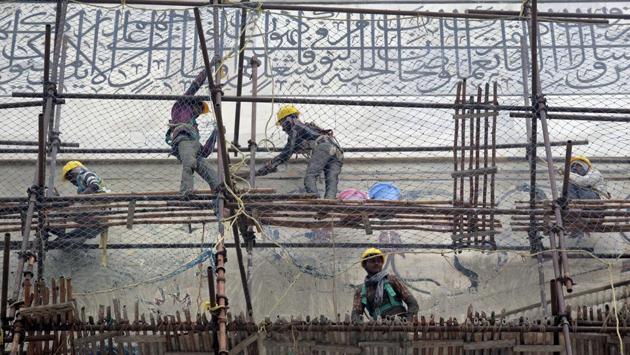
Workers peel off fuller’s earth from the walls of the Taj Mahal. The dome’s restoration will likely take 10 months, starting next year and finishing in 2019 with the makeover costing about $500,000. The work has prompted Fodor’s Travel guide to include the Taj on its list of places to avoid next year. Vikrama counters, saying photographs from the 1940s with scaffolding on the dome are interesting and historically important.
6/8
 View Photos in a new improved layout
Updated on Dec 08, 2017 1:44 PM
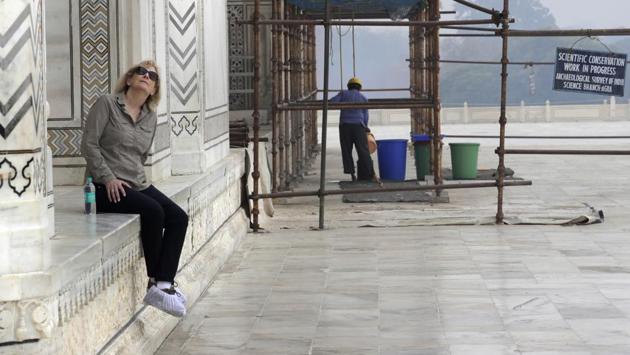
A tourist admires the Taj Mahal as a worker cleans the monument. The Taj Mahal typically attracts between 7 and 8 million visitors a year. Built by Mughal Emperor Shah Jahan in memory of his wife Mumtaz Mahal, people are attracted as much by the love story as the commemorative architecture. (Manish Swarup / AP)
7/8
 View Photos in a new improved layout
Updated on Dec 08, 2017 1:44 PM
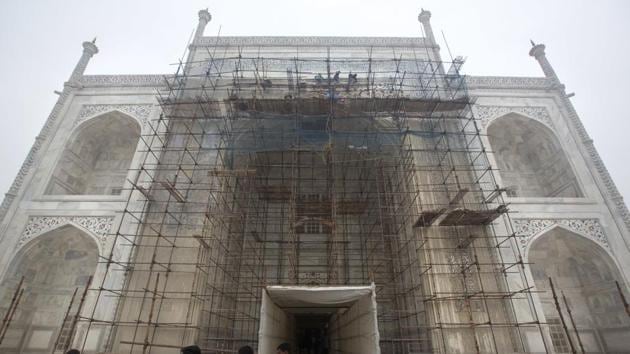
“If the tourism even fluctuates, we should not bother about that,” Vikrama said. “Tourists should also appreciate they are witnessing the work going on, the right kind of efforts for the preservation of monuments.” (Manish Swarup / AP)
8/8
 View Photos in a new improved layout
Updated on Dec 08, 2017 1:44 PM


