
 E-Paper



Photos: Looking back at independent India’s first general election
From 25 October 1951 to 21 February 1952, the people of India celebrated their first festival of democracy, lining up before 224,000 polling booths to elect 489 members to the Lok Sabha and 3,283 for the state assemblies. The vote was also treated as a valuable right and cast carefully, so that despite it being the first time for most people, only 3-4% of votes were invalid. When the election results were declared, it was found that nearly 46.6% of the eligible voters had cast their vote. India’s first election commissioner Sukumar Sen led the daunting task of holding a national election in a young country and devised the elections in 68 phases. The first general election was conducted over a period of four months, and never before had such large numbers of people anywhere in the world been involved in an exercise of this kind.
Updated on: Oct 28, 2021 6:13 PM IST


Share via


Copy link

1/16
 View Photos in a new improved layout
Updated on Oct 28, 2021 6:13 PM
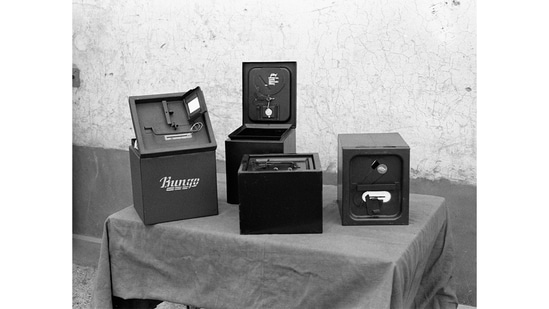
Different samples of specially designed, steel ballot boxes were used in India’s first general election. These ballot boxes were burglar-proof and helped keep the confidentiality of the ballot in October, 1951. (Courtesy Photo Division, PIB)
2/16
 View Photos in a new improved layout
Updated on Oct 28, 2021 6:13 PM
Sukumar Sen, Chief Election Commissioner and PS Subramaniam, Secretary to the Commission seen examining some supplies of ballot boxes specially designed for use in India’s colossal elections in October 1951. (Courtesy Photo Division, PIB)
3/16
 View Photos in a new improved layout
Updated on Oct 28, 2021 6:13 PM
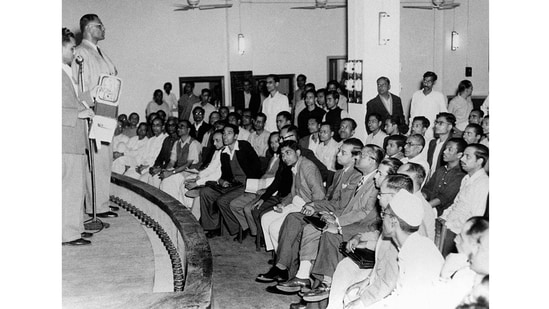
A training session for presiding officers of the general election in West Bengal in February, 1952. (Courtesy Publicity Department, West Bengal via Photo Division. PIB)
4/16
 View Photos in a new improved layout
Updated on Oct 28, 2021 6:13 PM
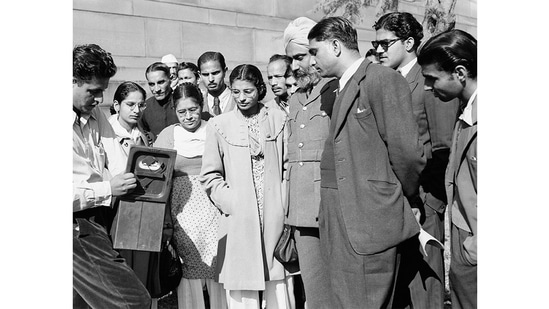
A demonstration on “How to close and seal a ballot box” being given to a batch of government officers in training of acting as polling officers in the general election in January 1952. (Courtesy Photo Division, PIB)
5/16
 View Photos in a new improved layout
Updated on Oct 28, 2021 6:13 PM
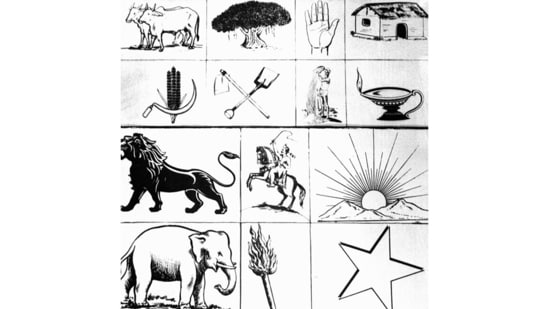
Designs approved by the Election Commission for the use in the elections by the parties contesting; top row (left to right): Congress (two bulls), Socialist Party (tree), Forward Bloc (hand), Kisan Mazdoor Praja Party (hut). Second row (left to right): Communist Party (corn ears and a sickle), Revolutionary Socialist Party (spade and stoker), Krishikar Lok Sabha Kar Party (cultivator winnowing grain), Jan Sangh (Diwali lamp). Third row (left to right): Forward Bloc (lion), Marxists Hindu Maha Sabha (rider on a horse), Ram Rajya Parishad (rising sun). Bottom row (left to right): Scheduled Caste Federation (elephant), Revolutionary Communist Party (flaming torch or Mashal), Bolshevist Party (star), December, 1951. (Courtesy Election Commission via Photo Division, PIB)
6/16
 View Photos in a new improved layout
Updated on Oct 28, 2021 6:13 PM
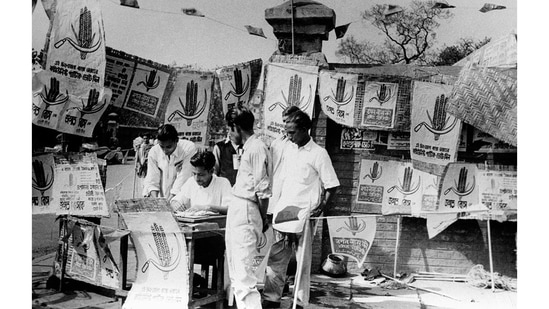
A makeshift propaganda office of a political party in West Bengal in February, 1952. (Courtesy Publicity Department, West Bengal via Photo Division. PIB)
7/16
 View Photos in a new improved layout
Updated on Oct 28, 2021 6:13 PM
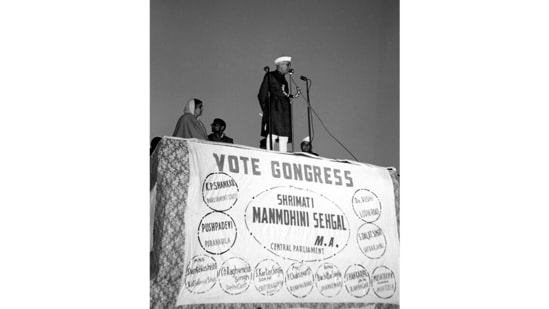
Prime Minister Jawaharlal Nehru, also President of the Indian National Congress seen addressing an election meeting at a children's park in Connaught Place, New Delhi, on January 5, 1952. (Courtesy Photo Division, PIB)
8/16
 View Photos in a new improved layout
Updated on Oct 28, 2021 6:13 PM
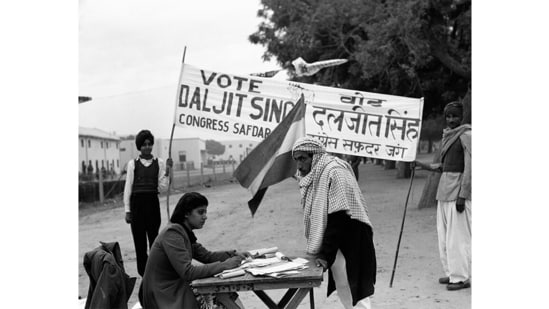
A Congress party election camp near Willingdon Airfield (now Safdarjung airport), New Delhi in January, 1952. (Courtesy Photo Division, PIB)
9/16
 View Photos in a new improved layout
Updated on Oct 28, 2021 6:13 PM
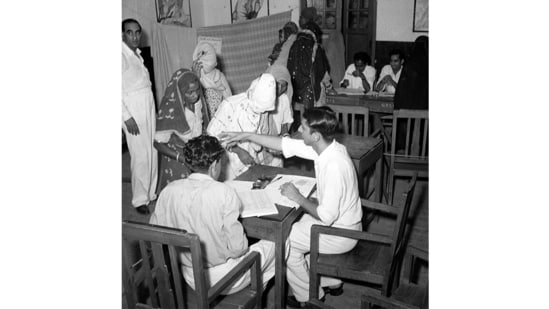
Women voters from villages being given instructions before casting their votes during the mock election in Nangloi near Delhi on September 2, 1951. (Courtesy Photo Division, PIB)
10/16
 View Photos in a new improved layout
Updated on Oct 28, 2021 6:13 PM
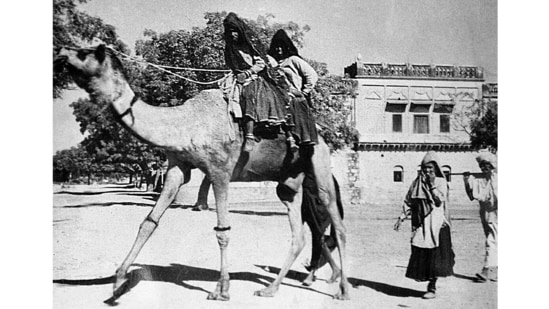
Members of a family in a village travel to the polling station on a camel from Dadri (in Patiala and East Punjab States Union – PEPSU) proceeding to the Polling Station on a camel from Dadri in Patiala and East Punjab States Union (PEPSU) in January, 1952. (Courtesy Photo Division, PIB)
11/16
 View Photos in a new improved layout
Updated on Oct 28, 2021 6:13 PM
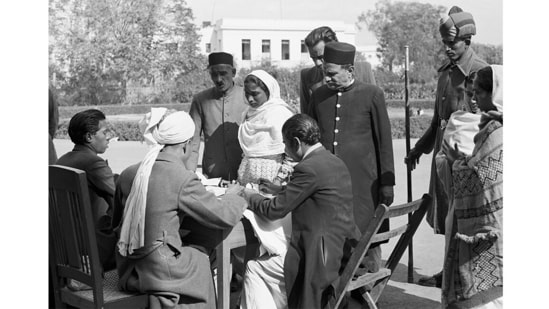
A polling officer is seen issuing an identity slip to a voter outside the Town Hall polling booth in New Delhi in January 1952. (Courtesy Photo Division, PIB)
12/16
 View Photos in a new improved layout
Updated on Oct 28, 2021 6:13 PM
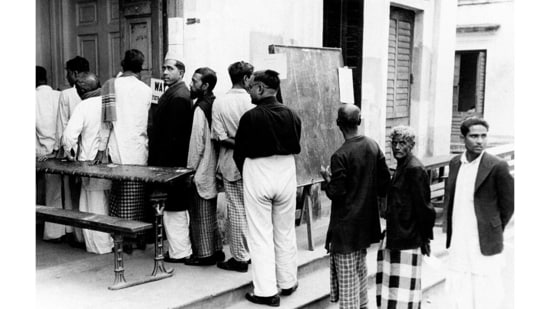
Voters in West Bengal, February 1952. (Courtesy Publicity Department, West Bengal via Photo Division, PIB)
13/16
 View Photos in a new improved layout
Updated on Oct 28, 2021 6:13 PM
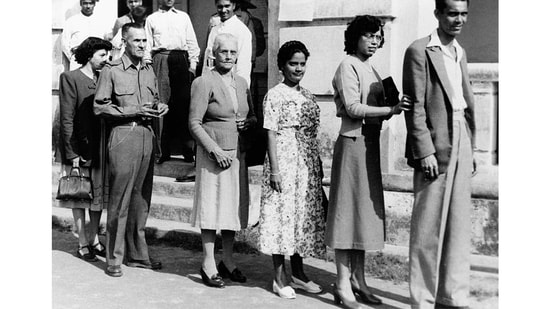
A queue outside a polling centre during the general elections in West Bengal. February, 1952. (Courtesy Publicity Department, West Bengal via Photo Division, PIB)
14/16
 View Photos in a new improved layout
Updated on Oct 28, 2021 6:13 PM
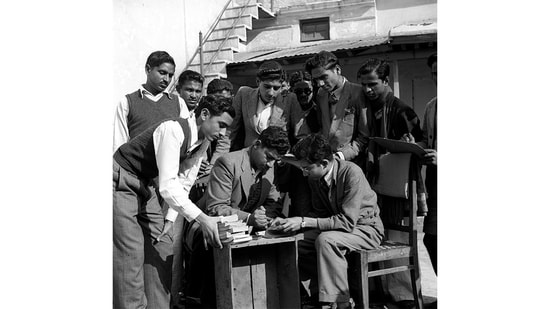
Election officers from Bharat Jan Sangh, one of the political parties in India, at Kashmere Gate, New Delhi in January 1952. (Courtesy Photo Division, PIB)
15/16
 View Photos in a new improved layout
Updated on Oct 28, 2021 6:13 PM
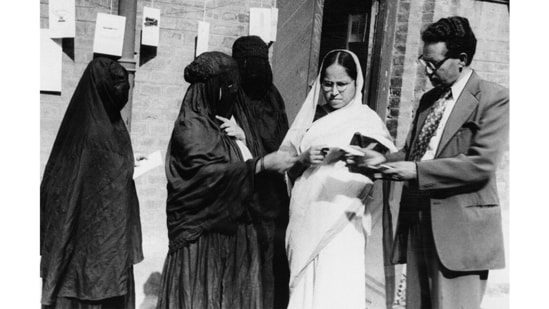
Muslim women queue up at a polling centre in West Bengal, February 1952. (Courtesy Publicity Department, West Bengal via Photo Division, PIB)
16/16
 View Photos in a new improved layout
Updated on Oct 28, 2021 6:13 PM


