
 E-Paper



Photos: The plight of Italy’s African labourers after fatal crashes
Multiple deaths of African migrant labourers in Italy have brought into focus the dire working and living conditions imposed on thousands of migrant farmhands whose cut-price labour allows the country to be one of the biggest fruit and vegetable exporters in Europe. Unable to go back home because of war, political persecution or lack of any papers, these migrant workers say they are being exploited. For many getting a regular job is a dream and for others even the ones they have are more like a trap.
Updated on: Aug 17, 2018 12:45 PM IST


Share via


Copy link

1/10

 View Photos in a new improved layout
Updated on Aug 17, 2018 12:45 PM
African migrant labourers stage a march to protest against their work conditions, following the death of 16 of their colleagues in two separate road accidents near Foggia, Italy. The tragedies have brought into focus the dire working and living conditions imposed on thousands of migrant farmhands whose cut-price labour allows Italy to be one of the biggest fruit and vegetable exporters in Europe. (Alessandro Bianchi / REUTERS)
2/10
 View Photos in a new improved layout
Updated on Aug 17, 2018 12:45 PM
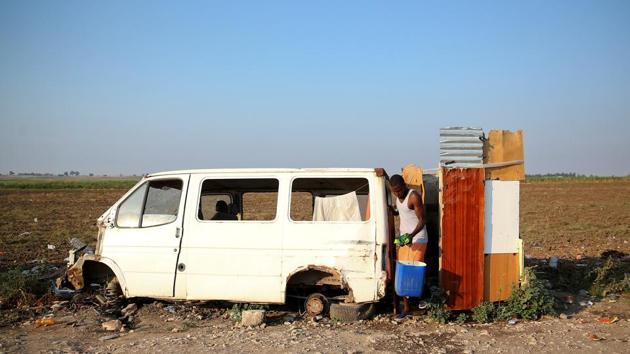
An African migrant labourer gets out of the shower box outside the camp known as the “Great Ghetto”, near Foggia. The multiple deaths come at a time of rising anti-immigration sentiment in Italy, with the newly installed government moving to halt the migrant arrivals to the country and promising mass deportations for those already here, no closer to integrating into local society than the day they arrived by boat from Libya. (Alessandro Bianchi / REUTERS)
3/10
 View Photos in a new improved layout
Updated on Aug 17, 2018 12:45 PM
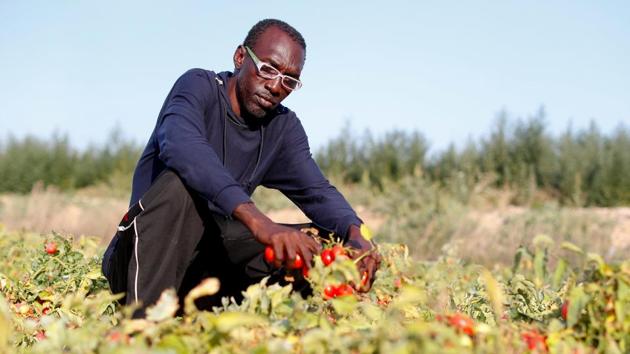
“I arrived in Italy on August 26, 2013. I haven’t created any problem, I don’t have a criminal record, I didn’t come here for fun. I just want to work,” said Sutay Darboe, 42, from Senegal. “Do Italians have any idea how we are treated? Do they even care?” he said, taking a precious day off work to travel around various hospital morgues looking for the body of a relative of his who died in the August 6 crash. (Alessandro Bianchi / REUTERS)
4/10
 View Photos in a new improved layout
Updated on Aug 17, 2018 12:45 PM
Migrant workers hold a banner in honour of Soumaila Sacko, a migrant agricultural worker from Mali who died on June 2, during in a march in Foggia. The other dead came from Nigeria, Mali, Guinea, Ghana and Morocco. There is no suspicion of foul play in the crash, but Vaccaro believes the men were victims of the so-called “caporalato” system which exploits farm workers across Italy. (Roberto D’Agostino / AFP)
5/10
 View Photos in a new improved layout
Updated on Aug 17, 2018 12:45 PM
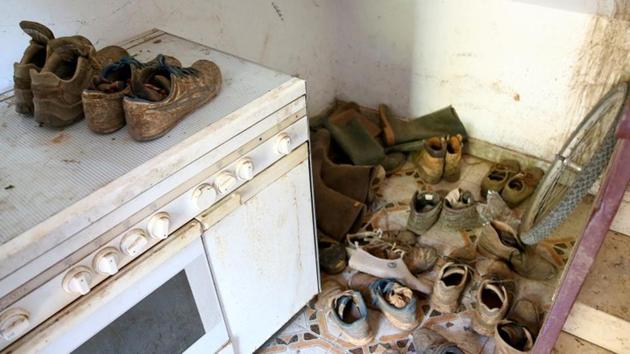
African migrant labourers’ shoes are seen in a shelter near Foggia. Ludovico Vaccaro, the magistrate investigating the August 6 deaths, says rampant exploitation of foreign labourers has gone largely unchecked for years. “They should rebel, but they are so poor they have to accept the unacceptable,” he told Reuters. (Alessandro Bianchi / REUTERS)
6/10
 View Photos in a new improved layout
Updated on Aug 17, 2018 12:45 PM
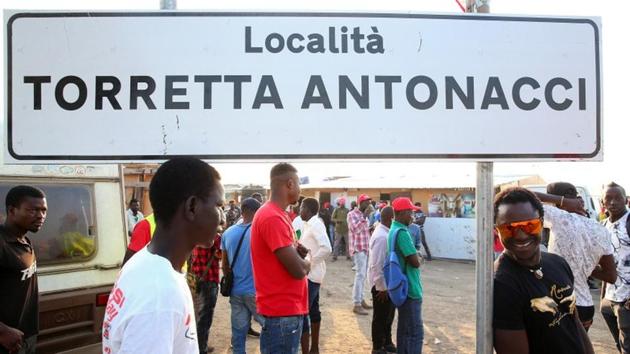
Labourers stand near a road sign reading “Torretta Antonacci place” outside the “Great Ghetto” near Foggia. Rather than employing pickers directly and putting them on regular contracts, farmers turn to caporali, or gangmasters, who gather labourers from various camps and ghettos and drive them to the fields in overcrowded vans. These middlemen hand out the wages, keep a handsome share for themselves, migrants say. (Alessandro Bianchi / REUTERS)
7/10
 View Photos in a new improved layout
Updated on Aug 17, 2018 12:45 PM
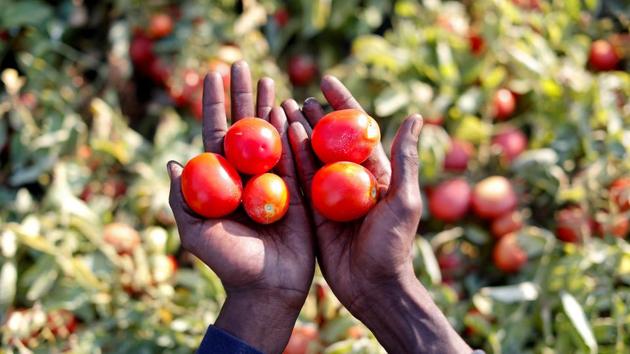
“Prices of (canned) tomatoes have remained virtually unchanged since 1985, while the cost of production has risen,” said Gianni Cantele, head of the farmers’ group Coldiretti in Puglia. The World Processing Tomato Council says Italy will overtake China this year to become the world’s second largest producer of processed tomatoes after the United States. The export of tomatoes generated 1.6 billion euros for Italy in 2017. (Alessandro Bianchi / REUTERS)
8/10
 View Photos in a new improved layout
Updated on Aug 17, 2018 12:45 PM
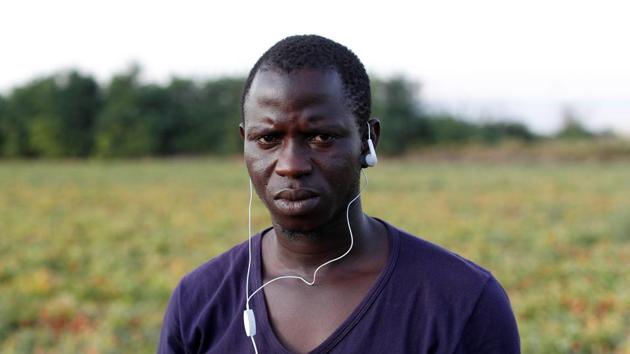
This business is built on the backs of men like Idrissa Diassy, a 24-year-old from Senegal who accuses the industry of taking advantage of migrants, many of whom can’t go back home because of war, political persecution or lack of any papers. “They treat us like slaves. We cannot go anywhere else. We aren’t allowed into other places in Europe. It is a trap.” (Alessandro Bianchi / REUTERS)
9/10
 View Photos in a new improved layout
Updated on Aug 17, 2018 12:45 PM
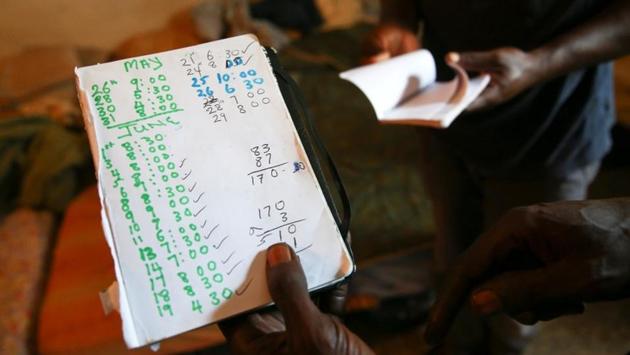
Sutay Darboe, a migrant labourer holds his notebook showing the dates and hours he has worked every day. Several workers said that although they had signed contracts that promised them more than 5 euros ($5.71) an hour, in the end they got between 3.0-3.5 euros. They also have to bring their own food and water and are allowed only brief breaks even as temperatures soar to 40C on the bleak Puglia plains. (Alessandro Bianchi / REUTERS)
10/10
 View Photos in a new improved layout
Updated on Aug 17, 2018 12:45 PM


