
 E-Paper



Photos: A funeral home copes with coronavirus in Spain
Jordi Fernández's 16-year-career as a mortician in Spain didn't prepare him for the hundreds of bodies that are streaming into the Barcelona funeral home where he works. Many are victims of COVID-19, and Fernandez cannot truly do his job. The traffic in and out is intense. White vans come in to drop off bodies picked up in hospitals, nursing homes and residences, while black hearses come in to pick up coffins and take them to their final destination, one by one. Fernández and his colleagues try to stay focused on their jobs, but the workload is taking its toll.
Updated on: Apr 18, 2020 12:19 PM IST


Share via


Copy link

1/9

 View Photos in a new improved layout
Updated on Apr 18, 2020 12:19 PM
Head mortician Jordi Fernandez walks out of an underground parking garage turned into a morgue for COVID-19 victims at the Collserola funeral home in Barcelona, Spain. It is currently housing the bodies of over 500 victims of the pandemic as public cemeteries and crematoria struggle to keep up with the increase in demand. "I had never imagined a situation like the one in which we are living," he told the AP. (Felipe Dana / AP)
2/9
 View Photos in a new improved layout
Updated on Apr 18, 2020 12:19 PM
Jordi Fernandez prepares a coffin before placing the body of a COVID-19 victim. Since a state of emergency was declared in the country, funeral homes must follow strict measures to avoid further contagion, stripping Fernandez of his normal duties and taking away the last chance families had of seeing their loved ones before laying them to rest. (Felipe Dana / AP)
3/9
 View Photos in a new improved layout
Updated on Apr 18, 2020 12:19 PM
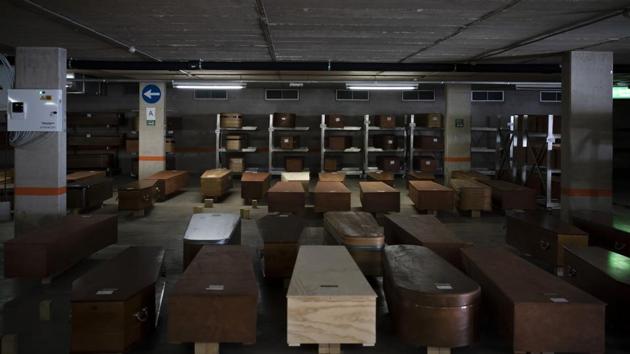
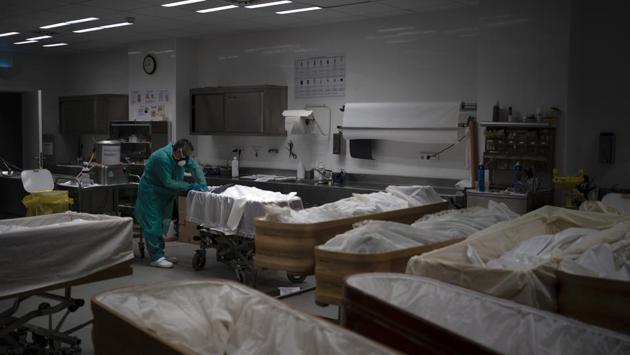
Coffins carrying the bodies of COVID-19 victims waiting to be buried or cremated are held at the Collserola funeral home. The space run by the Memora funeral home group has been equipped with air conditioning to preserve the dead as coffins in waiting pile up. (Felipe Dana / AP)
4/9
 View Photos in a new improved layout
Updated on Apr 18, 2020 12:19 PM
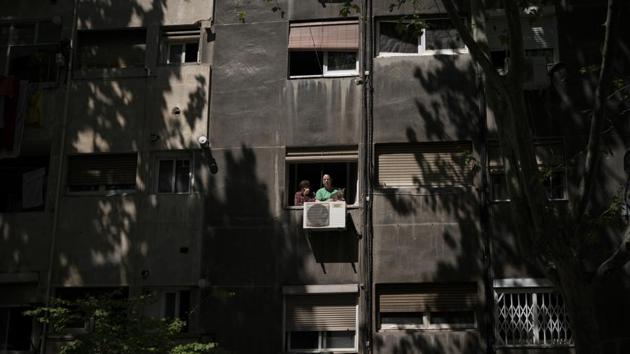
Residents watch from their window as funeral home workers pick up the body of a suspected COVID-19 victim from the nursing home across the street in Barcelona. The virus has killed over 20,000 people in Spain. But funeral homes feel the number is likely much higher. Fernandez says he’s seeing five times more bodies come in than normal. (Felipe Dana / AP)
5/9
 View Photos in a new improved layout
Updated on Apr 18, 2020 12:19 PM
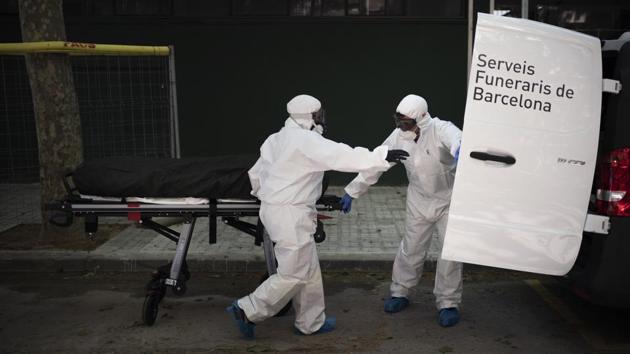
Funeral home workers pick up the body of a suspected COVID-19 victim from a nursing home in Barcelona, Spain. Now, infected corpses cannot be removed from their sealed body bags and are placed straight into coffins, something Fernandez and his team try to do with the utmost care. (Felipe Dana / AP)
6/9
 View Photos in a new improved layout
Updated on Apr 18, 2020 12:19 PM
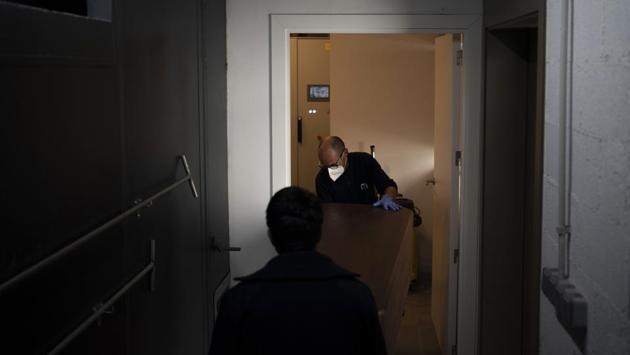
Workers carry a coffin ahead of cremation at the Memora Manresa funeral home in Manresa, Barcelona province. Although authorities in Spain believe they have passed the peak of the contagion curve and began relaxing lockdown measures this week, there are still more bodies coming into the Barcelona garage morgue than are leaving. (Felipe Dana / AP)
7/9
 View Photos in a new improved layout
Updated on Apr 18, 2020 12:19 PM
Head mortician Jordi Fernandez (C), closes the coffin of a COVID-19 victim as funeral home workers remove another body from a van. “What I like to do is place their head on the pillow because that’s going to be forever,” he said as he choked up in tears. “It is a way to show some respect and give some affection, too.” (Felipe Dana / AP)
8/9
 View Photos in a new improved layout
Updated on Apr 18, 2020 12:19 PM
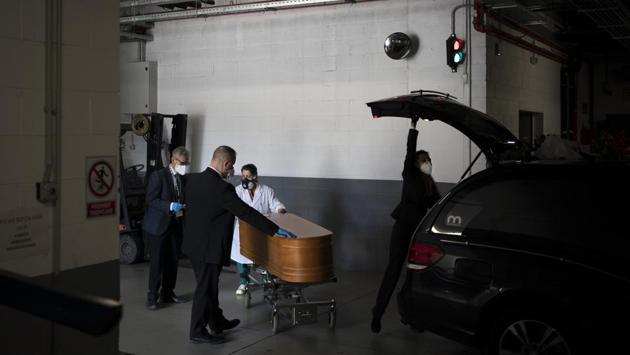
Workers prepare to transport a coffin at the Sancho de Avila funeral home in Barcelona. The demand for cremations is so great in Barcelona that even with all four of the city’s ovens operating 24/7, officials considered the option of placing the dead in temporary plots. Meanwhile, in cemeteries authorities have limited people attending funerals to three. (Felipe Dana / AP)
9/9
 View Photos in a new improved layout
Updated on Apr 18, 2020 12:19 PM


