
 E-Paper



Photos: After Kenya election re-do, boycotts and violence still concerns
With the counting almost done after Thursday's presidential re-run in Kenya, the results remain on hold as officials mull whether to declare victory for President Uhuru Kenyatta or reconsider polls in the 25 constituencies in four western counties where voting was blocked, sparking violence.
Updated on: Oct 30, 2017 1:26 PM IST

Share via


Copy link

1/9
 View Photos in a new improved layout
Updated on Oct 30, 2017 1:26 PM
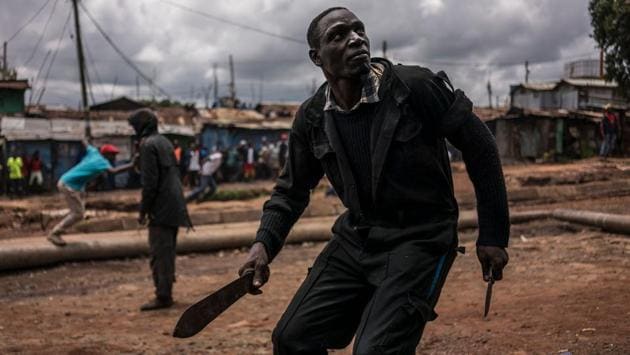
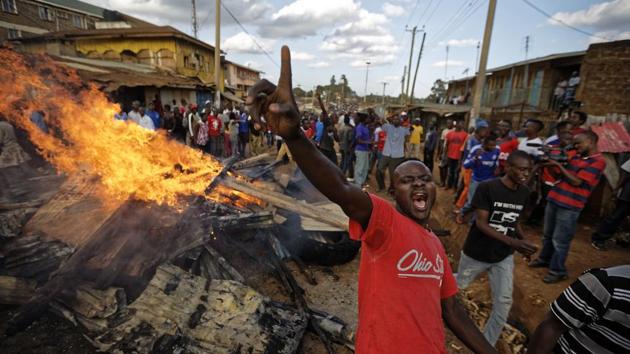
A protester brandishing a machete prepares to take cover during clashes with police forces in Kibera, Nairobi. Kenya’s election board is expected Monday to decide whether to reschedule a vote in flashpoint opposition areas, where a boycott sparked violent protests, or to push ahead with declaring victory for President Uhuru Kenyatta. (Marco Longari / AFP)
2/9
 View Photos in a new improved layout
Updated on Oct 30, 2017 1:26 PM
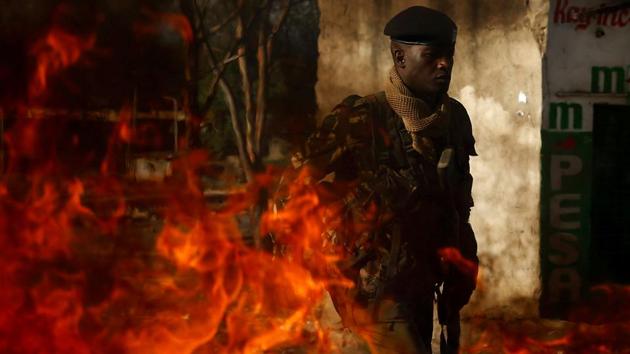
A police officer walks by a burning barricade during an opposition protest in the slum area of Mathare in Nairobi, Kenya, on October 26, 2017. Kenyans trickled into polling stations even as supporters of opposition leader Raila Odinga, who called for an election boycott, managed to prevent hundreds of polling stations from opening, prompting violent clashes with police which continued for several days, leaving nine dead and scores injured. (Siegfried Modola / REUTERS)
3/9
 View Photos in a new improved layout
Updated on Oct 30, 2017 1:26 PM
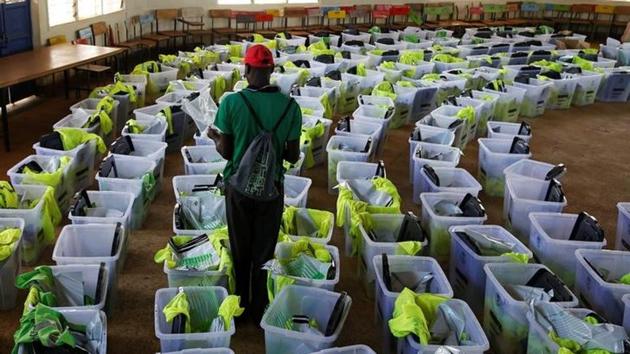
Ballot boxes and election materials are seen at a tallying centre in Kisumu, Kenya. Thursday’s presidential re-run was ordered by Kenya’s Supreme Court after it overturned Kenyatta’s August victory over ‘irregularities’ in the transmission of votes and claims that the results were electronically tampered. When the Independent Electoral and Boundaries Commission failed to provide the court with access to its computer servers, it ruled the results were fraudulent and ordered a rerun within 60 days. (Baz Ratner / REUTERS)
4/9
 View Photos in a new improved layout
Updated on Oct 30, 2017 1:26 PM
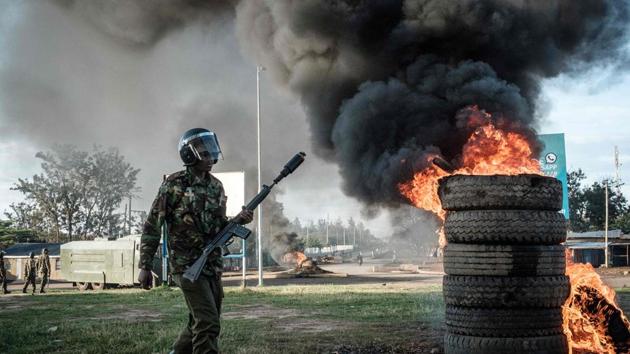
An anti-riot police officer walks by burning tires set alight by from supporters of Raila Odinga’s National Super Alliance (NASA) at Kondele where a polling station was supposed to be setup for the repeat presidential election on October 26, 2017. Kenyans voted in an election that has polarised the nation and sparked concern about the future of east Africa’s most stable democracy. Following Odinga’s boycott, Kenyatta is guaranteed a crushing win. (Yasuyoshi Chiba / AFP)
5/9
 View Photos in a new improved layout
Updated on Oct 30, 2017 1:26 PM
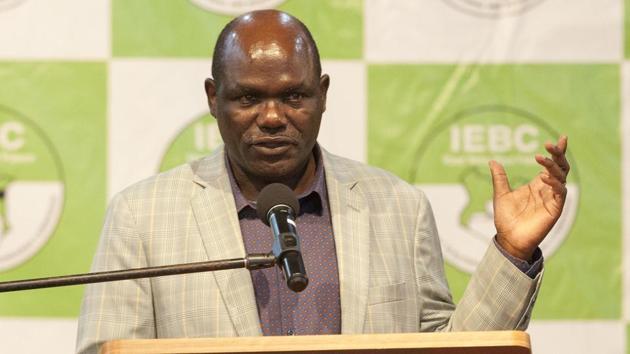
IEBC chief Wafula Chebukati, briefs media about the vote counting, in Nairobi on October 29, 2017. Chebukati had previously said he could not guarantee the credibility of the vote, but declared Sunday that the election was held with a turnout of 7.4 million people, equivalent to just 43% of voters in 251 of the 266 constituencies. He would soon announce a plan for four out of Kenya’s 47 counties where voting was postponed. (Sayyid Abdul Azim / AP)
6/9
 View Photos in a new improved layout
Updated on Oct 30, 2017 1:26 PM
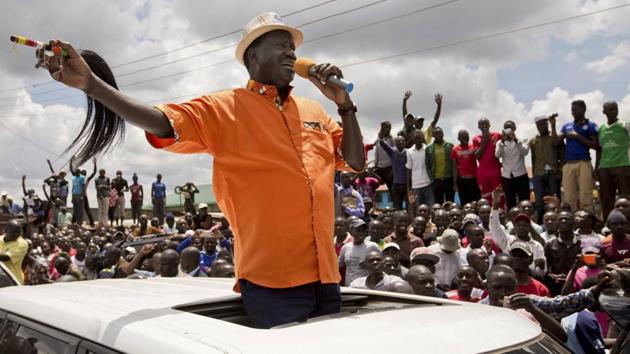
Opposition leader Raila Odinga greets supporters in the slum of Kawangware in Nairobi on October 29, 2017. Warning that Kenya is in ‘grave danger’, Odinga said in an interview with The Associated Press on Sunday that the country’s repeat presidential election was a sham and that a second re-vote should be held within 90 days. Countering IEBC claims, Odinga said only 3.5 million had cast ballots. (PTI / AP)
7/9
 View Photos in a new improved layout
Updated on Oct 30, 2017 1:26 PM
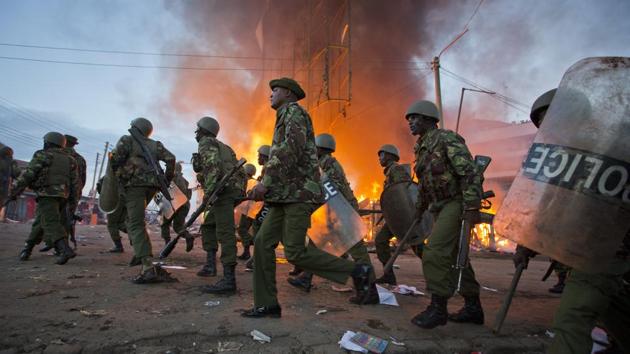
Police move past burning shops during clashes in Nairobi, Kenya on October 27, 2017. At least 49 people have died since the first presidential election of August 8, which was later overturned, prompting Kenya’s worst political crisis in a decade. The current flare is the worst since a 2007 vote sparked months of politically-driven ethnic violence that left 1,100 people dead. (Darko Bandic / AP)
8/9
 View Photos in a new improved layout
Updated on Oct 30, 2017 1:26 PM
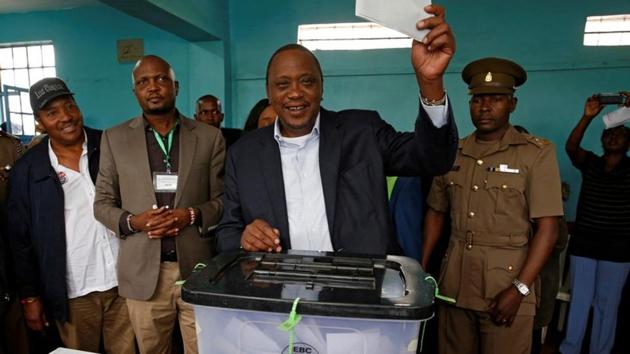
Kenya’s President Uhuru Kenyatta casts his vote during the presidential election re-run in Gatundu, Kenya on October 26, 2017. While the Supreme Court overturn in the earlier vote was hailed as a chance to deepen democracy, acrimonious bickering between Odinga and Kenyatta --whose fathers were rivals before them-- has sharply divided a country where politics is already run along tribal lines. (Siegfried Modola / REUTERS)
9/9
 View Photos in a new improved layout
Updated on Oct 30, 2017 1:26 PM


