
 E-Paper



Photos: Behind the scene at a Chinese Cantonese opera
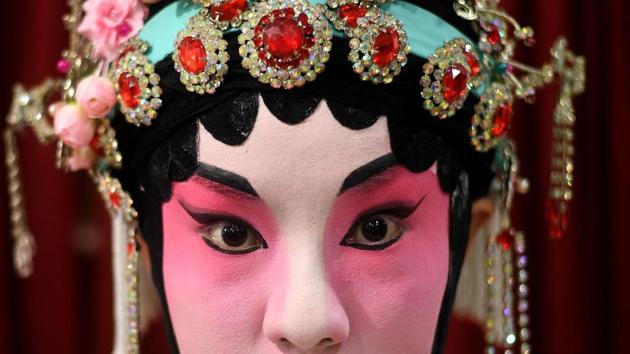
Chinese Cantonese opera actress Mia Zhao from Beijing poses backstage before an opera performance in Kuala Lumpur. Malaysia's National department for Culture and Arts is organising a Traditional Arts showcase in partnership with the Ministry of Tourism. Cantonese opera -- where actors wear elaborate costumes and make-up, and must be adept at elaborately choreographed martial arts as well as singing -- was recognised as 'intangible cultural heritage' by UN cultural agency UNESCO in 2009. (MANAN VATSYAYANA/ AFP)
Updated on: Jul 31, 2017 4:25 PM IST

Share via


Copy link

1/12
 View Photos in a new improved layout
Updated on Jul 31, 2017 4:25 PM
Chinese Cantonese opera actress Mia Zhao from Beijing poses backstage before an opera performance in Kuala Lumpur. Malaysia's National department for Culture and Arts is organising a Traditional Arts showcase in partnership with the Ministry of Tourism. Cantonese opera -- where actors wear elaborate costumes and make-up, and must be adept at elaborately choreographed martial arts as well as singing -- was recognised as 'intangible cultural heritage' by UN cultural agency UNESCO in 2009. (MANAN VATSYAYANA/ AFP)
2/12
 View Photos in a new improved layout
Updated on Jul 31, 2017 4:25 PM
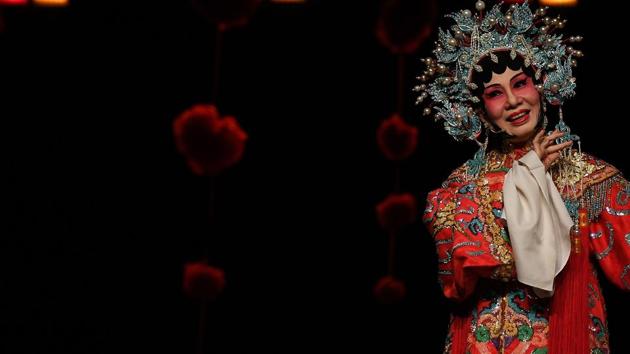
Cantonese opera, a traditional theatre, is a distinctive form of drama found in Hong Kong and China’s Guangdong region. Consisting of a blend of operatic traditions from various parts of China, it first arose in the Ming and Qing dynasties and experienced its commercial heyday in the early twentieth century. (MANAN VATSYAYANA / AFP)
3/12
 View Photos in a new improved layout
Updated on Jul 31, 2017 4:25 PM
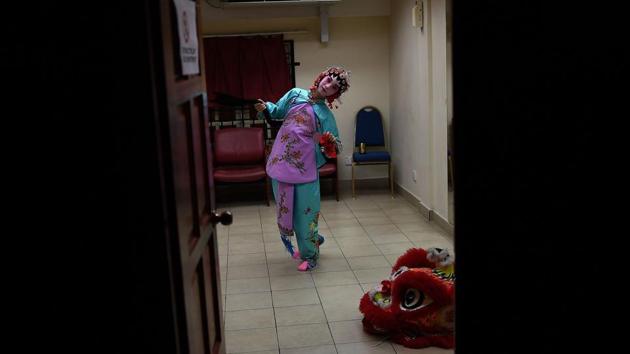
A ten-year old Chinese Cantonese opera actress Yujian Nuo from Beijing rehearses backstage. (MANAN VATSYAYANA / AFP)
4/12
 View Photos in a new improved layout
Updated on Jul 31, 2017 4:25 PM
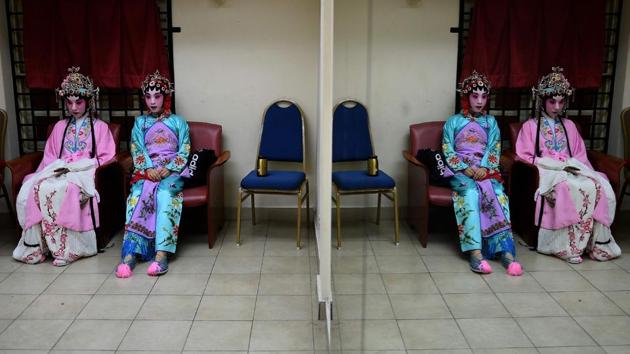
As early as the Ming dynasty, China’s Guangdong province had a local opera that blended existing theatrical styles, such as yiyang, bangzi, pihuang and kunqu, from other parts of China. (MANAN VATSYAYANA / AFP)
5/12
 View Photos in a new improved layout
Updated on Jul 31, 2017 4:25 PM
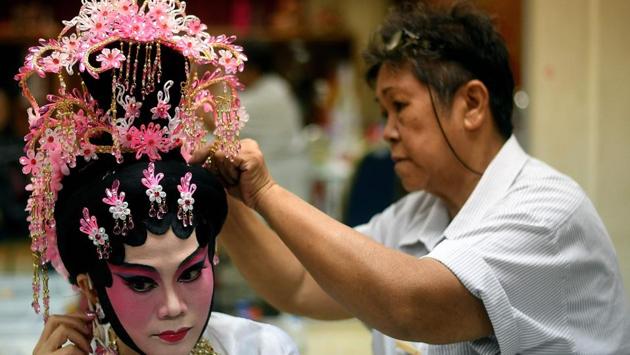
An ethnic Malaysian-Chinese Cantonese opera actress (L) from the Sound of Tai Hei group prepares backstage before an opera performance in Kuala Lumpur. (MANAN VATSYAYANA / AFP)
6/12
 View Photos in a new improved layout
Updated on Jul 31, 2017 4:25 PM
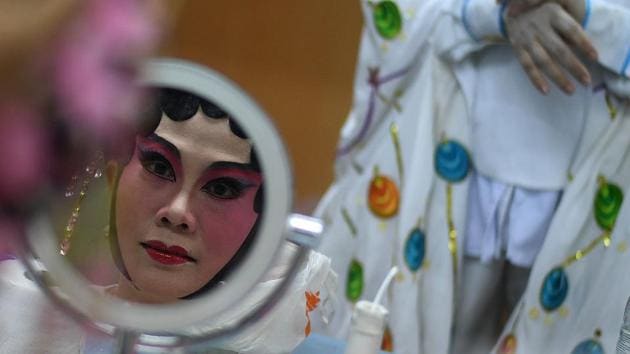
With the rise of the Qing in the 18th century, the city of Guangzhou welcomed an inundation of opera troupes from provinces to the north. These opera troupes were seen as more cultivated, and were patronized by an elite segment of Guangdong society. (MANAN VATSYAYANA / AFP)
7/12
 View Photos in a new improved layout
Updated on Jul 31, 2017 4:25 PM
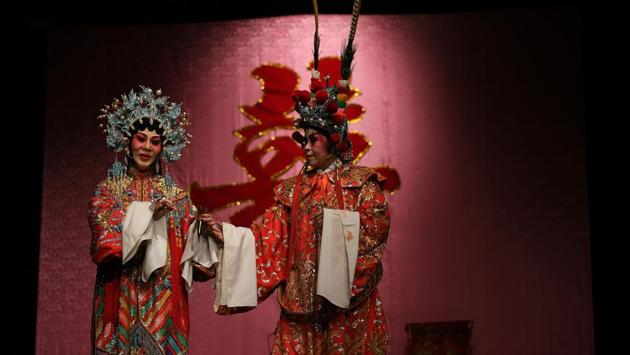
Actresses Veronica Davis (L) and Koh Lai Lin (R) from the Sound of Tai Hei group perform on stage . (MANAN VATSYAYANA / AFP)
8/12
 View Photos in a new improved layout
Updated on Jul 31, 2017 4:25 PM
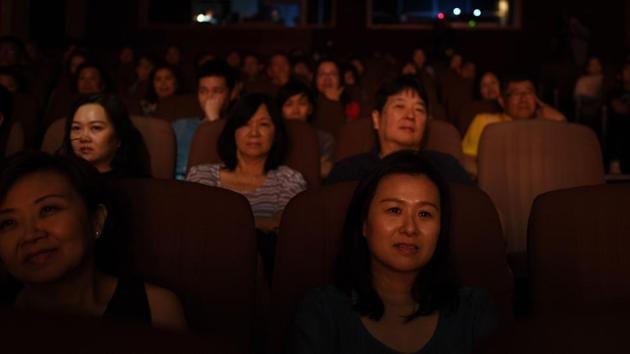
Malaysians watch a Malaysian-Chinese Cantonese opera performance in Kuala Lumpur. (MANAN VATSYAYANA / AFP)
9/12
 View Photos in a new improved layout
Updated on Jul 31, 2017 4:25 PM
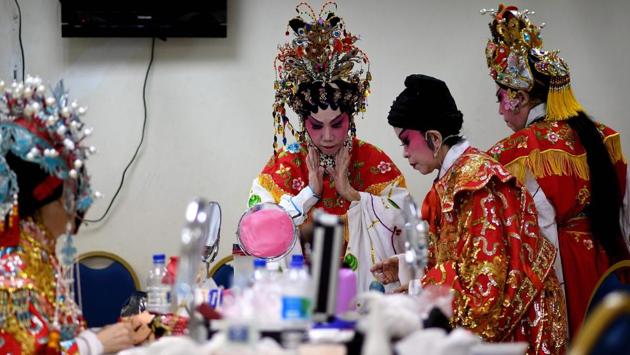
The turn of the century marked a significant shift for Cantonese opera, as the locus of activity moved from rural regions to the urban centres of Guangzhou and Hong Kong. The commercial support of city merchants allowed Cantonese opera to blossom on the urban stage. (MANAN VATSYAYANA / AFP)
10/12
 View Photos in a new improved layout
Updated on Jul 31, 2017 4:25 PM
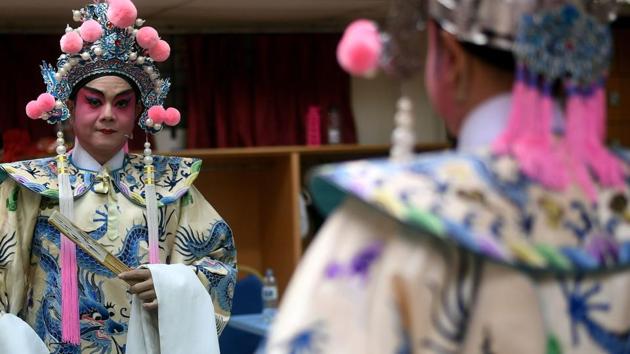
However, by the end of the 1930s, the turmoil caused by the Second Sino-Japanese War and the subsequent market collapse propelled the decline of Cantonese opera. (MANAN VATSYAYANA / AFP)
11/12
 View Photos in a new improved layout
Updated on Jul 31, 2017 4:25 PM
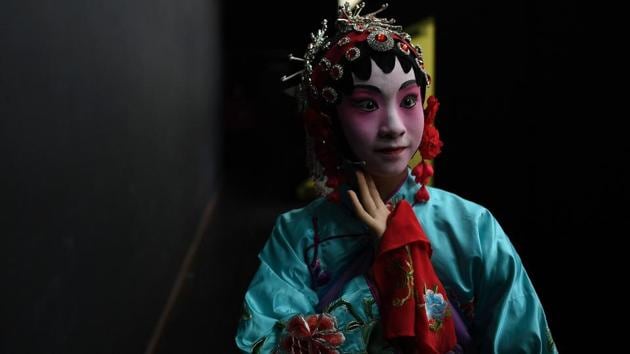
In the 1940s and 1950s, its popularity would briefly resurge in the form of Cantonese opera films. (MANAN VATSYAYANA / AFP)
12/12
 View Photos in a new improved layout
Updated on Jul 31, 2017 4:25 PM


