
 E-Paper



Photos: Women take to the streets as France grapples with domestic violence
France’s capital Paris witneseed tens of thousands of protesters marching through the city on Saturday to demand a national wake-up call and more government investment to prevent deadly domestic violence against women, a problem that President Emmanuel Macron calls “France’s shame.” More than 130 women have died from domestic violence this year alone in the country. Activists are now making slogans and pasting them on city walls to demand action towards this dire problem. The police force is being trained to deal with cases of domestic violence as well.
Updated on: Nov 25, 2019 6:22 PM IST


Share via


Copy link

1/10
 View Photos in a new improved layout
Updated on Nov 25, 2019 6:22 PM
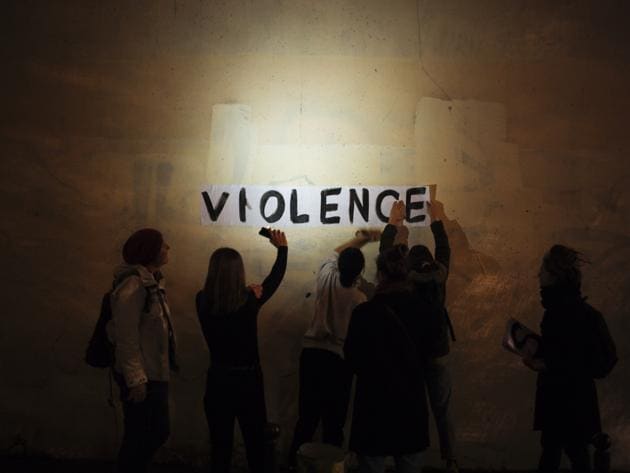
The word "violence" is pasted onto a wall by a group of women in a dark street in Paris. In Paris and cities across France, the signs are everywhere. "Complaints ignored, women killed" and "She leaves him, he kills her," they read in black block letters pasted over stately municipal buildings, drawing attention to the country’s high domestic violence rate. (Kamil Zihnioglu / AP)
2/10
 View Photos in a new improved layout
Updated on Nov 25, 2019 6:22 PM
A woman paints some signs before pasting them on buildings in the streets of Paris. More than 130 women have died from domestic violence this year alone in France, according to activists who track the deaths. European Union studies show France has a higher rate of domestic violence than most of its European peers. And frustrated activists have drawn national attention to a problem President Emmanuel Macron has called “France’s shame.” (Kamil Zihnioglu / AP)
3/10
 View Photos in a new improved layout
Updated on Nov 25, 2019 6:22 PM
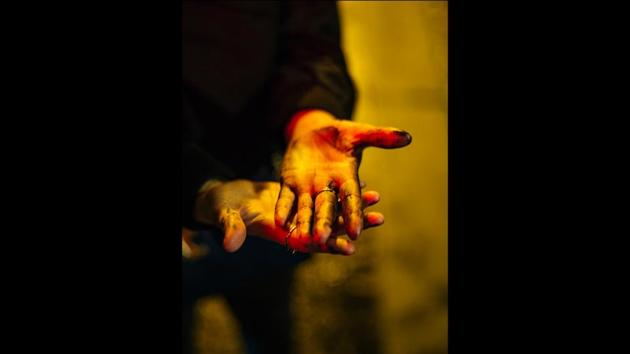
Lea, 22, a fashion student from Angouleme has her hands covered in paint after repairing a damaged slogan in Paris. France, a country that has prided itself on gender equality, is beginning to pay serious attention to its yet-intractable problem of domestic violence. Activists have pasted signs all over Paris to pressure authorities to do more to help victims, whom they say law enforcement too often fail to protect. (Kamil Zihnioglu / AP)
4/10
 View Photos in a new improved layout
Updated on Nov 25, 2019 6:22 PM
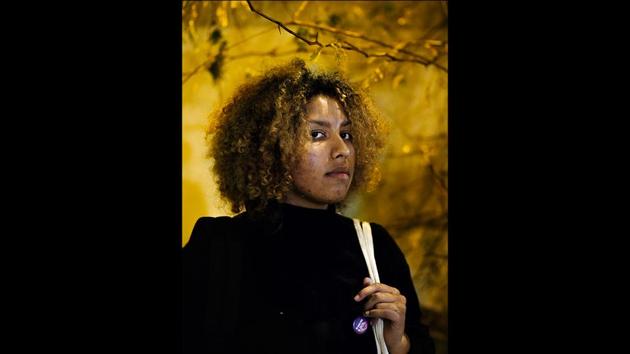
Maya, 19, a student in psychology from Versailles, poses for a portrait in Paris. After living with domestic violence with her past boyfriend, Maya needed to find a way to give a meaning to her life. By pasting some slogans in the street, she found the strength not to be afraid anymore. Two years after Macron made a campaign pledge to tackle the problem, the government has begun to act. (Kamil Zihnioglu / AP)
5/10
 View Photos in a new improved layout
Updated on Nov 25, 2019 6:22 PM
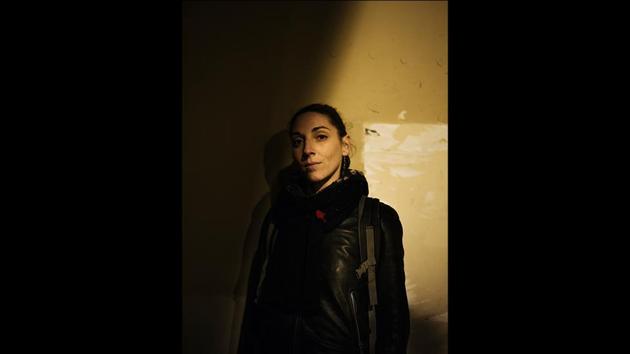
Cindy, 36, a head waitress from Paris poses for a portrait in Paris. Cindy witnessed domestic violence with her neighbors when she was a child. Today she’s a mother of a 13 year-old daughter and participating in sign-pasting is for her an easy way to be an activist. A Justice Ministry report released earlier this month acknowledged authorities’ systematic failure to intervene to prevent domestic violence murders. (Kamil Zihnioglu / AP)
6/10
 View Photos in a new improved layout
Updated on Nov 25, 2019 6:22 PM
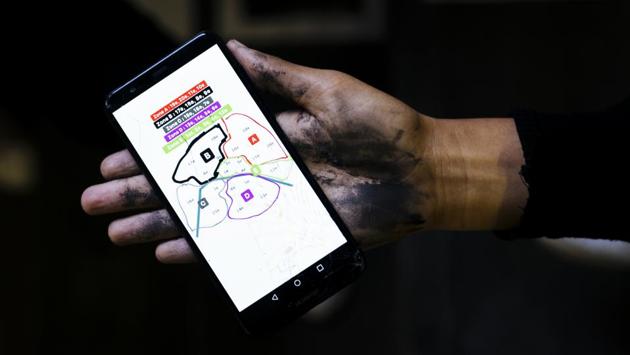
Maya holds her phone showing a map of Paris as she explains how the women of the movement divided Paris into five different pasting zones. On Monday, the government will announce measures that are expected to include seizing firearms from people suspected of domestic violence, prioritizing police training and formally recognizing “psychological violence” as a form of domestic violence. (Kamil Zihnioglu / AP)
7/10
 View Photos in a new improved layout
Updated on Nov 25, 2019 6:22 PM
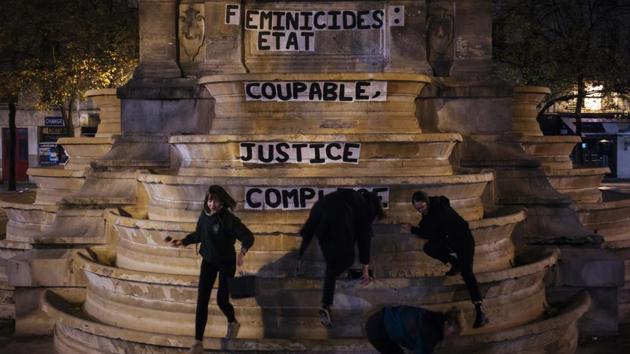
From left to right, Pauline, Clivia, France and Lea paste a slogan on a fountain reading “ Femicides: guilty state, accomplice justice” in Paris. Lawyers and victims’ advocates say women are too often disbelieved or turned away by law enforcement. But they’re encouraged by the new national conversation, which they say marks a departure from decades of denial. “In France, we always have the impression that we are perfect,” feminist activist Caroline de Haas said. (Kamil Zihnioglu / AP)
8/10
 View Photos in a new improved layout
Updated on Nov 25, 2019 6:22 PM
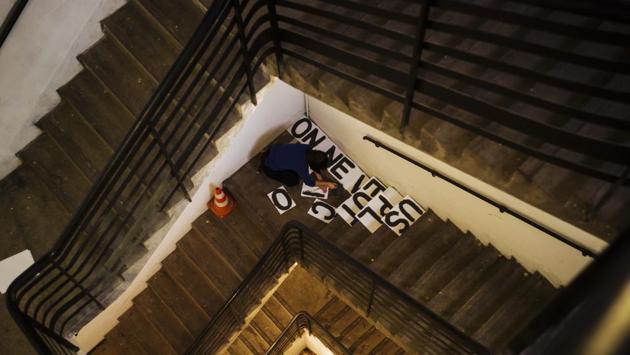
A woman paints some slogans against domestic violence in the stairwell of a building. A 2014 EU survey of 42,000 women across all 28 member states found that 26% of French women respondents said they been abused by a partner since age 15, either physically or sexually. That’s below the global average of 30%, according to UN Women. But it’s 4 percentage points above the EU average and the sixth highest among EU countries. (Kamil Zihnioglu / AP)
9/10
 View Photos in a new improved layout
Updated on Nov 25, 2019 6:22 PM
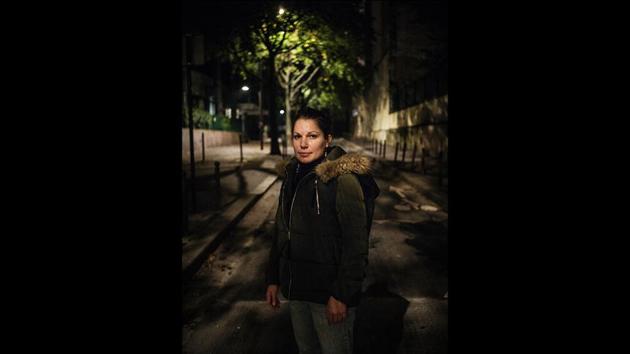
Mathilde, 31, a jewelry student from Marseille, poses for a portrait in Paris. Mathilde experienced domestic violence when she was 21. Ten years later, she finally took back control of her life. The Justice Ministry report this month found that 41% of “conjugal homicide” victims studied had previously reported incidents of domestic violence, and 80% of complaints sent to prosecutors went uninvestigated. (Kamil Zihnioglu / AP)
10/10
 View Photos in a new improved layout
Updated on Nov 25, 2019 6:22 PM


