
 E-Paper



Photos: Gaza farmers return to their lands along volatile Israeli border
About 600 Palestinian farmers who regained access to their fields along the border to cultivate crops under a project launched by the International Committee of the Red Cross. Under the ICRC project, launched in 2015, members of the Hamas-led Interior Ministry have cleared unexploded ordnance and other war material from 40 percent of the 2,500 acres (1,012 hectares) that make up the borderlands in that tract. Palestinians say the policy has deprived them of large areas of farmland, cut into livelihoods and reduced the space available to the densely populated strip’s two million residents.
Updated on: Feb 6, 2020 6:19 PM IST


Share via


Copy link

1/8
 View Photos in a new improved layout
Updated on Feb 6, 2020 6:19 PM
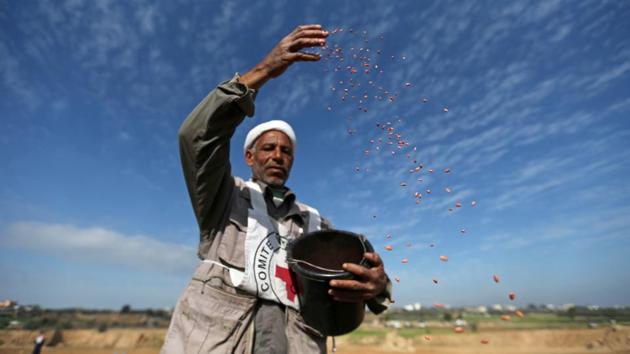
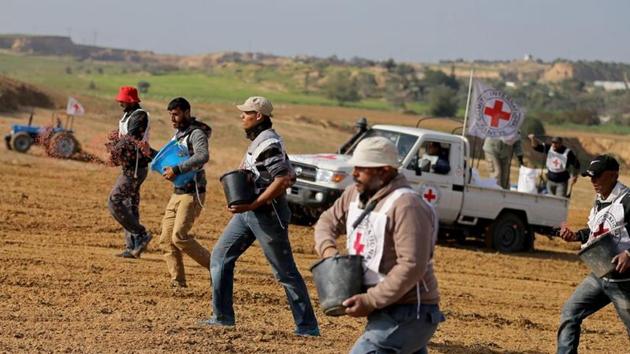
A Palestinian farmer, helped by the International Committee of the Red Cross (ICRC), throws wheat seeds as he plants a field near the Israel Gaza border in the central Gaza Strip. Returning to his fields for the first time in 14 years, farmer Naser Abu Isaeed surveyed the toll taken by conflict on formerly productive soil. “I saw an empty area full of holes and dry weeds,” said Abu Isaeed, who once grew fruit on the tracts along Gaza’s volatile border with Israel. (Ibraheem Abu Mustafa / REUTERS)
2/8
 View Photos in a new improved layout
Updated on Feb 6, 2020 6:19 PM
Farmers throw wheat seeds as they plant a field near the Israel Gaza border. He is one of about 600 Palestinian farmers who regained access to their fields along the border to cultivate crops under a project launched by the International Committee of the Red Cross. (Ibraheem Abu Mustafa / REUTERS)
3/8
 View Photos in a new improved layout
Updated on Feb 6, 2020 6:19 PM
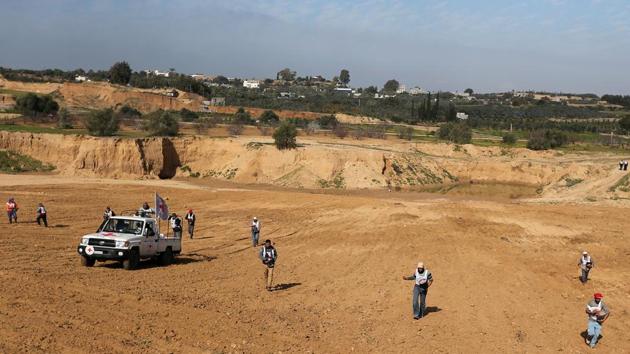
Citing security concerns, Israel has for years designated a 100 metre by 300 metre strip along its 40km-long fence at the frontier as off-limits to Palestinians in Gaza, an enclave ruled by the Hamas militant group. Palestinians say the policy has deprived them of large areas of farmland, cut into livelihoods and reduced the space available to the densely populated strip’s two million residents. (Ibraheem Abu Mustafa / REUTERS)
4/8
 View Photos in a new improved layout
Updated on Feb 6, 2020 6:19 PM
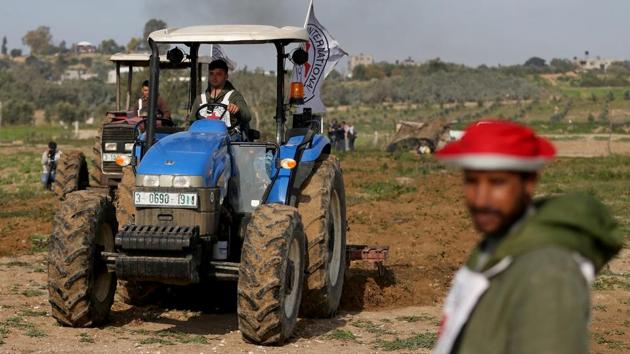
A Palestinian farmer uses a tractor to plow a field. Under the ICRC project, launched in 2015, members of the Hamas-led Interior Ministry have cleared unexploded ordnance and other war material from 40 percent of the 2,500 acres (1,012 hectares) that make up the borderlands in that tract. (Ibraheem Abu Mustafa / REUTERS)
5/8
 View Photos in a new improved layout
Updated on Feb 6, 2020 6:19 PM
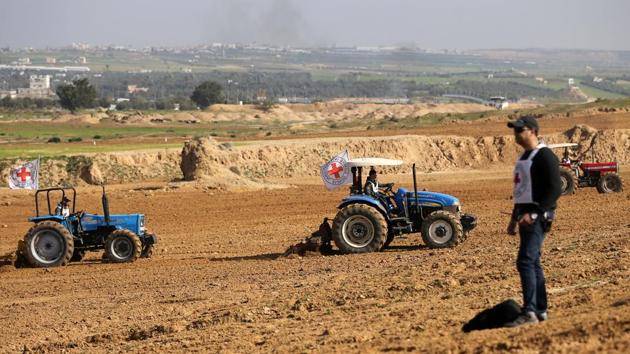
Abu Isaeed was one of 90 farmers whose lands were being rehabilitated by ICRC in the project’s third phase which began last August and will end with the harvest in May. In all, the ICRC said some 580 farmers have regained access to their land. (Ibraheem Abu Mustafa / REUTERS)
6/8
 View Photos in a new improved layout
Updated on Feb 6, 2020 6:19 PM
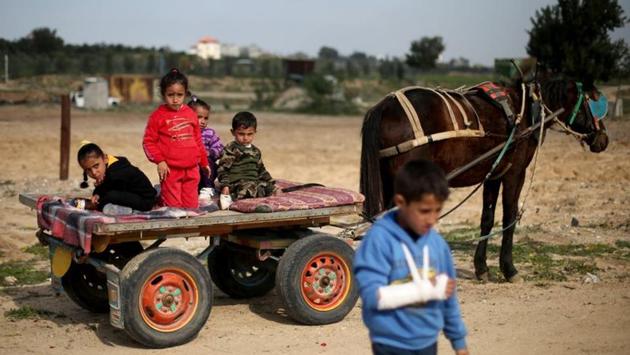
Palestinian children ride on a horse-drawn cart as farmers, plant a field. Fields were ploughed, fertilised and sown with wheat by ICRC-employed workers as part of the endeavour, organised in cooperation with Israeli authorities, Gaza’s Agriculture Ministry, local municipalities and farmers’ committees. (Ibraheem Abu Mustafa / REUTERS)
7/8
 View Photos in a new improved layout
Updated on Feb 6, 2020 6:19 PM
“We risk death every time we enter the land,” said Serhey Abu Mandeel, 71, noting its proximity to the border, which is closely monitored by the Israeli military. He and his family owned 12 acres planted with peas, soybeans, wheat and lentils. Like other Palestinian farmers, Abu Mandeel complained that herbicides sprayed by crop-dusters inside Israel were being carried by winds across the border into Gaza and harming fields there. (Ibraheem Abu Mustafa / REUTERS)
8/8
 View Photos in a new improved layout
Updated on Feb 6, 2020 6:19 PM


