
 E-Paper



Photos: Last residents of Tunisia’s centuries-old underground houses hold on
In Tunisia's Djebel Dahar, people have lived for centuries in underground houses escaping summer heat and winter winds. But in recent decades depopulation has left fewer people living in these troglodyte houses, mostly those attached to the homes and the land or with no way of moving.
Updated on: Feb 27, 2018 9:35 AM IST

Share via


Copy link

1/9
 View Photos in a new improved layout
Updated on Feb 27, 2018 9:35 AM
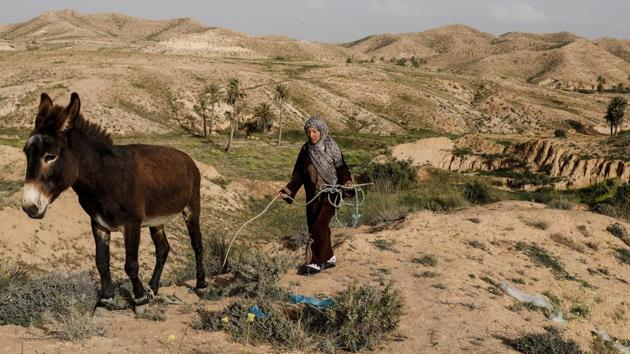
Mounjia, 43, leads a donkey towards her house in Matmata. In the arid valleys of Tunisia’s Djebel Dahar region, people have lived for centuries in underground houses whose earthen casing provides protection against searing summer heat and winter winds. But in recent decades, rural depopulation has meant fewer people living in these homes composed of rooms hewn into the walls of excavated circular courtyards. (Zohra Bensemra / REUTERS)
2/9
 View Photos in a new improved layout
Updated on Feb 27, 2018 9:35 AM
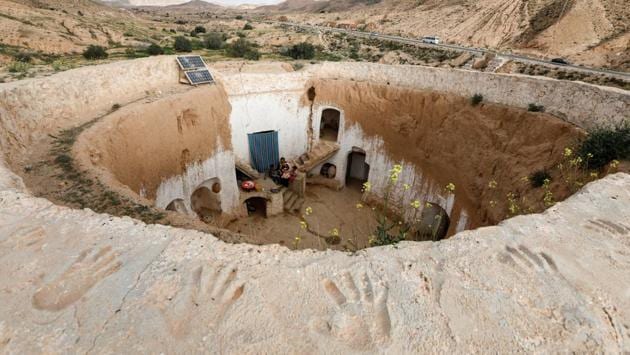
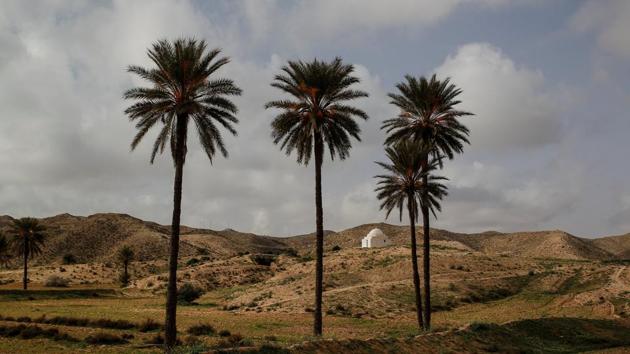
Saliha Mohamedi, 36, sits with her children at their house. These houses are concentrated around Matmata, in a cratered landscape dotted with palm trees and olive groves. Similar constructions are also found across the border in Libya, to the southwest. In other parts of Djebel Dahar, houses and storerooms were carved from rock and earth, but above ground. (Zohra Bensemra / REUTERS)
3/9
 View Photos in a new improved layout
Updated on Feb 27, 2018 9:35 AM
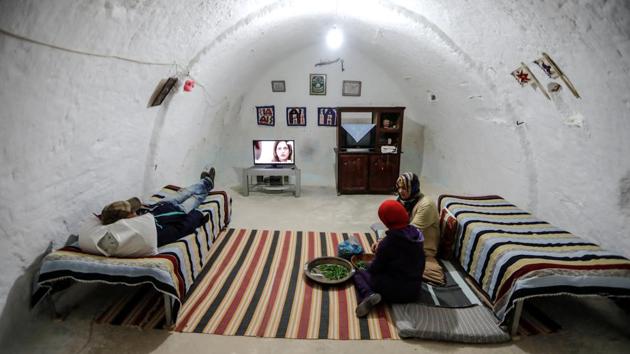
Samar, 18, and Latifa Ben Yahia, 38, (C) shell peas as their brother watches television at their five-room home in the village of Tijma. “My father died, my mother died, the girls got married and I was left alone. They all went to lead their own lives,” said Latifa. “If I leave then the house will be gone.” (Zohra Bensemra / REUTERS)
4/9
 View Photos in a new improved layout
Updated on Feb 27, 2018 9:35 AM
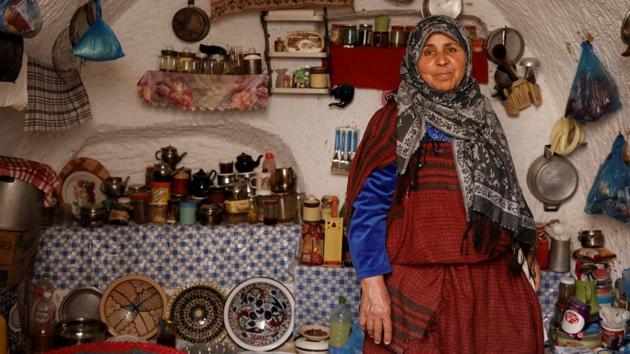
Mounjia, 60, poses for photograph in the kitchen of her house. “I don’t want to leave my troglodyte house for a modern one, we could buy everything but not peace of mind,” Mounjia said. Like her, the few remaining families say they are attached to their houses and the land or see no way of moving. (Zohra Bensemra / REUTERS)
5/9
 View Photos in a new improved layout
Updated on Feb 27, 2018 9:35 AM
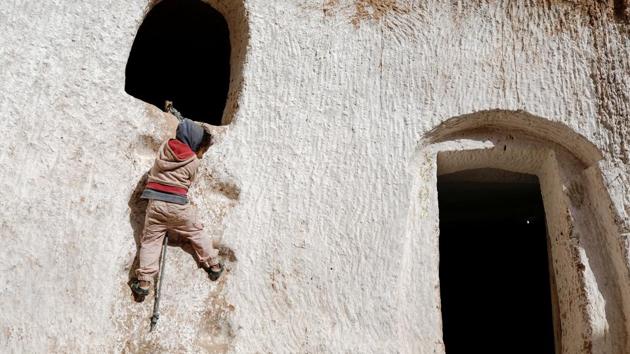
Ahlem, four, climbs up a wall to reach her rabbit’s hideaway at her house. Many families left these houses when new towns and villages were built in the 1960s and 1970s as part of a modernisation drive by President Habib Bourguiba. Locals suspect Bourguiba wanted to dilute Berber communities as he strove to integrate them into the Arab nation after independence from France. (Zohra Bensemra / REUTERS)
6/9
 View Photos in a new improved layout
Updated on Feb 27, 2018 9:35 AM
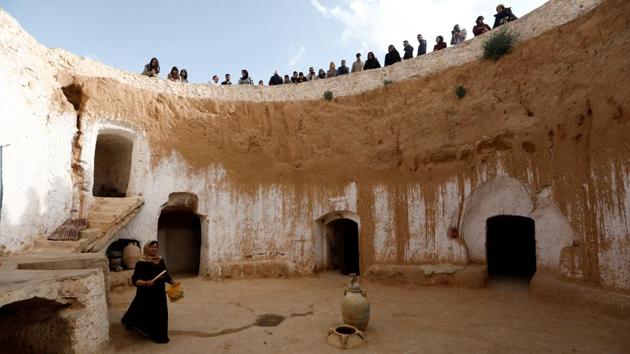
Tunisian tourists watch as Saliha Mohamedi walks around her house. “I don’t want to leave my house, it would be as if I was throwing my life and my traditions away,” she said. Residents live largely off olive farming and tourism. Matmata became a popular destination after a troglodyte home converted into a hotel was used as a Star Wars set in the 1970s. (Zohra Bensemra / REUTERS)
7/9
 View Photos in a new improved layout
Updated on Feb 27, 2018 9:35 AM
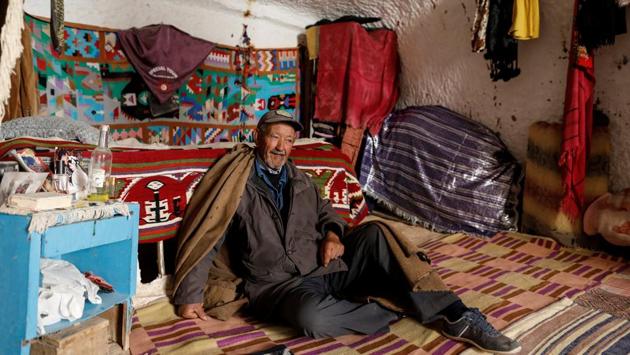
“Our home was open for tourists to visit, but now with the lack of tourists we don't earn anything. I don't want to leave my house, it's where I grew up,” Tayeb, 76, said. Tourism across Tunisia is still recovering from a sharp decline after the country’s 2011 Arab Spring uprising and major attacks targeting tourists in Tunis and Sousse in 2015. (Zohra Bensemra / REUTERS)
8/9
 View Photos in a new improved layout
Updated on Feb 27, 2018 9:35 AM
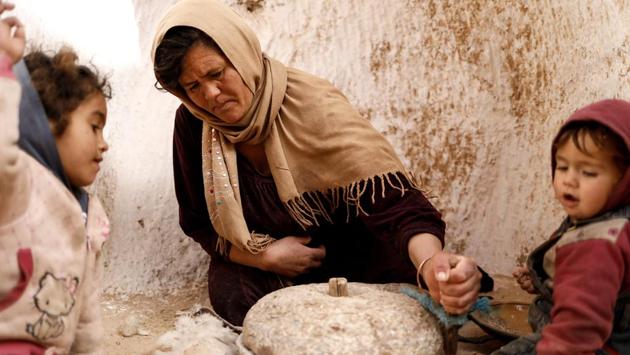
Saliha Mohamedi grinds wheat at her house where she lives with her husband and four children and lets tourists visit in return for tips. “Before the revolution there was tourism. Since then there’s not been much, just some Tunisians who come on days off or holidays,” she said. (Zohra Bensemra / REUTERS)
9/9
 View Photos in a new improved layout
Updated on Feb 27, 2018 9:35 AM


