
 E-Paper



Photos: Mothers skip meals to save their children as hunger gnaws at Yemen
Ravaged by a war between Yemen's Shiite Houthi rebels who hold the country's north, and the Saudi-led coalition, armed and backed by the United States, more than 2.9 million living in the country are severely malnourished. Between the air strikes and coalitions, Yemen’s mothers are fighting a war of their own as they starve themselves to so that their children can eat. But even as this selfless fight for survival racks up casualties, aid agencies warn that Yemen could soon start to see widespread death from its famine.
Updated on: May 07, 2018 12:54 PM IST

Share via


Copy link

1/11
 View Photos in a new improved layout
Updated on May 07, 2018 12:54 PM
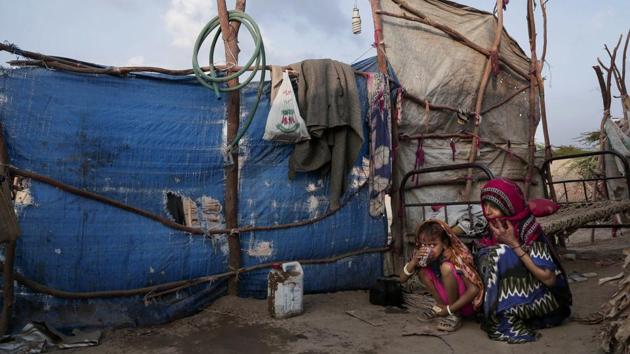
Awsaf, a 5-year-old Yemeni girl sits, next to her mother near her hut, drinking tea which on many days is the only food the family manages. Save the Children estimates that 50,000 children may have died in 2017 of extreme hunger or disease in Yemen. Deprived of food, the only defense against their hunger are mothers who skip meals and sleep to escape the gnawing in their stomachs at bay. (Nariman El-Mofty / AP)
2/11
 View Photos in a new improved layout
Updated on May 07, 2018 12:54 PM
Umm Mizrah, a 25-year-old Yemeni mother has her collarbones and emaciated ribs documented at Al-Sadaqa Hospital in Aden. Nearly into the second trimester of pregnancy, Mizrah weighs 38 kilograms and is severely undernourished, starving herself to feed her youngest son. Around 2.9 million women and children are acutely malnourished and another 400,000 children are fighting for their lives. (Nariman El-Mofty / AP)
3/11
 View Photos in a new improved layout
Updated on May 07, 2018 12:54 PM
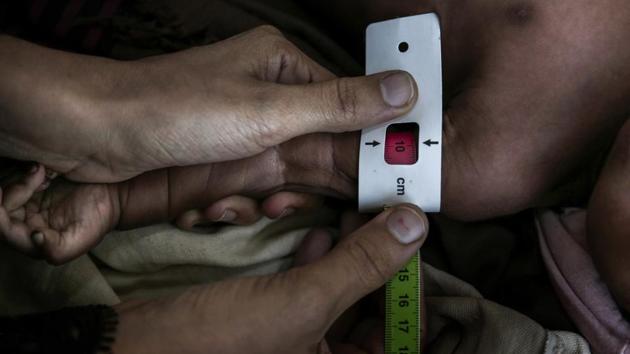
Staff carry out a malnourishment test at a hospital in Mocha. The hospital has seen 600 malnutrition cases over the past 10 months and has been short on supplies lacking even pain relievers for headaches. Prolonged malnutrition causes the body to lose its stock of carbohydrates, fats, and proteins. The brain struggles to find energy, the heart shrinks, and the skin cracks, prone to infections. (Nariman El-Mofty / AP)
4/11
 View Photos in a new improved layout
Updated on May 07, 2018 12:54 PM
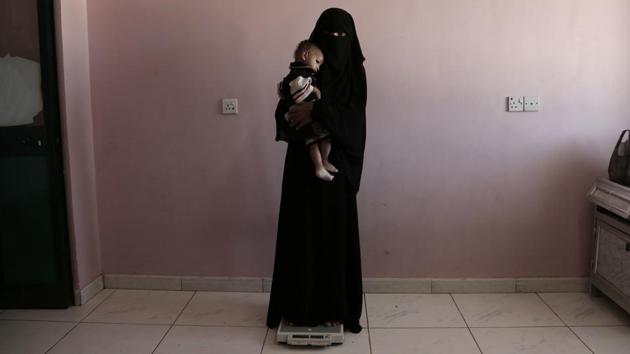
When the doctor told Mizrah that her malnutrition could be fatal, she trembled. Cigarette burns mark her baby’s belly. Desperate, the father had turned to a Yemeni folk cure called “maysam,” — using burns to expel evil spirits. “I don’t know what is right… He was playful and doing fine then he started to get sick and stopped breastfeeding and playing,” Mizrah said. (Nariman El-Mofty / AP)
5/11
 View Photos in a new improved layout
Updated on May 07, 2018 12:54 PM
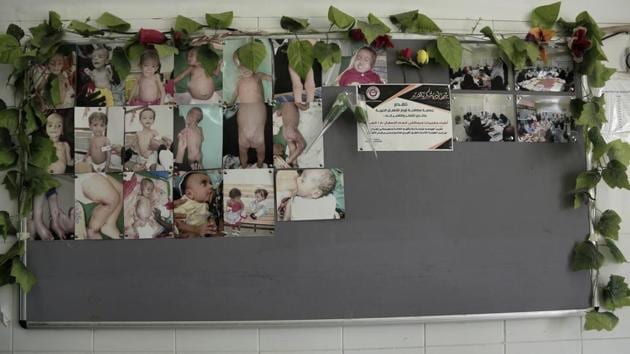
Photographs of severely malnourished infants are seen on a wall at the Aden Hospital. Coalition warplanes have blasted hospitals, schools, farms, factories, bridges and roads. Even before the war, the Arab world’s poorest nation struggled to feed itself. It is a country of deserts and mountains where only 2 to 4% of the land is cultivated and therefore almost all food and supplies must be imported. (Nariman El-Mofty / AP)
6/11
 View Photos in a new improved layout
Updated on May 07, 2018 12:54 PM
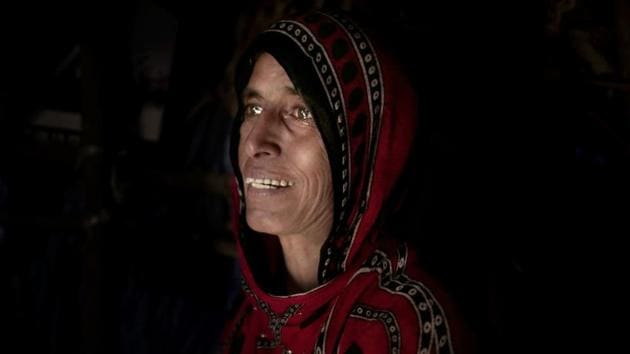
Hagar Yahia, a mother of eight, cries in her hut in Abyan. Displaced from their home and scrounging for work, she and her husband can barely afford to buy enough food for their family. “I go hungry for my children. I prefer that I don’t eat so they can,” she said. Nearly a third of Yemen’s population — 8.4 million of its 29 million people — rely completely on food aid or else they would starve. (Nariman El-Mofty / AP)
7/11
 View Photos in a new improved layout
Updated on May 07, 2018 12:54 PM
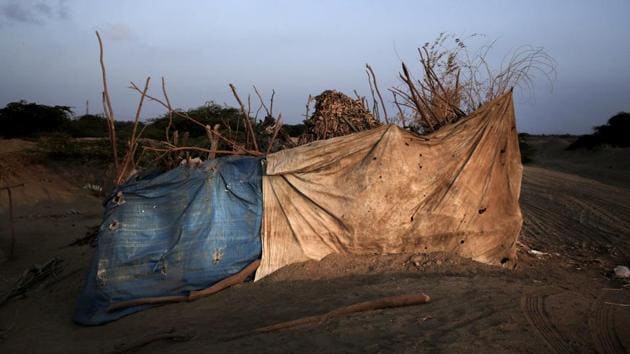
A hut made of tree limbs and rags tha Hagar Yahia and her family call home. Her family is among 18,000 people who escaped war zones further west and streamed into Abyan province. It isn’t just those driven from their homes who suffer. Isolated in a mountain valley, the 450 residents of the village of Qibli have been waiting for aid since 2016, according to a relief volunteer. (Nariman El-Mofty / AP)
8/11
 View Photos in a new improved layout
Updated on May 07, 2018 12:54 PM
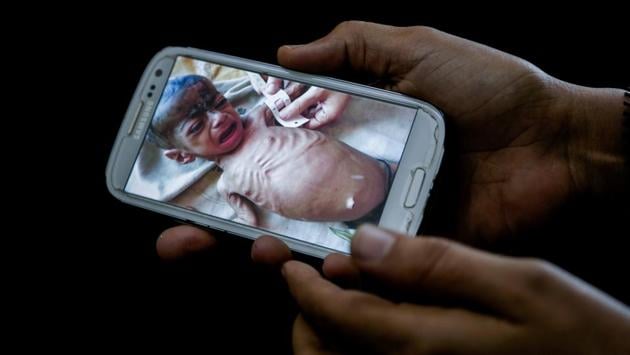
A doctor shows a photo of Fadl, an 8-month-old boy, taken in his last days before he starved to death. Fadl’s mother gave birth to him under a tree as she fled fighting, and ever since she struggled to get him enough food. When asked about her diet, Fadl’s mother replied, “Bor,” the local Arabic word for flour. (Nariman El-Mofty / AP)
9/11
 View Photos in a new improved layout
Updated on May 07, 2018 12:54 PM
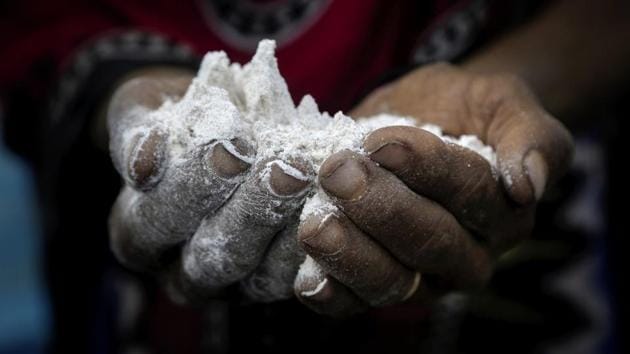
Hagar Yahia, a Yemeni woman, shows the amount of flour she uses to make a loaf of bread. “Unfortunately, now Yemen is considered to be the world’s largest humanitarian emergency,” said Stephen Anderson, the Yemen director of the World Food Program. Some 18 million people do not know where their next meal is coming from. (Nariman El-Mofty / AP)
10/11
 View Photos in a new improved layout
Updated on May 07, 2018 12:54 PM
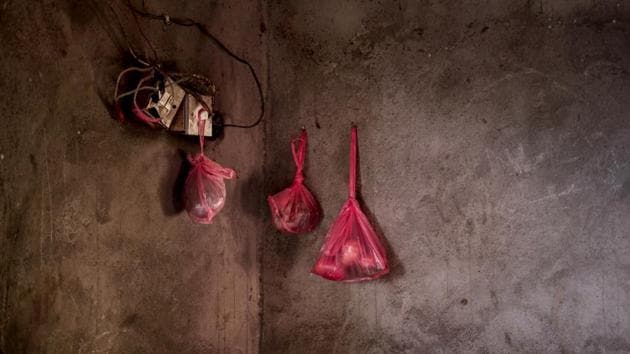
Food hangs in sacks on the wall at the home of a displaced family, in Lahj, southern Yemen. In many places there is food in the markets, but people simply can’t afford it. Salaries are going unpaid, work is harder to find and the currency has collapsed in value. Any money earned is spent in searching for food. In Qibli, the nearest market is 13 km away, which means paying high gas prices. (Nariman El-Mofty / AP)
11/11
 View Photos in a new improved layout
Updated on May 07, 2018 12:54 PM


