
 E-Paper



Photos: North Korea vows faster nuclear push after ‘evil’ UN sanctions
The United Nations' latest round of sanctions limiting textile exports, oil imports and foreign remittances to North Korea has prompted the DPRK to declare an acceleration in its nuclear program against international measures its foreign ministry described as 'evil and heinous'.
Updated on: Sep 13, 2017 12:05 PM IST

Share via


Copy link

1/10
 View Photos in a new improved layout
Updated on Sep 13, 2017 12:05 PM
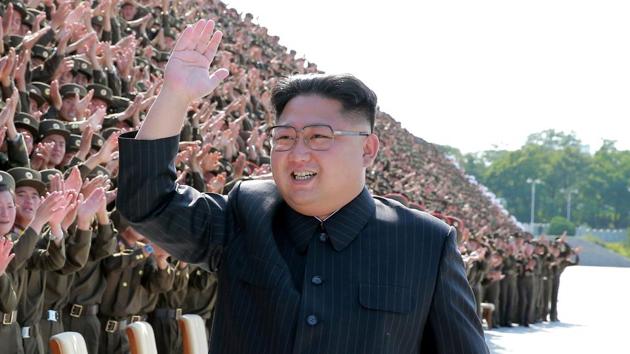
North Korea retaliated with a vow to accelerate its weapons programme in response to the ‘evil’ sanctions imposed by the UN Security Council on Monday, after the North’s supposed hydrogen bomb test. ‘The adoption of another illegal and evil ‘resolution on sanctions’ piloted by the US served as an occasion for the DPRK to verify that the road it chose to go down was absolutely right,’ the North’s foreign ministry said in a statement published by the official KCNA news agency. (KCNA / REUTERS)
2/10
 View Photos in a new improved layout
Updated on Sep 13, 2017 12:05 PM
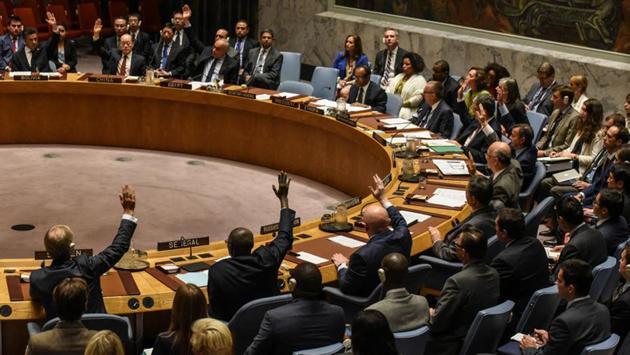
Ambassadors to the UN voted during a UN Security Council meeting with North Korea’s recent missile tests as agenda in New York City, on September 11, 2017. The US-drafted resolution was passed unanimously, just one month after the Security Council decided to ban exports of coal, lead and seafood in response to Pyongyang’s launch of an intercontinental ballistic missile (ICBM) that appeared to bring much of the US mainland into range. (Stephanie Keith / REUTERS)
3/10
 View Photos in a new improved layout
Updated on Sep 13, 2017 12:05 PM
A North Korean woman works at the Kim Jong Suk Pyongyang textile factory, the country’s largest, in Pyongyang. The US and allies argue that tougher sanctions will pile pressure on the regime to negotiate an end to its weapons programme with experts sceptical over any curb in Pyongyang’s nuclear drive. The fresh sanctions include a ban on all of the North’s textile exports and restrict incoming oil shipments with a 30% decrease to punish Pyongyang for its latest nuclear test. (Wong Maye-E / AP)
4/10
 View Photos in a new improved layout
Updated on Sep 13, 2017 12:05 PM
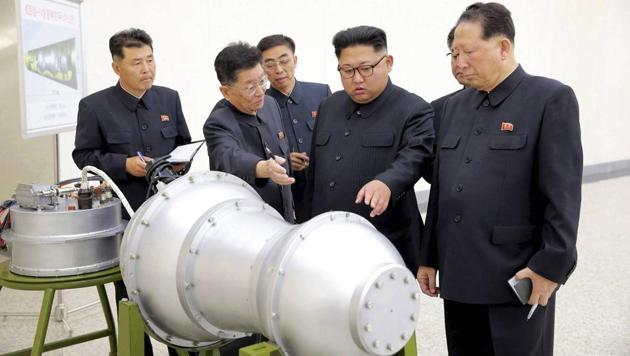
An undated file photo distributed on Sept. 3, 2017, by the North Korean government, shows leader Kim Jong Un (2nd R), at an undisclosed location in North Korea. The ministry lambasted the latest resolution, calling it a ‘heinous provocation aimed at depriving the DPRK of its legitimate right for self-defence and completely suffocating its state and people through full-scale economic blockade’. (AP)
5/10
 View Photos in a new improved layout
Updated on Sep 13, 2017 12:05 PM
In a photo taken on September 6, 2017, Korean People's Army (KPA) soldiers cheer during a mass celebration in Pyongyang for scientists involved in carrying out North Korea's largest nuclear blast to date. Last month’s ICBM launch was followed by a nuclear test on September 3, its largest to date, which Pyongyang said was a hydrogen bomb small enough to fit onto a missile. (Kim Won-Jin / AFP)
6/10
 View Photos in a new improved layout
Updated on Sep 13, 2017 12:05 PM
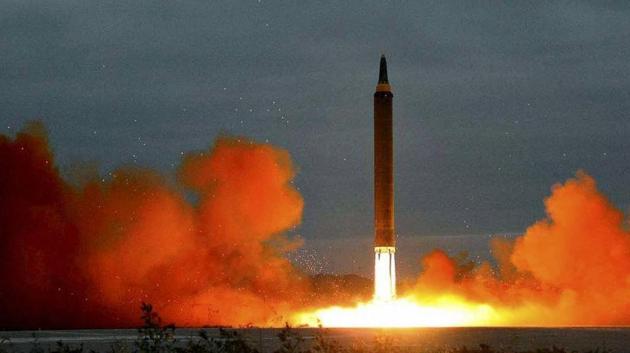
This August 29, 2017 photo distributed by the North Korean government shows what was said to be the test launch of a Hwasong-12 intermediate range missile in Pyongyang, North Korea. North Korean leader Kim Jong Un called for more ballistic missile tests targeting the Pacific Ocean, a day after his nation for the first time flew a ballistic missile designed to carry a nuclear payload over Japan. (AP)
7/10
 View Photos in a new improved layout
Updated on Sep 13, 2017 12:05 PM
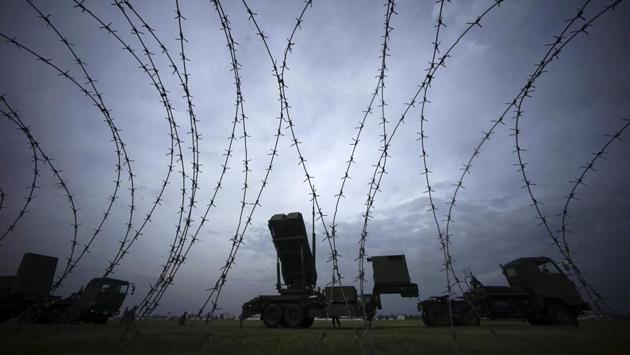
Japanese Air Self-Defense Force display surface-to-air interceptors at the US Yokota Air Base in Fussa, on August 29, 2017. The exercise took place the same day North Korea fired a missile over Japan which flew over the island of Hokkaido, landing in the sea after a flight of nearly 2735kms. TV programs in Japan were halted with rare warning screens announcing the missile with several bullet trains temporarily halted by the third North Korean projectile to fly over the country since 1998. (Eugene Hoshiko / AP)
8/10
 View Photos in a new improved layout
Updated on Sep 13, 2017 12:05 PM
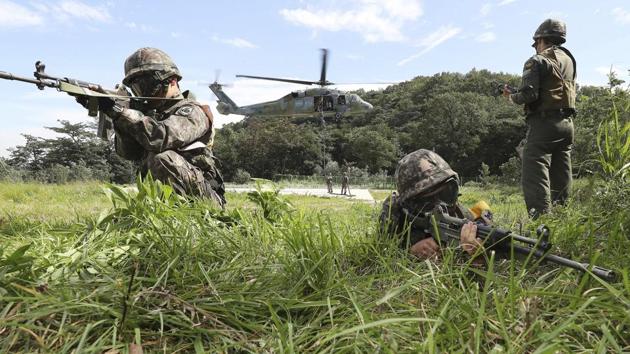
The South Korean defence minister, Song Young-moo, told lawmakers in Seoul a day after the North’s hydrogen bomb test that a Special Forces brigade, described as a ‘decapitation unit’ would be established by the end of the year. ‘The best deterrence we can have, next to having our own nukes, is to make Kim Jong-Un fear for his life,’ said Shin Won-sik, a three-star general who was the South Korean military’s top operational strategist before he retired in 2015. (Hong Gi-won / Yonhap via AP)
9/10
 View Photos in a new improved layout
Updated on Sep 13, 2017 12:05 PM
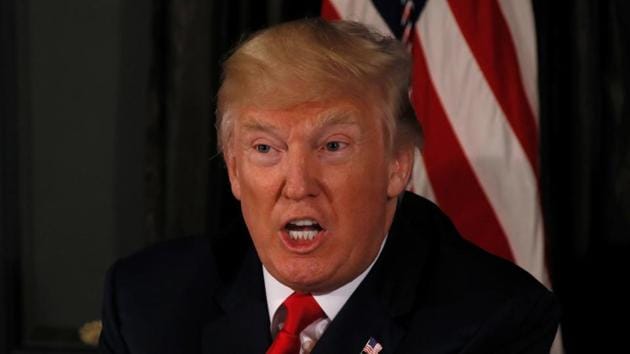
The North Jorean regime’s claims over its capabilities and intentions to launch attack US targets brought an impromptu response from US President Donald Trump warning that North Korea ‘had best not make any more threats to the United States’ or ‘they will be met with fire and fury like the world has never seen.’ Washington’s alarm over Kim Jong-Un’s pursuit of nuclear capability intensified after the North conducted two ICBM tests in July 2017. (Jonathan Ernst / REUTERS)
10/10
 View Photos in a new improved layout
Updated on Sep 13, 2017 12:05 PM


