
 E-Paper



Photos: On the road with France’s front-line coronavirus responders
The first to knock on the doors of people calling for help, and who may have the coronavirus infection or whose confirmed case has taken a downturn-- volunteers of France’s Civil Protection service, all trained, equip themselves for the crisis unfolding in their country with protective gowns, head gear, masks and gloves when they head out on a mission in downsized teams of two or three to minimize potential infection, not knowing what they will encounter when the door opens.
Updated on: Apr 1, 2020 3:12 PM IST


Share via


Copy link

1/9
 View Photos in a new improved layout
Updated on Apr 1, 2020 3:12 PM
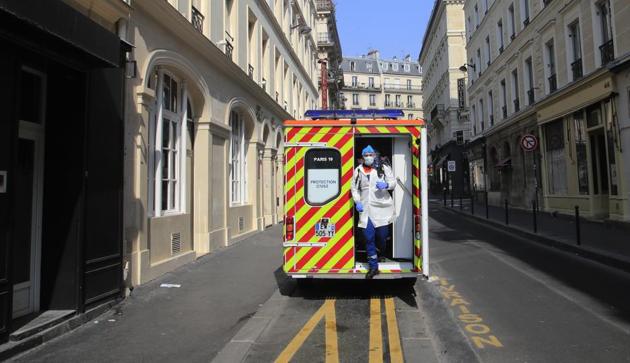
Cyril Lamriben, a member of the Civil Protection service, steps out of an ambulance on his way to check a woman possibly infected with the Covid-19 virus in Paris. They don't have to put themselves in harm's way, but the volunteers of France's well-known Civil Protection service choose the front line in the fight against the coronavirus. (Michel Euler / AP)
2/9
 View Photos in a new improved layout
Updated on Apr 1, 2020 3:12 PM
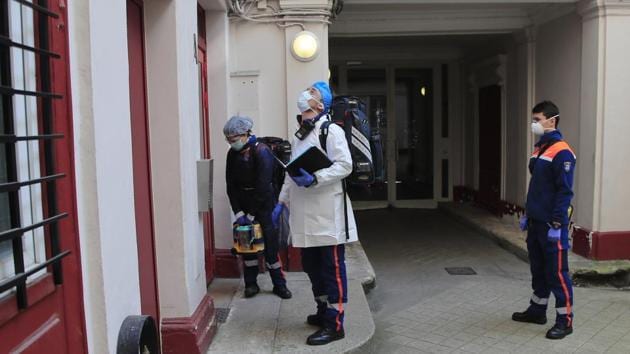
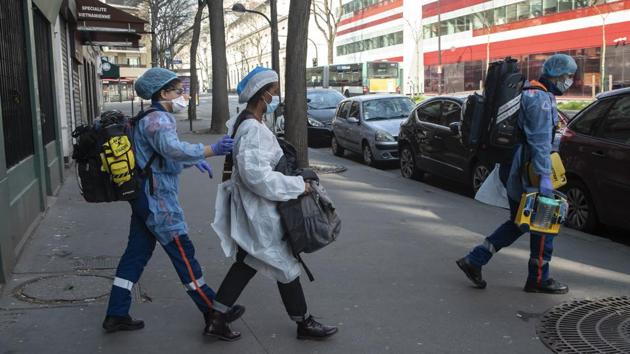
Members of the Civil Protection service, Noemie Biamba (L), Cyril Lamriben (C), and Pierre Leroux wait outside a possibly infected woman’s home. The service is a mainstay among France's first responder sector with 32,000 volunteers based in 400 locations around the country. (Michel Euler / AP)
3/9
 View Photos in a new improved layout
Updated on Apr 1, 2020 3:12 PM
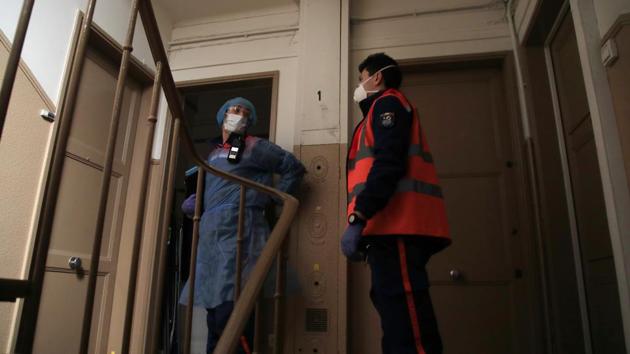
Cyril Lamriben (L), and Pierre Leroux wait outside an apartment before checking on a resident possibly infected with the Covid-19 virus. The volunteers, all trained, equip themselves for the crisis with protective gowns, head gear, masks and gloves when they head out on a mission, not knowing what they will encounter when the door opens. (Michel Euler / AP)
4/9
 View Photos in a new improved layout
Updated on Apr 1, 2020 3:12 PM
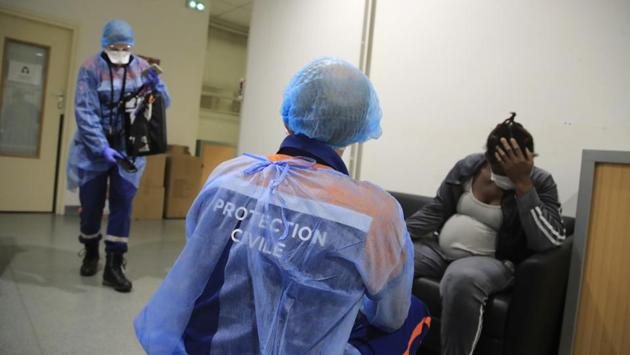
Vincent Jactel, a member of the Civil Protection service, talks with a 27-year-old pregnant woman suspected of being infected with the virus in a social housing building. (Michel Euler / AP)
5/9
 View Photos in a new improved layout
Updated on Apr 1, 2020 3:12 PM
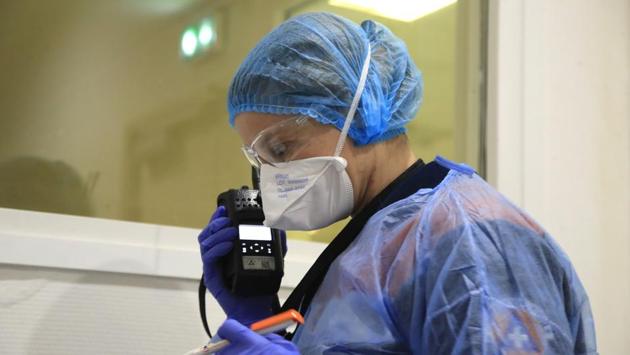
Aurore Lejeune, who builds bridges for the SNCF rail authority in her other life, checks a thermometer as she talks to a doctor on a walkie-talkie. Lejeune is in her 14th year volunteering for Civil Protection, but she says she hasn't encountered such high-risk situations in the past. “We’re facing a very contagious virus ... so we have to learn fast.” (Michel Euler / AP)
6/9
 View Photos in a new improved layout
Updated on Apr 1, 2020 3:12 PM
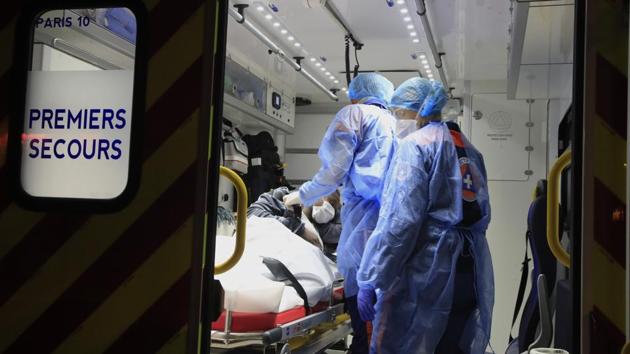
A woman is escorted to a Civil Protection service ambulance. The Paris teams start their missions at Necker Children’s Hospital, where they gear up. They return there to get rid of their garb and disinfect after each intervention. “What is striking is that all our interventions concern coronavirus,” Lejeune said, either respiratory distress or other signs of COVID-19. “This is how we see the size of the coronovirus in Paris. It’s ramping up.” (Michel Euler / AP)
7/9
 View Photos in a new improved layout
Updated on Apr 1, 2020 3:12 PM
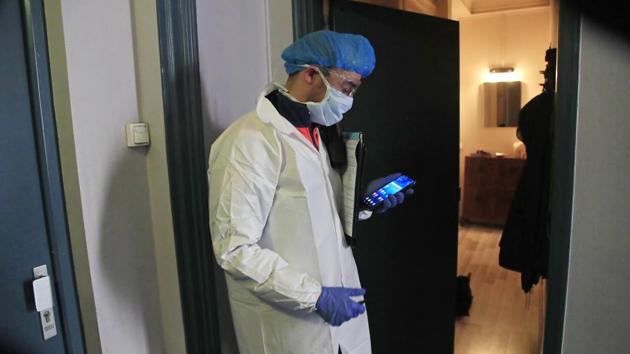
Cyril Lamriben waits for a phone call from a doctor before checking a house. Teams have been downsized from four to two or a maximum of three volunteers to limit the potential spread of infection. (Michel Euler / AP)
8/9
 View Photos in a new improved layout
Updated on Apr 1, 2020 3:12 PM
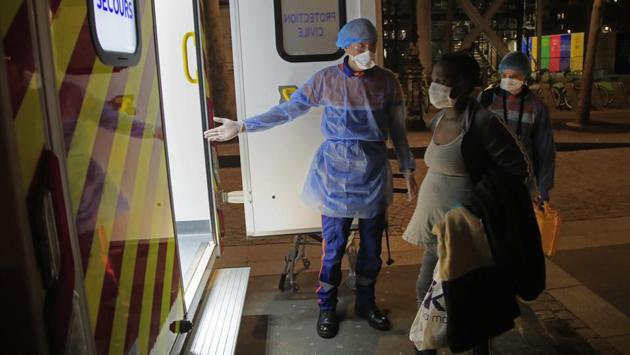
Vincent Jactel (L) and Aurore Lejeune (R), escort a woman suspected of being infected. Lejeune said her partner is a doctor so he, too, is in contact with COVID-19. “It’s very difficult. Our families ... are afraid for us,” she said. “It’s an added pressure.” Nevertheless, “we’re aware that the public and public services depend on us.” (Michel Euler / AP)
9/9
 View Photos in a new improved layout
Updated on Apr 1, 2020 3:12 PM


