
 E-Paper



Photos: Predictions for Tokyo rail commuters at Olympics 2020
First, Tokyo Olympic fans will have to find scarce tickets and pay the price. Then there's one more hurdle: getting around, or even finding a tiny space to stand on Tokyo's famously efficient but over-stressed rail system. Japanese professor Azuma Taguchi at Chuo University has researched Tokyo's system for years and says it's already running at double its capacity and the Olympic crunch could push it to the breaking point when peak capacity is three times above normal. It is more likely that the biggest wave of Olympic spectators will collide with work commuters at popular transfer stations during the morning rush hour, while small stations closest to venues will be overwhelmed.
Updated on: Nov 8, 2019 4:47 PM IST


Share via


Copy link

1/8
 View Photos in a new improved layout
Updated on Nov 8, 2019 4:47 PM
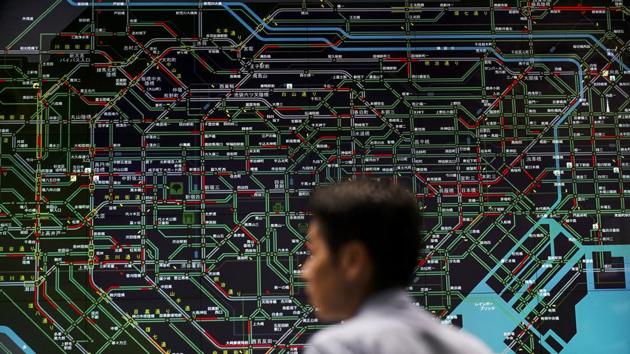
An officer monitors the flow of public transportation in front of a screen showing Tokyo’s web of train lines at the Tokyo Metropolitan Police Department’s traffic control centre. First, Tokyo Olympic fans will have to find scarce tickets and pay the price. And the summer heat and humidity will be off-putting for some. Then there’s one more hurdle: getting around, or even finding a tiny space to stand on Tokyo’s famously efficient but over-stressed rail system. (Jae C. Hong / AP)
2/8
 View Photos in a new improved layout
Updated on Nov 8, 2019 4:47 PM
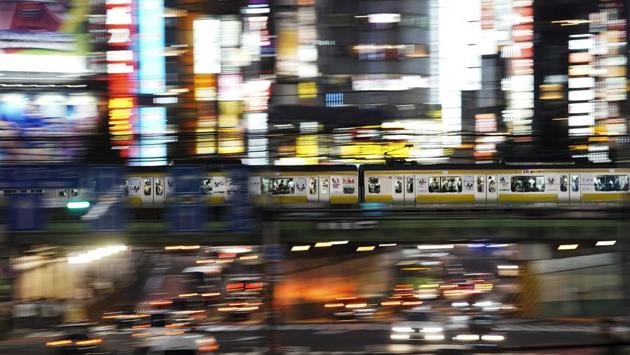
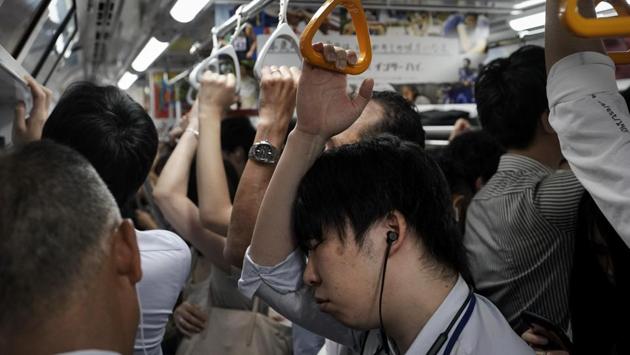
A train packed with commuters travels through the Shinjuku district of Tokyo during evening rush hours. Japanese professor Azuma Taguchi at Chuo University has researched Tokyo’s system for years and says it’s already running at double its capacity and the Olympic crunch could push it to the breaking point. “When peak capacity is twice or three times above normal, it’s possible some people could be killed,” Taguchi said. (Jae C. Hong / AP)
3/8
 View Photos in a new improved layout
Updated on Nov 8, 2019 4:47 PM
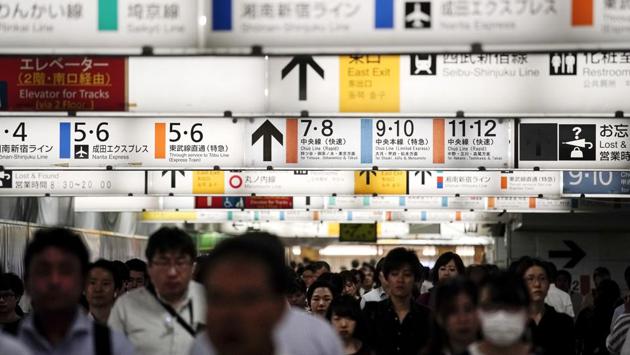
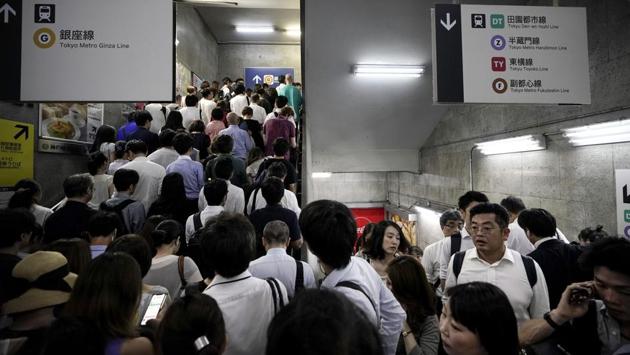
Commuters make their way through a tunnel underneath the clusters of platform signs at Shinjuku Station. Taguchi’s computer simulation predicts that the biggest wave of Olympic spectators will collide with work commuters at popular transfer stations during the morning rush hour, while small stations closest to venues will be overwhelmed. Add to the mix, newcomers carrying luggage aboard subway cars and struggling to maneuver off the train and through crowded stations. (Jae C. Hong / AP)
4/8
 View Photos in a new improved layout
Updated on Nov 8, 2019 4:47 PM
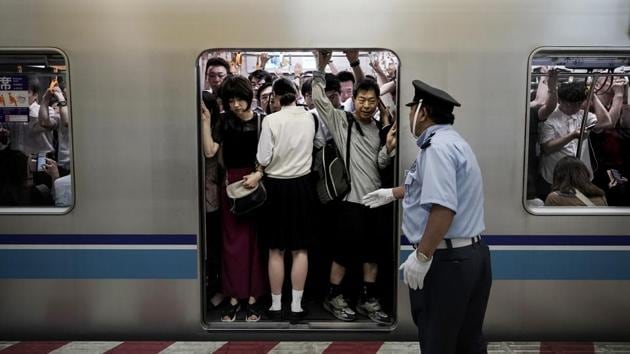
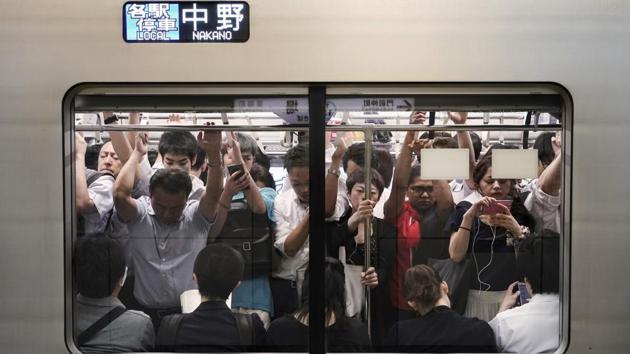
Taguchi’s study predicts 15 stations will experience greater than 200% capacity, with several reaching nearly 400% at their peak. Since Tokyo last hosted the Summer Olympics in 1964, railways have designated special oshiya, or “pushers,” to pack commuters into rush hour cars— often wearing white gloves. Locals are accustomed to the treatment, but visitors may not be. (Jae C. Hong / AP)
5/8
 View Photos in a new improved layout
Updated on Nov 8, 2019 4:47 PM
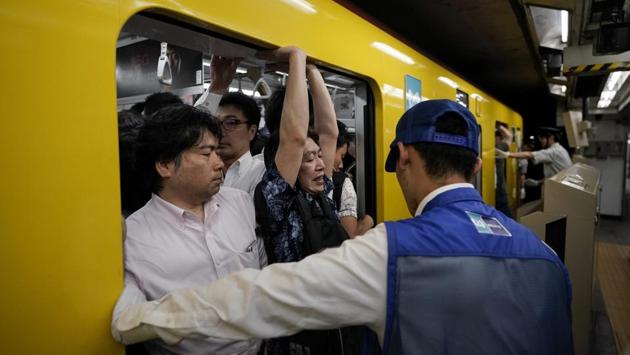
A station attendant watches as a commuter struggles to squeeze himself into an overcrowded train during morning rush hours at Akasaka Mitsuke Station. Tokyo transport officials characterise train cars at 200% capacity give passengers just enough space to read a magazine. This probably represents a normal commuting weekday in Tokyo. At 250%, they “cannot even move a hand.” (Jae C. Hong / AP)
6/8
 View Photos in a new improved layout
Updated on Nov 8, 2019 4:47 PM
Tokyo’s Olympic organizing committee question Taguchi’s dire predictions. They acknowledge the railways will be packed with 800,000 added passengers daily. They also anticipate that Tokyo expressway congestion will double. Hoping to head off the crowding, the committee wants to launch a smartphone app, boost multilingual signage, and use boats and robot-assisted technology to help fans and commuters get around. As with all Olympics, authorities are testing special highway lanes and altering the city’s transit flow. (Jae C. Hong / AP)
7/8
 View Photos in a new improved layout
Updated on Nov 8, 2019 4:47 PM
Taguchi and organisers agree on one thing: keeping Japanese workers at home during the Olympics could go a long way toward solving the problems. Organisers are asking companies in Tokyo to encourage their employees to work from home during the Olympics, which open on July 24, 2020, and close on August 9. They say more than 2,000 companies have agreed to participate. (Jae C. Hong / AP)
8/8
 View Photos in a new improved layout
Updated on Nov 8, 2019 4:47 PM


