
 E-Paper



Photos: Shrinking French Alps glaciers stress extent of climate change
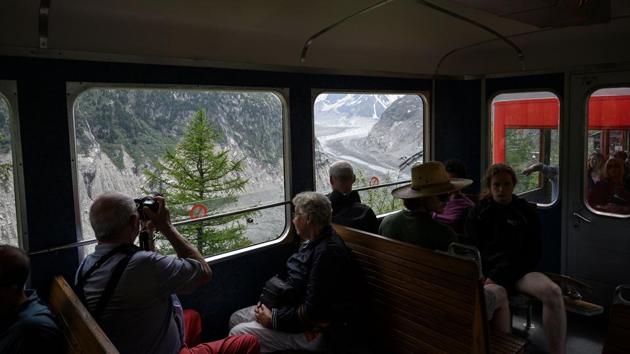
The effects of global warming can be seen high in the French Alps on the Mont Blanc mountain range, as the ‘Mer de Glace’ glacier is shrinking. Old visitors recall the time when there was more ice on the glacier. The routes to the mountain range have been damaged by rockfalls, consequently making them more complex and technically challenging.
Updated on: Jul 29, 2019 1:49 PM IST

Share via


Copy link

1/7
 View Photos in a new improved layout
Updated on Jul 29, 2019 1:49 PM
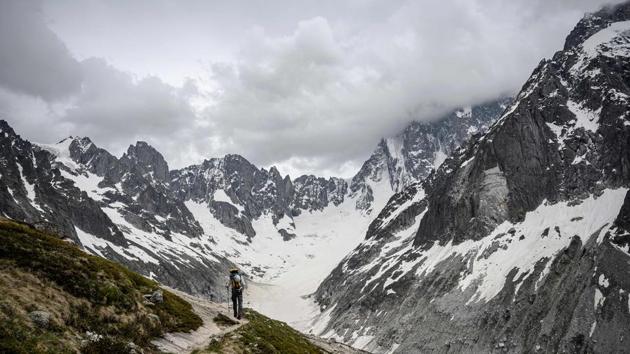
A man walks near the ‘Mer de Glace,’ or Sea of Ice glacier on the path to the Refuge du Couvercle (moutain hut) in Chamonix, France. The shrinking glacier – the largest in the country – is indicative of global warming. Visitors arriving from the last tram-stop before the 4,809-metre summit are forced to take 20 steps more each year to reach it. (Marco Bertorello / AFP)
2/7
 View Photos in a new improved layout
Updated on Jul 29, 2019 1:49 PM
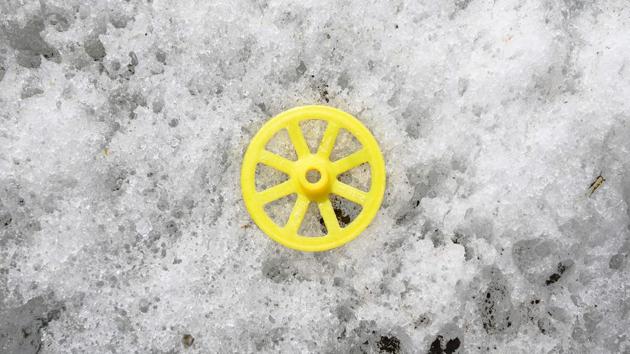
A plastic part of a ski stick found on the Mer de Glace glacier after the melting of ice. At one point, a sign on the edge of the valley says: “Level of the Glacier: 1990.” Now the ice has shrunk far below. (Marco Bertorello / AFP)
3/7
 View Photos in a new improved layout
Updated on Jul 29, 2019 1:49 PM
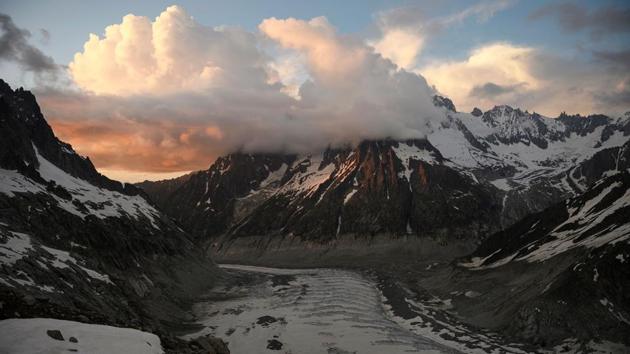
The glacier during sunset. The once immaculate pristine surface on the glacier is now depressed and greyish. Workers have now draped white tarpaulins held in place with large stones over the ice tunnel in a bid to protect it from the sun. (Marco Bertorello / AFP)
4/7
 View Photos in a new improved layout
Updated on Jul 29, 2019 1:49 PM
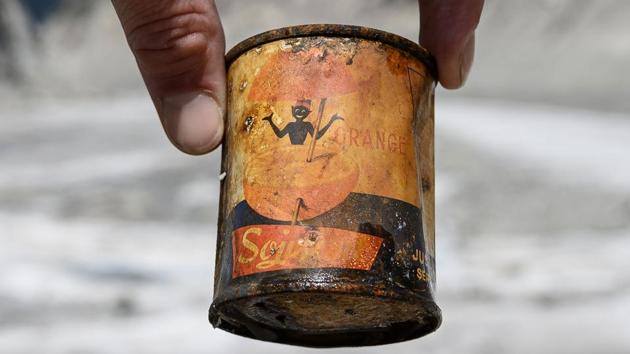
A man holds an old can of orange juice found on the glacier after the melting of ice. The alps are also frequented by an avalanche of loose rocks, called rockfall. These rockfalls scar the mountainside and damage routes used by climbers visiting Mont Blanc, Europe’s tallest peak. (Marco Bertorello / AFP)
5/7
 View Photos in a new improved layout
Updated on Jul 29, 2019 1:49 PM
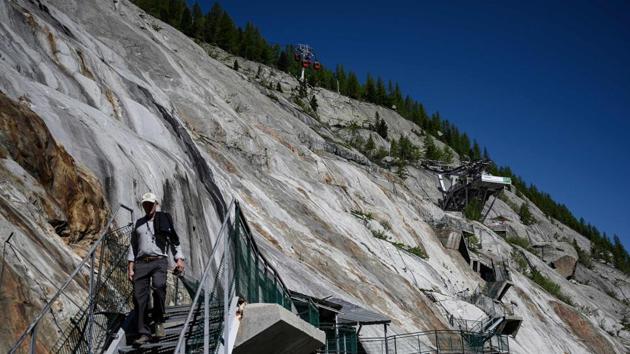
Most spectacular of these rockfalls affected the Bonatti pillar, a massive rock column named after Italian climber Walter Bonatti, that collapsed into a cloud of dust in June 2005. In 2011, smaller collapses also hit the same area and four years later landslides in the Couloir du Gouter prevented hundreds of mountaineers climbing Mont Blanc by the usual busiest routes. More falls have followed. (Marco Bertorello / AFP)
6/7
 View Photos in a new improved layout
Updated on Jul 29, 2019 1:49 PM
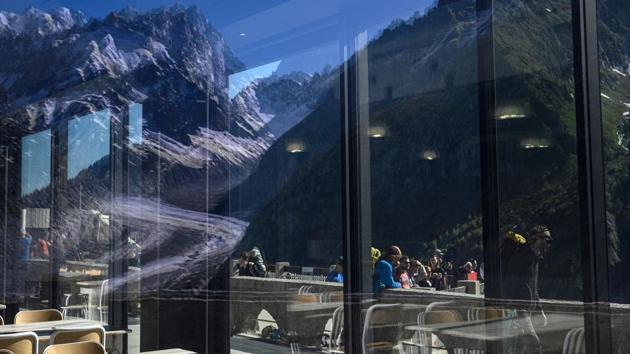
During the 1970s, the famed French alpinist and mountain guide Gaston Rebuffat noted Mont Blanc’s hundred finest routes. Half a century later, a team of researchers analysed snow conditions, ice and rock state, accessibility and risks on 95 of Rebuffat’s routes. The study found 93 of these routes affected by climate change, 26 of which were severely impacted and three no longer existed. (Marco Bertorello / AFP)
7/7
 View Photos in a new improved layout
Updated on Jul 29, 2019 1:49 PM


