
 E-Paper



Photos: The ancient Turkish village that’s about to disappear
Turkish authorities have started filling a controversial dam whose artificial lake will submerge a 12,000-year-old town and which is the source of tension with Iraq. The small town of Hasankeyf in the southeastern Batman province, home to 3,000 residents, will disappear as the lake is filled for the Ilisu project. The dam is a central part of Turkey's long-running Southeastern Anatolia Project (GAP), which aims to develop one of the country's poorest regions through energy and irrigation. Water levels in and around Hasankeyf have already risen some 15 metre and continue to rise by around 15 centimetre per day.
Updated on: Feb 27, 2020 7:24 PM IST


Share via


Copy link

1/7

 View Photos in a new improved layout
Updated on Feb 27, 2020 7:24 PM
People visit abandoned houses of the ancient city of Hasankeyf, in Turkey's Kurdish-majority south-east, that will be soon under water as part of a dam project. Despite years of protests by residents and activists, the small village on the banks of the Tigris River will soon be under water as part of the project. Authorities have started to move some historic monuments, and have already destroyed others. (Bulent Kilic / AFP)
2/7
 View Photos in a new improved layout
Updated on Feb 27, 2020 7:24 PM
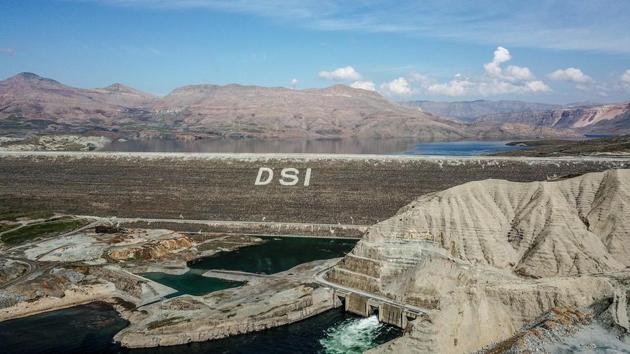
An aerial view of the Ilisu dam that will flood 199 villages and Hasankeyf. The dam, approved by the Turkish government in 1997 to generate electricity for the region, will uproot nearly 80,000 people and has alarmed authorities in neighbouring Iraq, who fear the impact on their water supplies from Tigris. Water levels in and around Hasankeyf have already risen some 15 metre and continue to rise by around 15 centimetre per day. (Bulent Kilic / AFP)
3/7
 View Photos in a new improved layout
Updated on Feb 27, 2020 7:24 PM
Kurdish youths visit abandoned houses in Hasankeyf. The dam forms a key part of Turkey’s south-eastern Anatolia Project, designed to spur economic growth in its poorest and least developed area. Residents have left Hasankeyf, many of them moving to a new town, Yeni Hasankeyf, on a nearby hill which will sit on the shores of a newly created lake once the dam is completely filled. The water is swallowing some houses. (Bulent Kilic / AFP)
4/7
 View Photos in a new improved layout
Updated on Feb 27, 2020 7:24 PM
An old man looks at Hasankeyf. Eyup Agilday, a 27-year-old shepherd, recently moved to the new town. He still visits the old village every day to take care of his sheep, which he left behind because there is no land for farming and husbandry in the new town. “When I see Hasankeyf being left under water, I am torn up inside. We have memories there but our history is there as well. We are talking about 12,000 years,” (Bulent Kilic / AFP)
5/7
 View Photos in a new improved layout
Updated on Feb 27, 2020 7:24 PM
Visitors at Hasankeyf. The Ilisu Dam will generate 1,200 megawatts of electricity, making it Turkey’s fourth-largest dam in terms of energy production. The dam is now 20-25% full, according to the Hasankeyf Coordination group, and the water will likely rise around another 50 metre in coming months, reaching just below the top of the fortress and submerging thousands more caves. (Bulent Kilic / AFP)
6/7
 View Photos in a new improved layout
Updated on Feb 27, 2020 7:24 PM
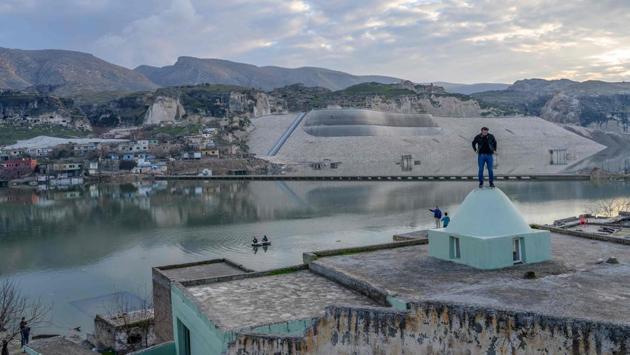
Visitors at Hasankeyf. Ramazan Sevik, originally from the nearby village of Gercus, came with his two children to visit the town before it is submerged. “We saw the history here but our children didn’t see those dusty beautiful caves. They’ll only a see a version of it with make-up,” the 45-year-old said, sitting at a cafe on the banks of the Tigris that will be submerged in the coming weeks. (Bulent Kilic / AFP)
7/7
 View Photos in a new improved layout
Updated on Feb 27, 2020 7:24 PM


