

 E-Paper


Population: Asset or burden?
1 / 9

 View Photos in a new improved layout
Updated on Jul 11, 2012 03:15 pm IST
A worker walks out of dust emnating from a borewell rig drilling into the earth on the outskirts of Bangalore. India's six biggest cities - Mumbai, Delhi, Kolkata, Bangalore, Chennai and Hyderabad - are among those most affected by water shortages. According to UN, population growth and unsustainable consumption are driving Earth towards "unprecedented" environmental destruction. AFP/Manjunath Kiran
2 / 9
 View Photos in a new improved layout
Updated on Jul 11, 2012 03:15 pm IST
The Cervera's reservoir, near Palencia, in Castilla y Leon's region. Spanish farmers are already on drought alert after the country's driest winter in 70 years. According to UN, population growth and unsustainable consumption are driving Earth towards "unprecedented" environmental destruction. AFP/Cesar Manso, File
3 / 9
 View Photos in a new improved layout
Updated on Jul 11, 2012 03:15 pm IST
A girl jumps on a trampoline at a park in Beijing. Africa and Asia are the continents that will see the fastest urban population growth in the next 40 years, noting that India and China are leading the surge. AFP/ Liu Jin, File
4 / 9
 View Photos in a new improved layout
Updated on Jul 11, 2012 03:15 pm IST
People boarding an overcrowded train at Chandausi Railway Station in Bheem Nagar, Uttar Pradesh on World Population Day. Africa and Asia will see the fastest urban population growth in the next 40 years, a UN report said earlier in the year. PTI Photo
5 / 9
 View Photos in a new improved layout
Updated on Jul 11, 2012 03:15 pm IST
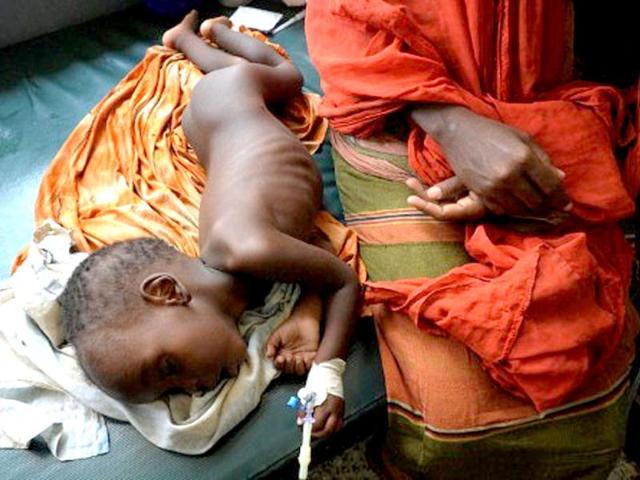
A Somali malnourished boy lies next to his mother as he receives treatment at the Banadir hospital in Mogadishu. Surging population growth is driving the planet towards food crunch, according to experts. AFP/Simon Maina
6 / 9
 View Photos in a new improved layout
Updated on Jul 11, 2012 03:15 pm IST
Danica Mae Camacho, the Philippine's symbolic 7 billionth baby is coddled by her mother Camille during a welcoming ceremony after she was born at a government-run maternity hospital in Manila on October 31, 2011. Africa and Asia will see the fastest urban population growth in the next 40 years, a UN report said earlier in the year noting that India and China are leading the surge. AFP/Ted Aljibe
7 / 9
 View Photos in a new improved layout
Updated on Jul 11, 2012 03:15 pm IST
A doctor inserts a contraceptive implant into an housewife's arm as part of family planning services in Manila's poor residential district of Baseco. The family planning fair is a part of the United Nations' celebration of World Population day in Manila. Reuters/Erik De Castro
8 / 9
 View Photos in a new improved layout
Updated on Jul 11, 2012 03:15 pm IST
Filipino women and their children participate in a family planning fair to commemorate World Population Day in Manila, Philippines. Residents living in slum areas were given free family planning information, counseling and services. AP/Aaron Favila
9 / 9
 View Photos in a new improved layout
Updated on Jul 11, 2012 03:15 pm IST