
 E-Paper



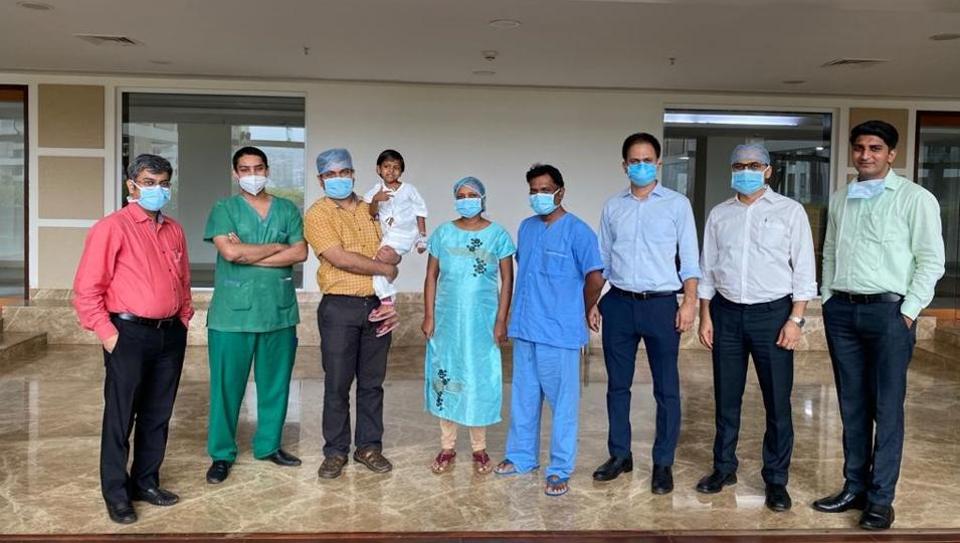
Father donates a portion of his liver to daughter, saves her life
Before the surgery, a Covid-19 test was conducted on both father and daughter who tested negative

 Prefer HTon Google


A father donated 300 grams of his liver to save his 5-year old daughter’s life at the Jupiter hospital, Baner on Friday.
The Pune region has seen only 21 organ donors in 2020, compared to 63 in the same duration last year.
A 10-hour long liver transplant surgery conducted by an experienced team of surgeons helped Shubhra, who was suffering from a liver disease since birth.
Before the surgery, a Covid-19 test was conducted on both father and daughter who tested negative.
“Shubra was suffering from biliary atresia, a condition in which there is a failure of development of bile ducts in the liver at birth. The children suffering from this condition develop jaundice. She underwent a corrective procedure at birth known as Kasai’s procedure, said Dr Kalpesh Patil, a paediatric surgeon.
Kasai’s procedure is performed for children suffering from biliary atresia if diagnosed within three months of birth. However, 80 per cent of children need a liver transplant in the future.
In biliary atresia, there is a failure of development of the bile ducts of the liver. During Kasai’s procedure, the diseased bile ducts are removed and the intestines are joined directly to the liver.
“Around 30 per cent of children will need transplant for biliary atresia before one year of age and 80 per cent children with biliary atresia will need a transplant by 20 years of age,” said Dr Gaurav Chaubal, who headed the team of doctors during the surgery.
“The liver transplantation in children is often very challenging as they have very small blood vessels which need to be connected to the new liver and the operation is technically challenging,” added Dr Chaubal.
Shubra’s father donated a part of his liver to his child. All necessary testing and diagnostic procedures were carried out and the transplant was performed on July 4.
The transplanted liver began working straight away. At the end of the surgery, the recipient was stable and shifted out to the intensive care unit for further care.


