
 E-Paper



Startup Saturday: Pro-action is the best re-action, say Pune-based founders
The problems a founder faces can range from finance and technology to human resources. Three Pune startups list their biggest problem faced, so far, and, how it was overcome


A startup must be an answer to a problem, most often defined as a gap in the current market place; or in the disrupter’s case, defining a solution to address a need the consumer did not even know existed. However, once the proof of concept is out the door, an entire new set of on-the-job issues surface. Glitches, hurdles, challenges, obstacles, take your pick, because no startup avoids the same.

The problems a founder faces can range from finance and technology to human resources. Three Pune startups list their biggest problem faced, so far, and, how it was overcome.
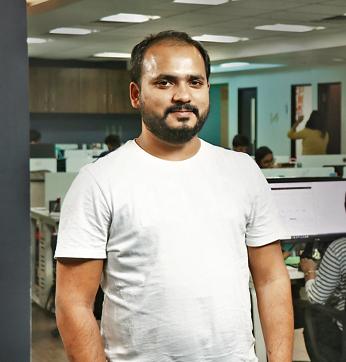
TestBook, founder, Ashutosh Kumar
Online learning platform for government exams,
The problem
How to sell to a web-based product to customers with poor net access?
Ashutosh Kumar hails from Bihar and understands the dynamics of education there. “In small towns and villages and in cities that are not economically forward a goveernment job is the most coveted, simply because there aren’t many private companies.”
This presented an opportunity to the IIT-B grad.
“Every year, six crore students take these government exams and 70% of these students are from small towns. Why not provide an online platform that would help them be successful?” says Kumar.
Building the technological platform was comparatively the easy part. The real challenge came from the market dynamics itself. “We were actively selling ourselves on social media, but if these students were not active on these media, how do we reach them? The second problem was payments. In a small town people are not comfortable with digital payments. The third problem was lack of infrastructure. There wasn’t enough access to the internet,” Kumar adds.
The solution
“To reach out to the customers we understood that social media was not enough. While in Bihar I saw that RK Agarwal was a very popular author and brand that published books that helped these students clear the government exams. We reached out to him to offer a coupon in his books that readers could use. This was a coupon for the various modules on TestBook. We distributed 30 lakh books. What it did was let people access TestBook in a way they were comfortable with. They trusted RK Agarwal and so this new online platform must be worth it,” Kumar explains.
Kumar also started offering recharge coupons for their courses, much like prepaid phones. TestBook went to book stores, coaching classes and other learning centres to offer their recharge coupons. As of now they have 500 retail outlets on board.
To tackle the lack of infrastructure TestBook invested in building learning centres that taught students the basics of the internet.
“They can also use these centres to learn about the internet and give exams using TestBook,” says Kumar
TestBook now has 70 learning centres across North India. Five are self-owned and the rest are on a franchise model.
The result
Earlier TestBook had 1% of enrollments from Bihar. Today it has grown to 20%. - 90 lakh registered users of which 4.5 lakh are active paid users.
- Annual run rate of ~30 crore
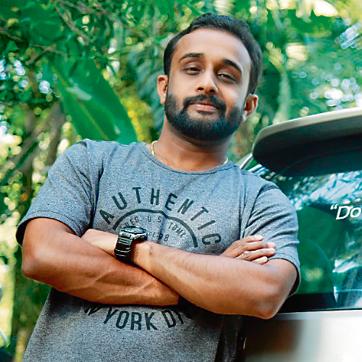
Vi Innovations, founder Vimal Kumar
An electronic device for cars that allows for wireless control of functions like power windows, air conditioning, unlocking the car either through a mobile phone remotely, or via a touch screen.
The problem
Access to funds and creating customer awareenss about a new tech product
“Why should only high-end cars have features like power windows, power lamps, touch screens to control various functions? So I began work on developing a product that could control the wipers, a/c, windows, lock unlock the car either remotely via a mobile smart phone or a touch screen,” says Vimal Kumar.
“Getting people to fund a hardware project is very difficult. You have to first build a prototype, then make several iterations till it gets perfect and each time that is a considerable investment compared to a software tool,” Vimal adds.
The next problem was, like it is for anything novel and untested, to communicate its value to prospective customers.
The solution
Initially Vimal shored up money from family. “In 2016, when I began R&D on this automobile device control system I spent Rs 2 lakh of my own money,” he says. He then approached the government bodies that help startups and innovation. “I approached Tech Prism (Promoting Innovation in Individuals, Startups and MSMEs) a department of the Ministry of Science and Technology and was sanctioned less than a lakh of rupees. I used this to build a proof-of-concept product,” he says, adding, “I had to develop it further since the PoC was just enough to prove functionality.”
Next he approached Maker Village in Kerala, an incubator. “They funded me with Rs 5 lakh. I have filed a patent (which is pending) for my device,” says Vimal. In 2017 he incorporated Vi Innovations.
Now to reach the customers.
“I did what was available to me. I went to any and every auto event organised in the country. There I presented my product. I must have attended over a 100 such events in the past three years. That helped gain some traction. I met the auto incubator from Pune, Auto Nebula, and they connected me to several manufacturers. Then I hit upon the idea of making a short film about my product. I put this up on Facebook and YouTube and had friends look at it. It worked,” explains Vimal.
The video got 3.6 lakh views and 7,800 shares. This acted like the tipping point. Vimal had the eyeballs.
The result
Video got 3.6 lakh views and 7,800 shares.
Interest from car manufacturers (no names just yet)
Interest from luxury car brands too, “because no one has the facility of switching on your car AC with your mobile”.
La Flamington, founder, Taha Khan
Food & beverage operations firm that deals in B2B products; two retail outlets in Kalyaninagar and Salunkhe Vihar.
The problem
Quality added to cost. Was there a “credit” routed map?
Says Khan, “We had several roadblocks. One was the suppliers vs customers, and the credit period loop. It is very difficult for a startup to buy ingredients and raw-materials from suppliers on credit. At the same time when you sell the finished product to another business (and retail customers), they ask for credit.”
“It’s almost like quicksand, as on one hand you don’t want to create a bad reputation with suppliers and on the other hand you don’t want to lose a customer.
“The other problem was ethics and its impact on price: As an example, there are bakeries that use a whipped topping (soyabean and vegetable oil mix cream) that allows them to sell their gateaux at 500 per pound.
“We use French dairy whipping cream and sell it at 750 per pound. Customers would ask us why is it so expensive? Are you looting us? Regular compound chocolate used for drinking chocolates costs 250 per kg. We use one that costs 1,250 per kg. It was like people knew the price of everything, but the value of nothing,” explains Khan.

The solution
Says Khan: “We created a policy to not give credit. We faced a lot of heat from our customers regarding our refusal to give credit. At the risk of letting go customers we stuck to our policy. Regarding our suppliers we asked them for three working days to process payments. That they agreed.
“Regarding our policy of using pure materials even though it impacted the price, we simply held on because we believe in not compromising on the quality for the sake of profit. We had to create awareness with our customers make them understand that our products are natural, more healthy and nutritious. And of course, that made them more delicious. Over time our customers now understand the value of quality and choose us over the other cheaper versions.”
The result
Second retail outlet opens
Centralised kitchen
Hotels are now his clients. “I’m under NDA with them so I cannot reveal the names,” he says.
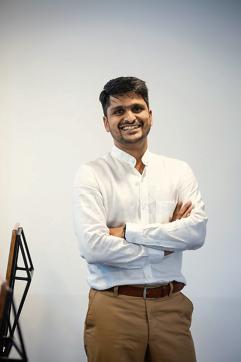
Pickyourtrail, co- founder, Hari Ganapathy
Online platform that lets travellers create, customise and book international holidays.
The problem
Building a tech product without tech founders.
Says Ganapathy: “People laughed at us when we said we wanted to build the best tech platform for customised international trips. We had no tech background. In addition to that we came from a non-travel industry (both founders were marketing professionals), but we had a passion for travel, having travelled to 50-odd countries.
The solution
Says Ganapathy: “We needed a senior VP engineering, but who would join a startup that had (at that time) nothing to show? We met a lot of friends and peers in the startup community and pitched.
“We understood that if we are to get a senior person into the company we had to have something to show. So we decided to hire junior engineers who could build a prototype of what we wanted. This too was a challenge because we knew nothing about technology.
“The startup community helped us. We roped in CTOs of different firms do the interviews for us.”
The result
Hired four junior engineers who built a prototype of what we wanted.
In a better position to hire a VP who would look into refining the product and build a tech team.


