
 E-Paper



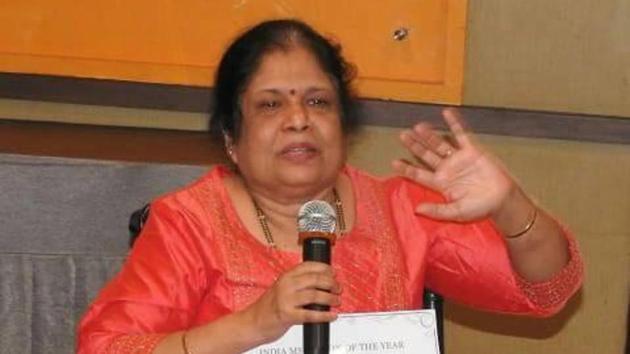
We find it difficult to make people understand multiple sclerosis, says Jyoti Ronghe
Ahead of World Multiple Sclerosis Day, Jyoti Ronghe, national joint secretary of Multiple Sclerosis Society of India shares the challenges that the support group faces because of the less-known disease


World Multiple Sclerosis Day will be observed on May 30. The auto immune disorder, also known as a group of disabilities, has affected over one million people in the country, but it still remains the least talked about due to lack of awareness. Jyoti Ronghe, national joint secretary of Multiple Sclerosis Society of India (MSSI), shares with Nozia Sayyed the challenges that the support group working for multiple sclerosis faces because of the less-known disease.
What is multiple sclerosis?
It is an auto immune disease of the central nervous system and is more known as group of disabilities as it affects many organs and body parts of a person. There are many types of multiple sclerosis — lapse remission (constant recurrence of the disease), progressive and benign multiple sclerosis which means there are no symptoms of the disease, but can be diagnosed only through a magnetic resonance imaging (MRI).
Its affect and symptoms?
The ailment affects the person physically and mentally and there is no particular cause which has been cited by the experts. Since it also includes loss of stability, loss of balance while walking, constant fatigue, loss of control over urinary bladder/bowel, loss of power in limbs and affected speech, all this makes the person non-productive as well as dependent and requires a full-time caretaker.
What is the treatment and cure?
There is no treatment or cure for it. It is treated symptomatically. Early diagnosis is always recommended as it affects during the early age of life and is often progressive. Many a times there is an ‘invisible’ symptom like unexplained spasm, sudden shooting pain. All this cannot be explained. The progressive disease cripples the person’s lifestyle and hence emotional support becomes utmost important to improve quality of life and to improve the same and help people in educating about the disease, we started a support group for patients. There are nine support groups in the country for multiple sclerosis, including one is in Pune.
What are the challenges faced when it comes to running a support group for multiple sclerosis patients?
Since the disease is rare, we find it difficult to make people understand and fund our programmes. Also, finding volunteers to help us in spreading awareness is also a difficult task. The disease also comes with a taboo and has a social stigma attached to it as many think if one person is affected the rest in the family must be having it. Hence, awareness and education about the disease is important. Multiple sclerosis can affect anybody without showing any warning sign and hence early diagnosis is always advised and stressed.


