
 E-Paper



Punjab cabinet committee to give report on illegal colonies in 30 days
Regularise or not? Ministers disagree over granting amnesty; most developers of illegal colonies have vanished, leaving residents in the lurch.


With differences emerging in Wednesday’s Cabinet meeting on regularisation of illegal colonies, Punjab chief minister Capt Amarinder Singh has formed a sub-committee led by health minister Brahm Mohindra to give a report in 30 days. Sources said the government wanted to offer the regularisation sop to dwellers in these colonies, but is moving with caution.
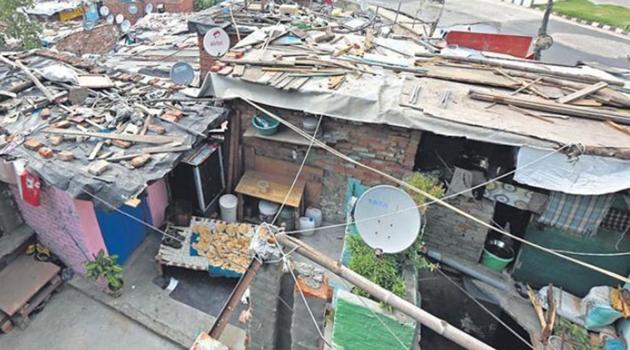
Estimates suggest that there are at least 6,500 colonies that have been identified as illegal and some had approached the government for regularisation, under the various amnesty policies announced by the previous Akali-BJP regime thrice during its tenure.
The issue of whether to regularise illegal colonies was also discussed in last week’s Cabinet meeting, but a decision was deferred. Then too, ministers had disagreement.
On Wednesday, local bodies minister Navjot Singh Sidhu along with other cabinet colleagues, pointed out that a coloniser who flouts all norms, gives no facility to residents and builds 85% of the total area — will be let off the hook, on the grant of amnesty.
“A coloniser who carries out development as per norms and pays all charges and fees, builds houses over 55% and leaves 45% open space has to compete with illegal colonisers,” Sidhu said. He added that the onus to check this lopsided development fell on the local bodies department.
The subcommittee formed comprises Sidhu, finance minister Manpreet Singh Badal, technical education minister Charanjit Singh Channi and rural development minister Tript Rajinder Singh Bajwa.
Mechanics of the scheme
The previous government earned Rs 777 crore by regularising 936 colonies. Individual plot owners were also asked to get their dwelling units on illegal colonies regularised. Around 4.3 lakh plot owners came forward for regularisation and 2.93 lakh cases were cleared.
The Congress government now plans not to regularise an individual plot in an illegal colony. “A colony and a plot, both will have to be regularised,” said a source.
Incidentally, a large section of developers of the illegal colonies has disappeared, leaving residents in the lurch. Residents, however, are reluctant to bear the cost of regularisation.
Finance minister Manpreet told the media, “The challenge before the government is to put an end to the system of building illegal colonies. There is also the question of implementation of acts and laws such as PAPRA and RERA.”


