
 E-Paper



Punjab’s first de-addiction centre battles shortage of medicines
Inaccessibility: Health dept’s failure in providing medicines has decreased number of patients visiting centre from 400 to 40 daily


The state’s first model de-addiction centre in Amritsar wears a deserted look as the number of patients has decreased because the centre has failed to procure vital medicines in the last six months.
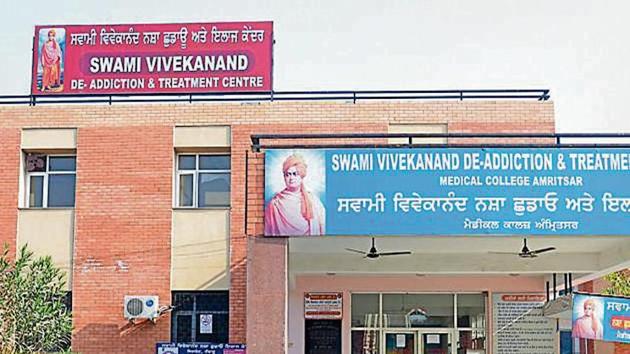
In July 2015, the Akali government had inaugurated the Swami Vivekanand De-addiction and Treatment Centre, constructed at a cost of Rs 5 crore, at the Government Medical College, Amritsar.
A senior official at the centre, on condition of anonymity, said, “Despite repeated requests, the health department has failed to send Buprenorphine—a medicine given to patients as a substitute for drugs. As a result, the number of patients visiting the centre has decreased from 400 to about 40 daily. We have requested the department to provide 6 lakh pills of Buprenorphine. At present, we are using Tramadol and other pain killers, but they are less effective.”
Deputy commissioner (DC) Kamaldeep Singh Sangha heads the Drug De-Addiction and Rehabilitation Committee that is responsible for managing the centre.
When asked about the state of the de-addiction centre, he said, “I have already asked Dr PD Garg, in-charge of the centre, and other officers concerned whether they want my intervention to resolve the issue of shortage of Buphrinorphine pills. We were busy with the civic body elections and could not pay special attention towards the problem. I will call a meeting of the health department in first week of January to solve the problem.”
Meanwhile, sources in the centre claimed that most of the patients who visit the centre ask for Buphrenorphine. However, the centre has to refuse the demand, and in turn, the patients prefer to visit private de-addiction centres because the pill is easily available there.
Centre to cut staff strength
On the other hand, as a cost-saving measure, a five-member committee was recently constituted with an aim to reduce the staff strength at the centre. A senior official at the centre said, “There are around 23 ad hoc staff members who operate the centre. Their salaries are paid from the centre’s income. But since patients rarely visit the centre now, it is becoming difficult to pay salaries.”
He added that recently a meeting was held with the DC and a five-members committee was formed to look into ways to reduce the staff strength. “Instead of making efforts to procure the medicine, they are trying to reduce the staff strength,” he said.
At present, there are only 14 patients admitted in the 50-bedded hospital.
When asked about the proposed cut in staff strength, the DC said, “I have directed the officials concerned and formed a committee to terminate services of the unwanted staff from the centre. This will help us in using the financial resources to run the centre smoothly.”
However, Dr Rajinder Mago, senior resident MD, psychiatry, said, “The OPD count is reducing because we don’t have Buphrenorphin pills. Once we receive the medicine, the numbers will increase.” Despite repeated attempts, Dr PD Garg could not be contacted for his comments.


