
 E-Paper



Rajasthan assembly elections 2018: 59 SC, ST seats could sway poll outcome
Rajasthan assembly elections 2018: The tribal heartland is in sharp focus for both the parties. Chief minister Vasundhara Raje launched her political campaign for return to power from the Udaipur division’s Charbhuja temple, and the Congress president Rahul Gandhi held a ‘Sankalp Rally’ in Sagwara in Dungarpur district in the first of his election meetings.

 Prefer HTon Google


The Bharatiya Janata Party (BJP) won 50 out of the 59 seats reserved for the Scheduled Castes (SCs) and Scheduled Tribes (STs) in Rajasthan to return to power in the state in 2013. The Congress bagged 34 of the reserved seats in the 200-member assembly and went on to form the government in the state five years earlier. The SCs (17.8%) and the STs (13.5%) account for the Rajasthan’s 31.3% population and are key to who rules the state.
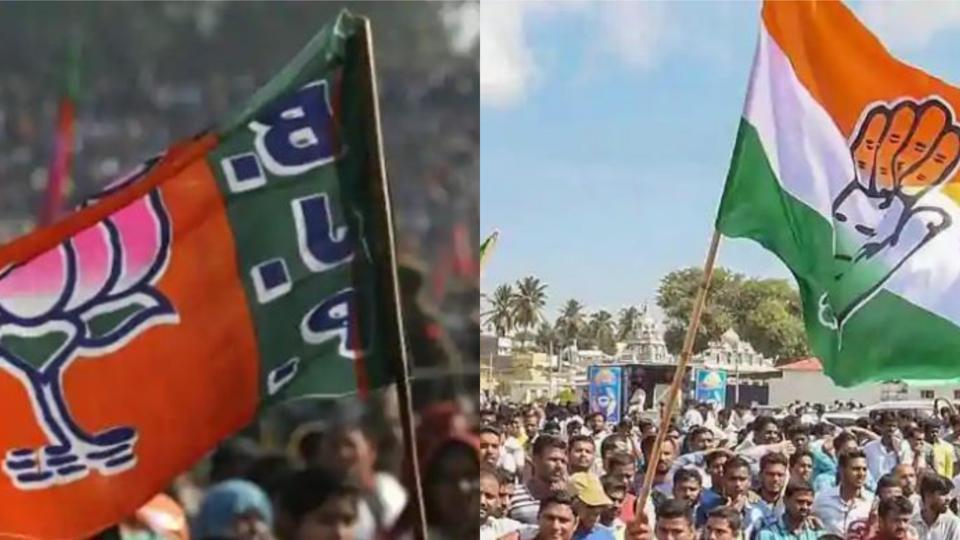
The SC seats are spread throughout the state’s seven divisions while those for the STs are concentrated in the Udaipur division, which has been the focus of the two main parties vying for power. Chief minister Vasundhara Raje launched her campaign from Udaipur division’s Charbhuja temple in August. Congress president Rahul Gandhi held his first election rally in Rajasthan in the division’s Sagwara a month later.
The BJP is buoyed by tribal leader Kirodi Lal Meena’s return to the party a decade after he left it amid differences with Raje. The Congress has included tribal leader Raghuveer Singh Meena to its highest decision-making body, the Congress Working Committee, as part of its efforts to woo the tribals.
Also Read: Rajasthan assembly elections 2018: Unemployment dole, jobs in BJP manifesto
Rajasthan Adivasi Adhikar Manch (Tribal Rights Forum) convenor Dharamchand Khair, 45, said there was anger against the BJP in tribal areas. “The BJP government made MNREGA weak,’’ said Khair, referring to the Mahatma Gandhi National Rural Employment Guarantee Act under which 100-day employment is annually provided to an adult member of every rural household.
Khair blamed the Raje government for complicating the social security schemes’ delivery by introducing point-of-sale machines in areas where mobile connectivity is an issue. “People are facing problems in claiming their social security pensions and [subsidised] PDS [Public Distribution System] rations,” said Khair, whose organisation is an amalgam of 27 groups working for the tribal rights.
Khair, who lives in Udaipur’s Kotda block, said villages in Southern Rajasthan still lack basic amenities like roads and electricity. “The anger is also over the slow pace of granting land titles to tribals in forests... Over the five years of the BJP government, only 6,000 people got the titles. Between 2009 and 2012, 32,000 titles were granted.”
In Alwar, which is part of the region where the SC population is concentrated in Rajasthan’s northern and eastern parts, Dalit rights activist Surajmal Kardam, too, spoke about the anger against the BJP. “The students have not got scholarships for years. Our girls were excluded from the [government]’s Scooty distribution scheme,’’ he said. He called the criminal cases against over 2,500 people following the April 2 Bharat Bandh as the biggest reason for their anger.
The bandh was called against the Supreme Court’s directions in March to prevent the misuse of the Scheduled Castes and the Scheduled Tribes (Prevention of Atrocities) Act (the SC/ST Act). The directions were seen as an attempt to weaken the law. The protests over them had forced the Centre to bring a legislation to overturn them.
Kardam accused the BJP government of not considering them as Hindus. He alleged Dalits were booked for peaceful protests for their rights. Kardam said 23 Dalits from Sikar were still in jail while 113 from Alwar got bail after three months. “BJP MLAs stood with the police to book our men under sections that dub us anti-nationals.”
Read More: Campaigning for Assembly polls gathers steam in Rajasthan
The legislation to overturn the court’s directions has angered the upper caste communities, which are the mainstay of the BJP’s support base. In Karauli’s Hindaun town, upper caste protesters had set houses of a BJP legislator and a former minister afire a day after the Bharat Bandh. “There is anger among the upper castes over the BJP decision on the SC/ST Act. The move to appease the SCs will boomerang on the BJP,” said Ramesh Vyas, a trader in Pali district.
BJP spokesman Mukesh Pareek insisted his party is going to win more seats in tribal belt. “[This is] because most of the [BJP government]’s schemes... have benefitted the SCs and STs. “
Congress spokesman Satyendra Singh Raghav said that the SCs and STs has always voted for his party and that the tribal region has always been its bastion. “Last time they got trapped in fake promises....”
Political analyst M L Yadav said there is anger against the BJP government among all sections. “The anger among the SCs is simmering since April 2. But they have been silent about it. A lot will depend on how they express it on December 7 [polling day]. The tribes have different issues but mostly the weakening of NREGA has robbed them of job opportunities and led them to migration to the neighbouring Gujarat.”
For full assembly elections coverage, click here.


