
 E-Paper



RBI keeps policy rate unchanged at 5.25%, giving homebuyers ‘breathing space’ and developers planning confidence
The RBI's decision to keep the repo rate steady at 5.25% provides essential stability for homebuyers and confidence for real estate developers

 Prefer HTon Google


The Reserve Bank of India (RBI) kept the repo rate unchanged at 5.25% on April 8, as expected, amid hopes of a global recovery driven by the ceasefire in the six-week-long US-Israel-Iran war. For the real estate sector, this stability provides much-needed relief, helping homebuyers maintain affordability, ensuring EMIs remain predictable for current and future borrowers, and enabling developers to plan projects with confidence.
Steady borrowing costs also cushion the impact of rising input prices on demand, allowing stakeholders to recalibrate strategies amid evolving market conditions, say real estate experts.
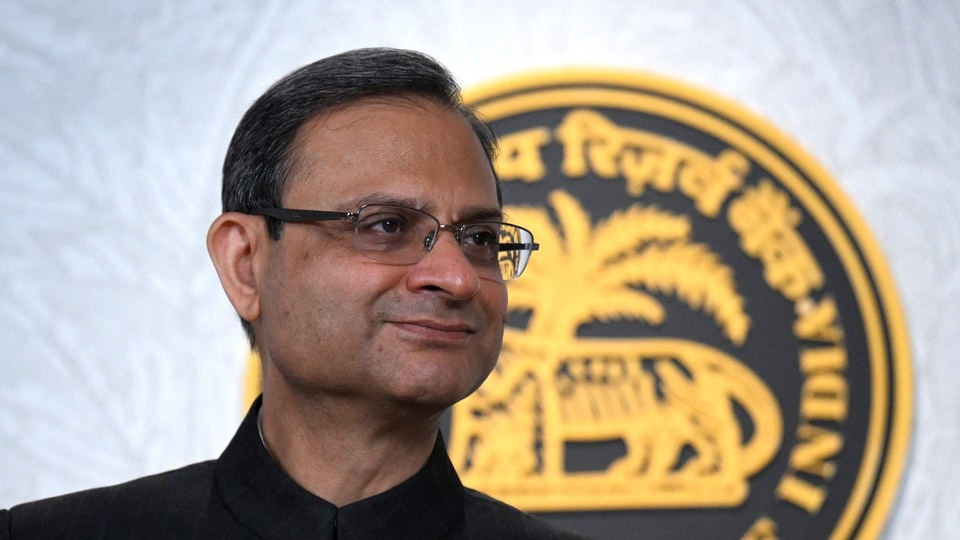
Announcing the first bi-monthly monetary policy for the current fiscal, RBI Governor Sanjay Malhotra said the Monetary Policy Committee (MPC) unanimously decided to retain the short-term lending rate, or repo rate, at 5.25%, with a neutral stance. This is the first monetary policy review after the government announced a fresh inflation target for the RBI last month. The government has asked the RBI to maintain retail inflation at 4%, with a 2% margin on either side, for another five years, ending March 2031.
“A steady repo rate continues to anchor homebuyer sentiment by keeping EMIs predictable and manageable. Concurrently, the effective moderation of inflation by the year-end is likely to spur further business expansion, boost consumer purchasing power, and drive sustained, robust demand across both the residential and commercial real estate segments,” said Anshuman Magazine, chairman and CEO - India, South-East Asia, Middle East and Africa, CBRE.
This rate stability offers ‘breathing room’ for homebuyers and backs market resilience, said Anuj Puri, chairman, ANAROCK Group.
Also Read: RBI keeps interest rates unchanged, bringing EMI stability for homebuyers
“Keeping rates steady means stability for current and future home loan borrowers. EMIs will remain unchanged, which makes planning for the future easier. This is especially good news for people buying homes, who can now move forward with more confidence,” he said.
Shishir Baijal, International Partner, chairman and managing director, Knight Frank India said that the Reserve Bank of India’s decision to keep the repo rate unchanged at 5.25% reinforces a sense of stability. For the real estate sector, this continuity in interest rates is crucial for sustaining momentum. Stable borrowing costs help preserve affordability for homebuyers while also enabling developers to plan with greater confidence.
Also Read: Income Tax changes 2026: PAN mandatory for property deals above ₹20 lakh from April 1
“With financing costs remaining steady, prospective buyers are better positioned to evaluate and commit to long-term investments such as homeownership,” he said.
RBI’s decision to keep policy rate unchanged may cushion the impact of rising input costs
Shrinivas Rao, FRICS, CEO, Vestian, welcomed the move. “It is likely to keep mortgage rates steady and competitive at a time when construction costs remain elevated due to the ongoing West Asia crisis. This move could help cushion the impact of rising input costs on demand and allow stakeholders to recalibrate their strategies in response to evolving market dynamics. However, this may be the RBI’s final status quo before the repo rate begins its upward trajectory.”
Manju Yagnik, vice chairperson of Nahar Group and senior VP, NAREDCO, Maharashtra, said that a stable interest rate regime ensures greater predictability in funding for developers, facilitating smoother project execution and enabling homebuyers to make long-term financial decisions with greater confidence.
Vimal Nadar, National Director and Head, Research at Colliers India, said RBI has kept the repo rate unchanged at 5.25% in its first MPC meeting of the fiscal year. This, along with the continuation of the neutral stance, reflects a ‘wait-and-watch’ approach amid the West Asia crisis and its fallout on commodity and fuel prices and supply chain disruptions as well.
CREDAI president Shekhar Patel said, "We view the RBI's decision to maintain status quo on the repo rate as a balanced and prudent approach, particularly against the backdrop of ongoing global geopolitical tensions and their cascading impact on inflation, supply chains, and capital flows."
While the domestic economy continues to demonstrate resilience, these external uncertainties necessitate a calibrated policy stance. A stable interest rate environment provides much-needed visibility to both developers and homebuyers, helping sustain demand momentum across housing segments, he said.
Patel pointed out that while there may be some near-term pressure on raw material prices due to supply chain disruptions, “we remain confident that policy stability, coupled with strong end-user demand, will enable the real estate sector to maintain steady growth and continue contributing meaningfully to India’s economic trajectory.”
The current policy stance will continue to act as support to the prevailing momentum in the real estate market. “We expect increases in construction costs due to rising energy prices and supply chain disruptions. In such a scenario, a stable interest rate environment with previous rate cut transmissions still cycling through will lend stability to the residential markets. The current sluggishness in residential sales in the first quarter of 2026 is already a signal that rising prices are beginning to hit affordability and uncertainty is affecting buying decisions,” said Lata Pillai, senior managing director and Head - Capital Markets, India, JLL.
Anshul Jain, Chief Executive, India, SEA, MEA, APAC Office and Retail, Cushman & Wakefield said , “Previously though, borrowing rates have been lowered by ~125 bps in 2025 and are currently at low levels, so homebuyers in the affordable and mid-segment projects will continue to reap the benefits in the near-term. In this environment, policy predictability will remain critical in supporting steady growth across India’s real estate market.”


