
 E-Paper



Bengaluru’s rental maze: Landlord interviews, eviction excuses and the battle to get your security deposit back. All that tenants need to know
Moving to Bengaluru can mean landlord interviews, security deposits and a stressful fight to recover them. Renters describe delayed refunds, disputed painting and repair deductions, and eviction requests. This guide explains what landlords may deduct, why rental agreement terms matter, and how tenants can document, negotiate and pursue legal remedies.

 Prefer HTon Google


Moving to Bengaluru for a new job? Before you get the keys to your apartment, you may have to clear a few rounds of interviews; this time, the prospective employer is your landlord.
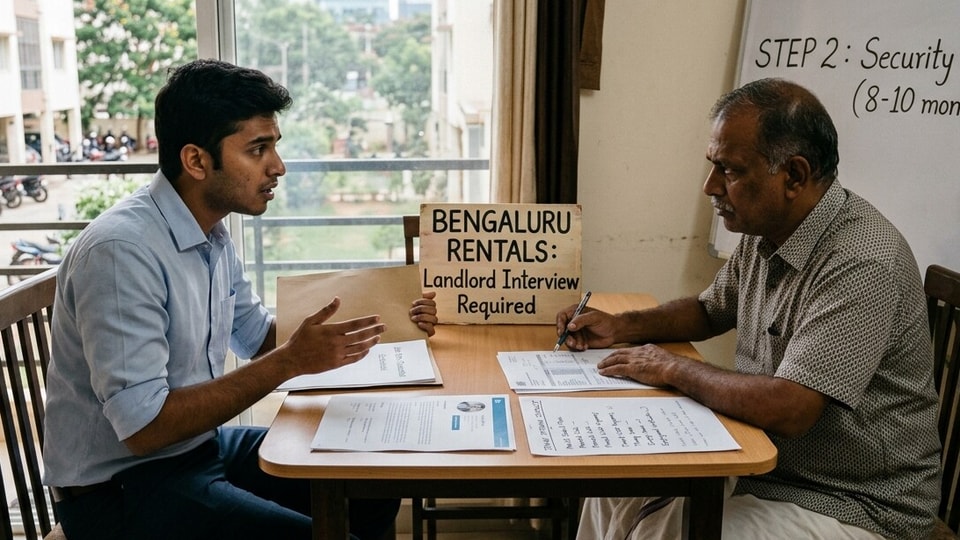
Are you married? If not, when do you plan to get married? Do your parents visit often? Do you have friends over? What time do you usually return home? Can you share your LinkedIn profile and your last three salary slips? And would you mind if I spoke to your previous landlord?
For many renters, finding a home in India’s tech capital has become an exercise in patience, negotiation and, increasingly, explaining their personal lives to a stranger. Online discussions about Bengaluru’s rental market are filled with accounts of landlord interviews that seem to have more in common with a corporate hiring process than a routine house-hunting exercise.
Clearing the interview, however, is only the beginning. Pay up, move in and prepare for the next battle
Once selected, tenants must contend with another hurdle: the security deposit. Depending on the property and the landlord, this can amount to a substantial sum, often running into several months’ rent. And while moving in may be difficult, moving out can prove even more stressful.
For tenants who have lived in a property for 11 months, three years or longer, getting their deposit back can become a prolonged exercise in follow-ups, negotiations and mounting frustration.
Then there is the possibility of being asked to leave just as the rental agreement approaches its end. Tenants say that when rents rise sharply in a neighbourhood, some landlords appear to find reasons to replace existing occupants with new tenants willing to pay more.
“My son is returning and needs the house.” “I plan to sell the property.” “The house needs major renovations.”
These are among the reasons tenants say they have heard when asked to vacate. Some accounts are more unusual. One tenant alleged being asked to leave after the landlord discovered that they had been using a neighbour’s home, with permission, to dry clothes.
Whether these explanations reflect genuine changes in circumstances or serve as convenient reasons to end a tenancy is not always clear. But for renters, the uncertainty can mean having to restart an exhausting search for a home in a competitive market.
When a good tenant still has to fight for his own money
If finding a house feels like an interview, getting the security deposit back can feel like a test of endurance.
A recent Reddit post captured that frustration in a line that resonated with other renters: “Being a tenant in Bangalore is a humiliation ritual.”
The tenant, who said they had lived in the property for three years and always paid rent on time, described repeatedly following up with the landlord for the return of their deposit, only to be ignored or given excuses.
The frustration is familiar to many renters who say that being a responsible tenant does not necessarily guarantee a smooth exit. After paying rent on time, maintaining the property and complying with the terms of the agreement, they may still find themselves chasing money that they believe is rightfully theirs.
A separate Reddit discussion asking whether a 100% security deposit refund was even possible opened the floodgates to accounts of disputed deductions and delayed payments. Renters described landlords withholding ₹40,000 to ₹80,000 for painting, cleaning and wear-and-tear, while others said deposits equivalent to six to 10 months’ rent remained tied up for weeks after they moved out.
Some deductions may be legitimate when they cover documented damage beyond normal wear and tear or other costs permitted under the rental agreement. The dispute, tenants say, is often over what constitutes damage, how much a landlord can reasonably deduct, and why the balance is not returned promptly.
What is a security deposit?
A security deposit is a refundable amount paid by a tenant to a landlord at the beginning of a tenancy. The money remains the tenant’s, subject to any legitimate deductions permitted under the rental agreement. These may include unpaid rent, outstanding utility bills, the cost of repairing damage beyond normal wear and tear, or expenses arising from a breach of the agreement. Legal experts say such deductions should be reasonable, explained clearly and supported by evidence, wherever applicable.
A rental market where the rules can feel one-sided
Bengaluru’s technology-led employment market continues to draw professionals from across India, sustaining demand for homes in several parts of the city. For tenants, however, the challenge extends beyond finding a property within budget. It is also about navigating screening questions, substantial upfront deposits, rent revisions, the possibility of being asked to vacate and uncertainty over refunds.
Many landlords in Bengaluru say they deduct painting charges to restore their properties before renting them to new occupants. They argue that rising labour and material costs have made repainting more expensive, with a deduction equivalent to one month’s rent serving as a convenient benchmark.
Some property owners say these deductions cover more than painting. They may include deep cleaning of bathrooms, minor plumbing repairs, replacing damaged fittings, servicing door handles and latches, and changing locks for security after a tenant vacates.
However, the terms of the rental agreement are crucial. An advocate practising at the Karnataka High Court, said there is no blanket prohibition on such charges. If the agreement explicitly provides for repainting or restoration deductions and both parties have accepted the terms, the clause may be enforceable, depending on the circumstances of the case.
Landlord not returning your security deposit or demanding more money? Here’s what tenants can do
With security deposit disputes becoming a concern for renters, legal experts recommend taking preventive steps before moving into a property and maintaining proper documentation throughout the tenancy.
1. Read the rental agreement carefully
Before signing the lease, review the clauses governing the security deposit, notice period, rent escalation, painting charges, and deductions upon vacating. Ensure that both parties understand and agree to the terms, particularly those that could affect the amount refunded at the end of the tenancy. Legal experts say disputes often arise when tenants and landlords have different interpretations of the deductions permitted under the agreement.
2. Document the property’s condition
Photograph or record a video of the apartment immediately after taking possession. Document existing damage, stains, faulty fittings and other defects, and share these observations with the landlord in writing.
This record can help establish the property's original condition and challenge deductions for damage that existed before the tenancy began.
3. Ask for a written explanation of deductions
If the landlord deducts money from the security deposit, ask for an itemised statement explaining each charge, along with supporting bills or invoices wherever applicable.
Keep copies of the rental agreement, rent receipts, utility payments, photographs of the property and written communications concerning the handover. These records can help support the tenant’s claim if the dispute escalates.
4. Send a legal notice and approach the RWA
If the landlord refuses to return the deposit without valid reasons, tenants can consult a lawyer and send a legal notice demanding its return.
They can also approach the Resident Welfare Association (RWA) or apartment association, where appropriate, to seek mediation. While an association may help facilitate a settlement, its ability to intervene will depend on the circumstances and applicable rules.
5. Approach a civil court if necessary
If the landlord continues to withhold a substantial amount despite attempts to resolve the dispute, tenants may seek legal relief through a civil court. Depending on the evidence and circumstances, the court may order a refund or grant other appropriate relief.
Before initiating proceedings, tenants should retain the rental agreement, proof of the deposit payment, rent records, handover documentation and all relevant correspondence.
6. Check whether the rental agreement needs registration
Registration can be important when establishing the terms of a tenancy and resolving disputes. Under the Registration Act, 1908, leases from year to year, for terms exceeding one year, or reserving yearly rent generally require registration. Other requirements may apply under state laws and the specific arrangement.
An agreement that is legally required to be registered but remains unregistered can face restrictions on its use as evidence, subject to applicable legal exceptions. Legal experts recommend checking the registration requirements for the particular tenancy and ensuring that the agreement is properly executed and registered where required.
(Disclaimer: This report is based on user-generated content from social media. HT.com has not independently verified the claims and does not endorse them.)


