E-Paper



Chinese hiker uses clothing tag to help find missing children, turns online backlash into awareness
A Chinese woman was wrongly accused of misusing return tags before clarifying they carried missing children’s details for a charity project.

 Prefer HTon Google


A woman from northeastern China who came under intense online scrutiny for keeping a clothing tag attached to her backpack during a hike has explained that it contained information about a missing child.
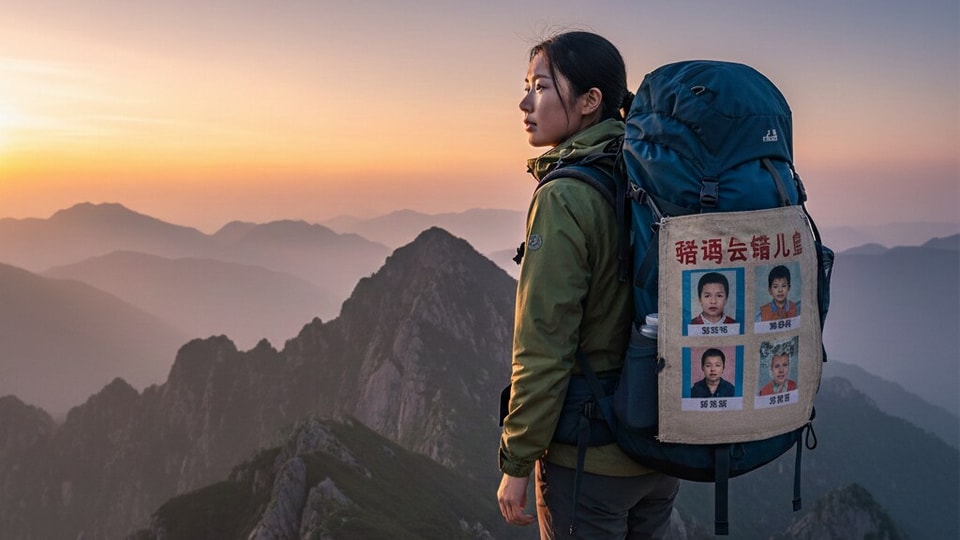
The clarification emerged after her video attracted widespread criticism across mainland social media, as per a report by South China Morning Post.
Deng from Jilin province recently shared a hiking clip where the tag was visible, prompting users to accuse her of intending to return the product after use. Some social media users even resurfaced an older video showing her wearing a ski suit with the same type of tag attached.
Return policy misuse fuels public suspicion
As per a report by SCMP, Chinese e-commerce platforms typically offer a seven day unconditional return policy to safeguard consumers. However, the system is often exploited by individuals who treat online shops as personal temporary wardrobes.
During this year’s Double 11 shopping festival on November 11, several retailers attempted to curb misuse by attaching oversized cloth tags or installing small combination locks on garment zippers.
Deng defends herself against online harassment
Deng said she felt unfairly targeted by the criticism, which grew to include remarks about her appearance and even regional discrimination. Addressing the controversy in a follow up video, she explained that her backpack was purchased in September and her ski suit in 2023, meaning both items were well beyond the return window.
She further revealed that the tags included information about missing children as part of a charitable campaign that she considered meaningful. She displayed one tag featuring details of a missing boy with the surname Li, including his photo, personal data and his parents contact number.
Brand confirms charitable purpose of tags
Soon after, the head of clothing brand NO1NW, surnamed Meng, publicly thanked Deng for drawing attention to the initiative. Meng told Jimu News cited by SCMP that the tags were part of a public welfare project the company has operated for four years.
When the brand launched, it printed the tags using publicly available information from organisations that search for missing individuals and updates the details every one to two years. Meng explained that customers could help expand the search network simply by carrying the tags while travelling.
“Greater dissemination brings more hope,” Meng said.
NO1NW later gifted Deng a set of ski clothing, a hat and several detachable tags with missing children’s information in appreciation of her support.
Calls for rational online behaviour
Deng said some online critics had apologised after learning the truth. She added that she intended to continue hiking and skiing with the tags in place.
“I hope people will approach situations more rationally in the future. Don’t attack individuals without evidence,” she remarked.
The incident triggered widespread discussion on mainland social media, with related posts gathering more than eight million views. As per a report by SCMP, estimates of the number of trafficked children in China each year vary significantly, from the official figure of around 10,000 to independent estimates reaching as high as 200,000.