E-Paper



Entrepreneur says he went from earning ₹10 lakh monthly to seeking ₹6 lakh loan, calls out ‘toxic Indian customers’
Indian origin entrepreneur in Singapore shared how client issues pushed him from ₹10L monthly income to borrowing ₹6L.

 Prefer HTon Google


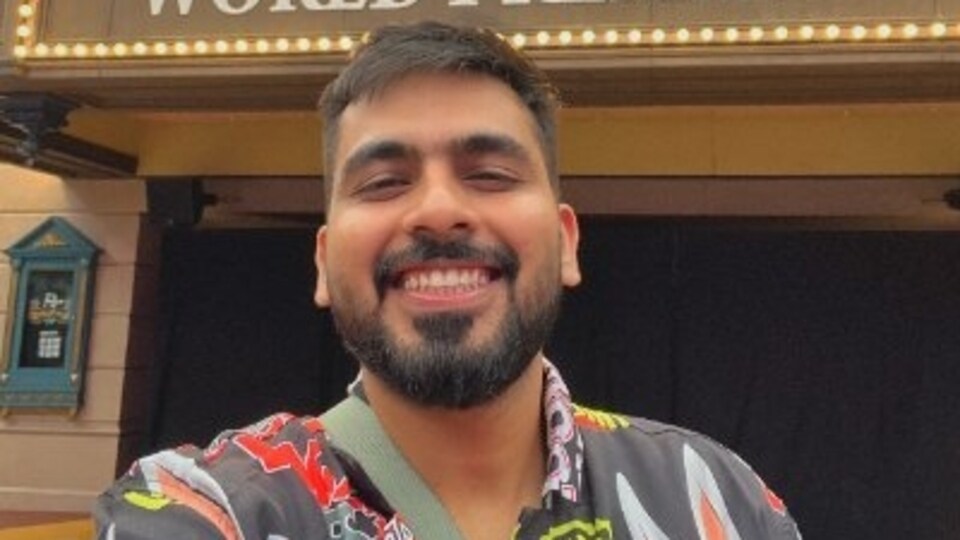
An Indian origin entrepreneur based in Singapore has sparked an online conversation after sharing a candid account of the struggles early stage founders face while dealing with what he described as “toxic Indian customers”.
(Also read: India techie on how Singapore changed him as a person: ‘You feel guilty if…’)
Taking to X, entrepreneur Yashank Jhamb wrote about the harsh lessons he learned while running his agency and how business decisions driven by survival often lead founders into difficult client relationships.
“I have gone from making 10L/month to asking for 6L loan from friends to pay salary and had to let go couple folks,” he wrote, describing the financial pressure his company faced.
Jhamb said the past six months forced him to confront a difficult truth. “But over the past 6 months, I have realized something hard to swallow: the problem is also me, Harshil Tomar and more early founders like us,” he wrote.
He clarified that he was not blaming anyone directly. “Before I say this, I am not pointing fingers at Harshil. He is a good friend, and every time we talk, I leave motivated to do more,” he added.
The ‘survival trap’ founders fall into
According to Jhamb, many founders end up agreeing to unfavourable conditions because they are trying to prove themselves and keep their companies alive.
“In our rush to make it and survive, we say yes to them at their claws. And that backfires,” he wrote.
Explaining what he called the “survival trap”, he said founders often focus on solving the client’s problem and securing work but ignore important contractual conversations early on.
“When we start working with any client, it’s not just about money to us. It's about showing what we can do, solving their pain, and ensuring the survival of our companies. In that eagerness to prove ourselves, we rely too much on trust and end up skipping the hard talks about strict scope, money, NDAs, and non competes,” he wrote.
Cultural differences in client behaviour
Jhamb also spoke about what he observed during client discovery calls over the past two years. According to him, there is a noticeable difference in how international and Indian clients approach discussions.
“In the client discovery calls I’ve attended over the past 2 years, there is a clear pattern. International Clients (90%): The first call is about the problem, the process, and the solution. Money comes later. They focus on building trust. Indian Clients (90%): It’s always about the money,” he wrote.
He added that many discussions quickly shift to minimising costs rather than focusing on solving the problem.
A difficult project and a reality check
The entrepreneur also shared an experience with one of his agency’s biggest clients, a six month project that initially secured the company’s survival.
However, problems began after a few months. “Their PM and team started pushing for extra features, blocking sign offs on planned work, and creating endless dependencies,” he wrote.
When his team raised concerns, he said they were told the additional features were essential. As a result, payments were delayed and the project stalled.
“Half of our money got stuck. We weren't paid for months because of the chaos. My team was struggling, and the project stalled,” he wrote, adding that he eventually had to escalate the matter directly to the founder to resolve it.
Lesson for founders
Jhamb said the experience taught him a crucial lesson about setting boundaries with clients.
“My biggest lesson: With Indian clients, you cannot take anything on trust until it's explicitly discussed and signed,” he wrote.
He added that going forward his team would only proceed after proper approvals. “From now on, whenever a PRD is shared or a feature list is finalized, no one moves an inch without a sign off. No surprise dependencies, no unbilled scope.”
Take a look here at the post:
Internet reacts
The post has attracted several reactions online, with many users saying they related to the experience.
One user wrote, “this is one of the reasons why I don't want to come in agency business!” Another said, “been through this exact cycle and you nailed it.”
A third comment read, “exactly my words, Yashank! it's sad too see how common it has become.”
However, some users also offered a different perspective. “Most ‘toxic client’ stories are actually boundary failures from founders,” one person wrote, while another added simply, “This is relatable.”
HT.com has reached out to the user for his comments, and the copy will be updated once his response is received.
(Disclaimer: This report is based on user-generated content from social media. HT.com has not independently verified the claims and does not endorse them.)