
 E-Paper



‘No Swiggy, Zomato, maid': Gurgaon RWA shames maintenance defaulters with giant billboard
The Mumbai founder who shared a picture of the huge billboard with the names of the maintenance defaulters said the board was placed right at the entrance.

 Prefer HTon Google


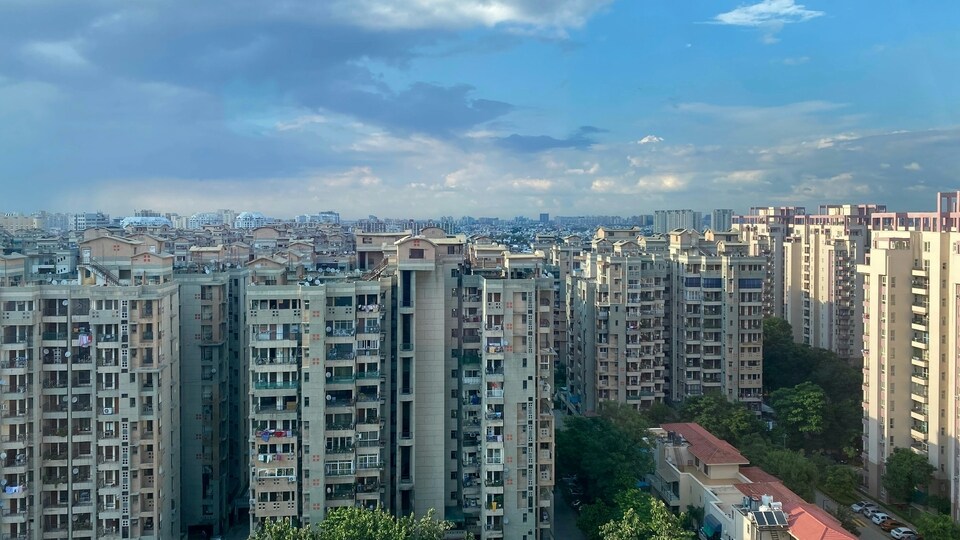
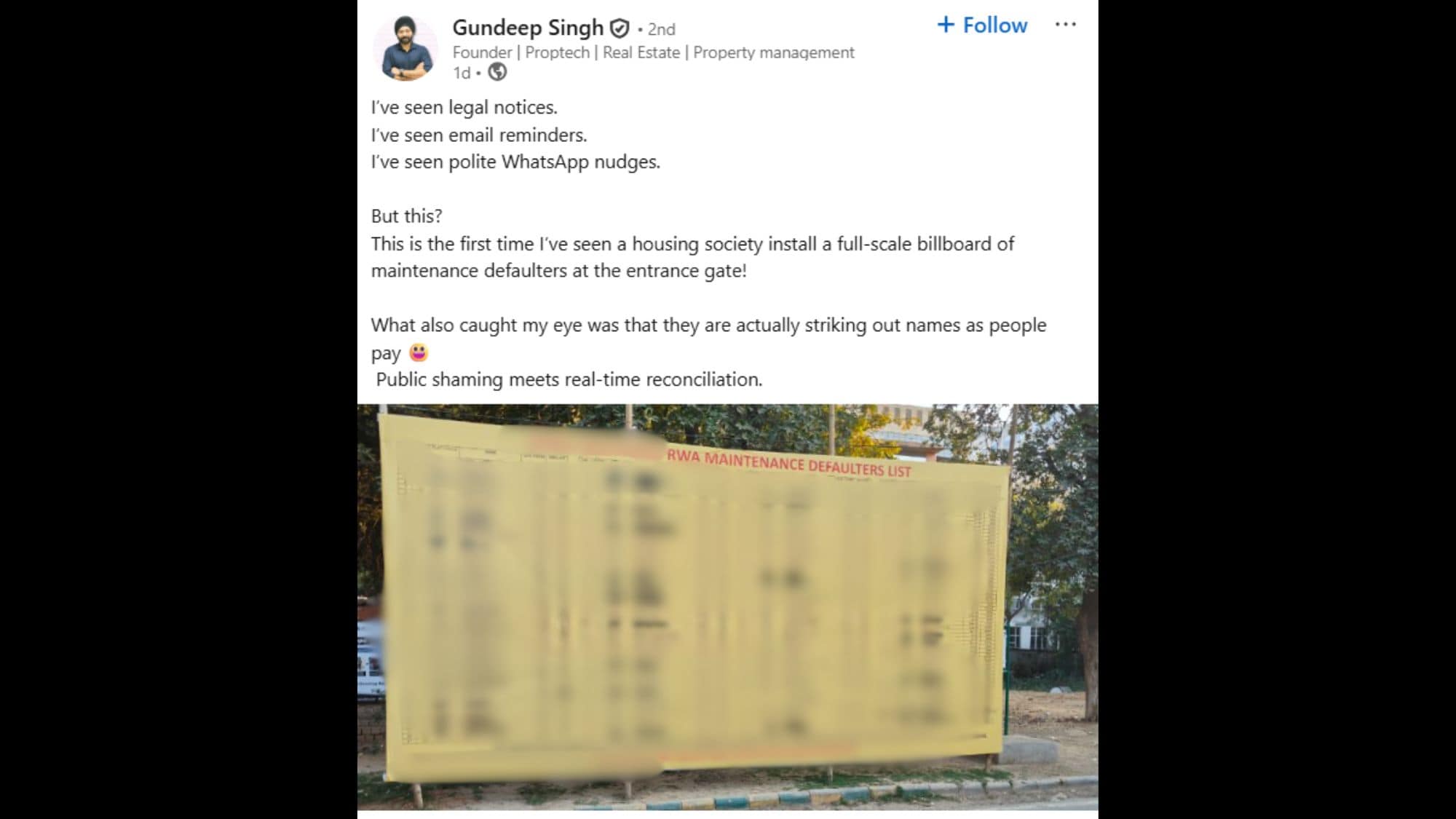
A Gurgaon Residents' Welfare Association (RWA) has taken drastic measures to recover unpaid dues by installing a massive "Maintenance Defaulters List" at the society's entrance. Beyond the public shaming, the RWA has officially suspended all non-essential services, including maid access, car washing, and food deliveries from platforms like Zomato and Swiggy, for those on the list. A Mumbai-based founder shared a picture of the billboard on LinkedIn, expressing his surprise.
“I’ve seen legal notices. I’ve seen email reminders. I’ve seen polite WhatsApp nudges. But this? This is the first time I’ve seen a housing society install a full-scale billboard of maintenance defaulters at the entrance gate!” founder Gundeep Singh wrote.
Also Read: Housing society swimming pools: Should you pay a premium for an amenity that you might never use?
He added, “What also caught my eye was that they are actually striking out names as people pay. Public shaming meets real-time reconciliation.”
What did the RAW put up?
At the top of the towering billboard, the housing society’s name serves as a header for a comprehensive list of residents with outstanding maintenance fees. In a display of real-time accountability, several names have been struck through with thick black lines, indicating that those individuals have already moved to clear their dues.
Below the names, a formal notice warns: “All residents whose payments are due and whose names are displayed on the notice board are requested to clear their outstanding dues at earliest.”
Highlighting the immediate consequences, the note adds, “Please note that effective today, all non-essential services - including maid services, car washing, and delivery services such as Zomato and Swiggy - will be suspended until the dues are fully cleared.”
The society has also implemented a social ban, stating in large, bold font that “RWA social events are not open to defaulters and PG occupants.”
How did social media react?
The post prompted mixed reactions on social media. While some found it hilarious and expressed that it would be an effective way to force the defaulters to pay, some argued that it violates an individual’s privacy.
An individual commented, “At the same time, it also raises a question about privacy. Some people might feel uncomfortable seeing their name on a public list. Still, it seems the society wanted to solve the problem quickly.” Singh replied, “I believe the larger discomfort should emerge from not paying the dues as opposed to the world knowing that they haven't paid the dues.”
Also Read: ‘My landlord wants a spare key’: Chennai tenant battles homeowner over bedroom lock access
Another expressed, “This is essentially gamification applied to civic responsibility. The moment a scoreboard appears, participation dynamics change… after all, reputation tends to move faster than regulation.” A third posted, “I can well understand the frustration of the RWA members. The Residents forget that the security guards and maintenance personnel have to be paid, and that failure to comply with the RWA's rules results in the security and upkeep of the layout. The RWA might be at its wits' end.”
A fourth wrote, “In our society, we have the digital boards and defaulters' names keep flashing, but due to that, now there are no maintenance defaulters anymore, public shaming does help!” Singh replied, “I expect the same to be the case. At least 90% of the defaulters will pay to avoid public shaming. But that is a good enough % to correct with this method.”


