
 E-Paper



Saturn's rings will 'disappear' from Earth's view by 2025. Here's why
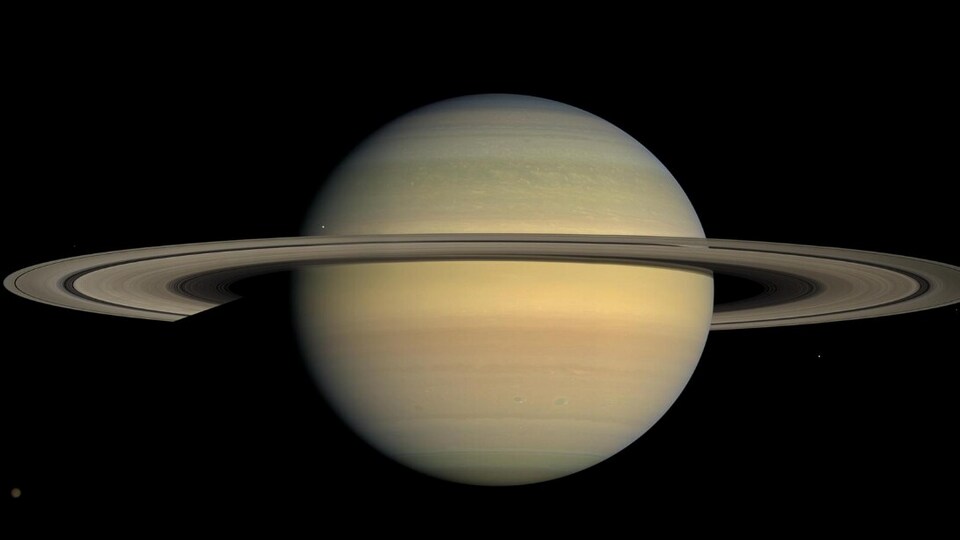
The intricate rings of Saturn are gradually fading away, and by 2025, they will no longer be visible from Earth.

 Prefer HTon Google


Astronomers, astrophotographers, and space enthusiasts have long been captivated by Saturn and its iconic rings. However, the window to appreciate their splendor is narrowing. The intricate rings of Saturn are gradually fading away, and by 2025, they will no longer be visible from Earth. However, they will be visible again in 2032.
Why are Saturn's rings 'disappearing'?
According to Earth.com, "Saturn will align edge-on with Earth, rendering its splendid rings virtually invisible. This is similar to trying to spot a sheet of paper edge-on when it’s positioned at the far end of a soccer field." (Also Read: Nasa shares stunning pictures of a cosmic ‘hand’. It has ‘bones’)
Although the rings are incredibly wide, with a height of typically 30 feet, every 15 years, the rings become almost invisible, creating the appearance that they have vanished. This phenomenon is called the Saturnian equinox. The last time this astronomical event occurred was in September 2009. The next equinox is expected to take place on May 6, 2025, according to the European Space Agency.
Will the Saturn's rings ever be visible again?
Yes, these rings will be visible again, but in 2032. Saturn will progressively tilt as it continues its 29.5-year orbital dance, revealing its rings on the opposite side once more. This display will peak in 2032.
More about Saturn's ring:
According to NASA Saturn's rings make up enormous and complex structures. The majority of the particles in Saturn's rings are made of water ice and have sizes ranging from microns to tens of meters. The rings exhibit a remarkable amount of structure at all scales; a large portion of this structure is yet unknown but is thought to be connected to gravitational interactions with Saturn's numerous moons.


