
 E-Paper



Astronomers find out when first stars shone, could be seen by Nasa’s Webb telescope
The astronomers analysed six of the most distant galaxies and worked out their age to calculate the start of "cosmic dawn".

 Prefer HTon Google


Astronomers have calculated the period when the universe was first bathed in starlight, known as the “cosmic dawn”. According to a new study, the first stars started shining as early as 150 to 250 million years after the big bang, when dark matter haloes were sufficiently massive to induce star formation.
The astronomers analysed six of the most distant galaxies and worked out their age to calculate the start of cosmic dawn. The study, led by Dr Nicolas Laporte, from the Kavli Institute of Astronomy in Cambridge, was published on Thursday in the Monthly Notices of the Royal Astronomical Society.
“The Holy Grail has been to look back far enough that you would be able to see the very first generation of stars and galaxies. And now we have the first convincing evidence of when the Universe was first bathed in starlight," BBC News quoted Richard Ellis, co-author of the study, as saying.
According to the BBC report, the results suggest that the first galaxies will be bright enough to be seen by Nasa's James Webb Space Telescope, the world’s largest and most powerful space telescope targeted for October 31 launch.
Also Read | Mystery of ‘see-through’ galaxy deepens after new Hubble observation: Nasa
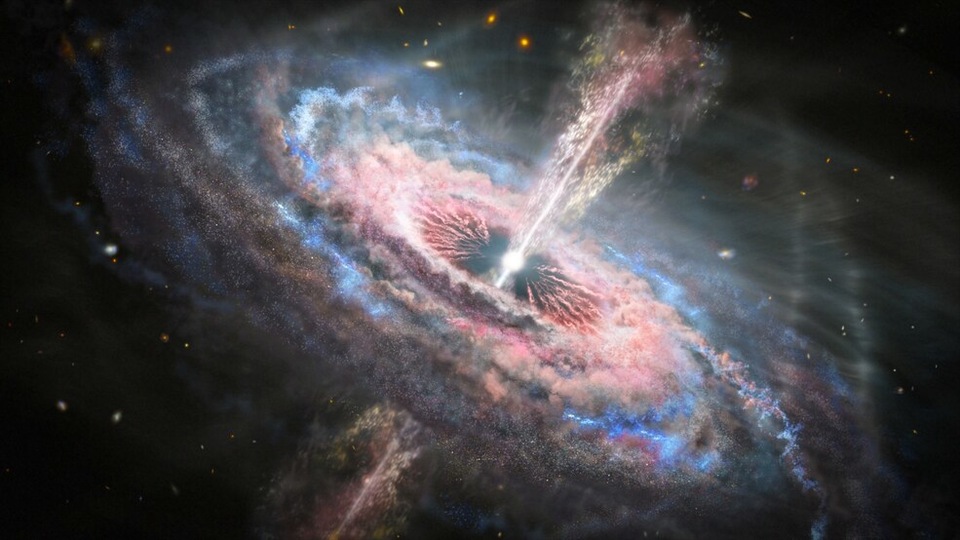
A team of scientists will train Webb on six of the most distant and luminous quasars, the active supermassive black holes that are millions to billions of times the mass of the Sun. A quasar’s light outshines that of all the stars in its host galaxy combined, and its jets and winds shape the galaxy in which it resides.
The Webb telescope will actually look back in time as light from these distant quasars began its journey to Webb when the universe was very young and took billions of years to arrive. The team will study the properties of these quasars and their host galaxies, and how they are interconnected during the first stages of galaxy evolution in the very early universe.
“So these observations give us the opportunity to study galaxy evolution and supermassive black hole formation and evolution at these very early times,” team member Santiago Arribas explained, as per the statement published by Nasa.


