
 E-Paper



Army remains major player in Bangladesh amid post-Hasina return to democracy: What past tells us about the future
Bangladesh's military has been a central force in the country's history since the 1970s, especially in the first 20 years marked by coups, assassinations.

 Prefer HTon Google


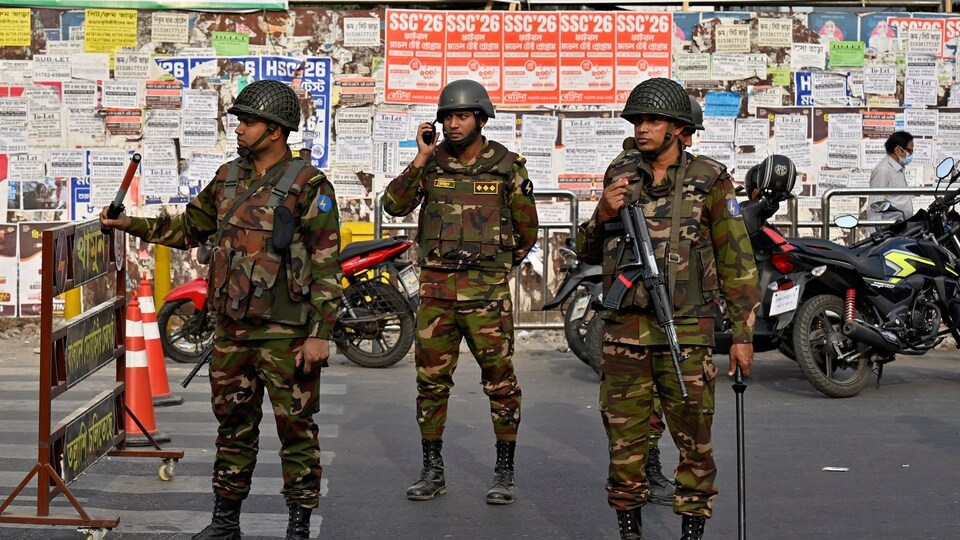
Bangladesh is hours away from choosing a new government in the February 12 elections, a move hoped to bring in some political stability, 19 months after the ouster of former Sheikh Hasina as prime minister. The events over the past two years have shown that neither the government nor political parties and prominent figures hold power in Bangladesh for long, but the country’s army — a silent yet formidable force — remains a key factor for those vying to be in power.
Follow all the latest updates on Bangladesh elections live
Bangladesh's army, with its more than five-decade history, has not only helped leaders like Ziaur Rahman, father of one of the top contenders for the PM post, Tarique Rahman, but also led to the ouster of many others. The military, tasked with protecting the country's borders and its institutions, remains deeply entrenched within the state. Beyond its formal mandate, it also exercises a tacit influence, despite projecting itself as ‘non-political’.
How Bangladesh Army played political role
Bangladesh's military has been a central force in the country's history since its independence in 1971, especially in the first two decades marked by coups, assassinations and even direct military rule.
Also Read: A caretaker, not political contender: What next for Yunus after Bangladesh elections
During the early years of its independence, the military emerged as a powerful actor amid political instability. The evidence was stark when, after the assassination of Sheikh Mujibur
Rahman by junior military officers in August 1975, leading to the first military coup in the country.
What followed was a period of instability and political violence, which eventually led to the rise of Major General Ziaur Rahman. Rahman, a military officer, rose from Chief of Army Staff to the President in 1977. A year later, he founded the Bangladesh National Party (BNP).
However, he was assassinated four years later, in 1981, by a group of officers in another failed coup attempt. The powerful yet factional military regime didn't enjoy power for long as the country entered into parliamentary democracy in the 1990s.
Military's role in Sheikh Hasina's ouster?
After the restoration of democracy, there was a brief period of military rule (2007-2009), followed by Sheikh Hasina’s tenure. During her rule, Hasina focused on taming the military, which was already divided.
While Hasina thrived on the divisions, there were reports of favouritism within the military and promotions being given by bypassing traditional hierarchy. Army Chief General Waqar Uz Zaman was also reportedly a relative of Hasina.
Also Read: Bangladesh election: What are the key issues in crucial post-Hasina polls?
Cut to July 2024, when the students' protest began, the military started crackdowns against students and protestors. But as the protests grew, the military failed to support the government. While the military remained deployed to maintain peace, its actions were limited and mostly symbolic.
However, despite Hasina's resignation a month later and her escape to India, the military didn't seize power.
In turn, it led to the smooth transition after an interim government was brought to power, led by Muhammad Yunus.
In a post-Hasina Bangladesh, the army has played a role in stabilising the unrest and protests, especially those after the death of student leader Osman Hadi last year. While protestors took to streets and violence against minorities was reported, the army was involved in the everyday administration of the country.
What now for the army?
Over the last decade, the Bangladesh military has evolved into a more professional institution, involved in peacekeeping at home. However, the history of coups and counter-coups in Bangladesh, and the fall of major political figures like Mujibur Rehman and Ziaur Rahman, have shown that the military remains a considerable force.


