
 E-Paper



Bones of contention: Israel find may help solve mystery of biblical Philistines
With an excavation in Israel unearthing a Philistine cemetery for the first time, bones of the biblical giant people can shed light on mysteries of their origin.


An archaeological discovery announced on Sunday in Israel may help solve an enduring biblical mystery: where did the ancient Philistines come from?
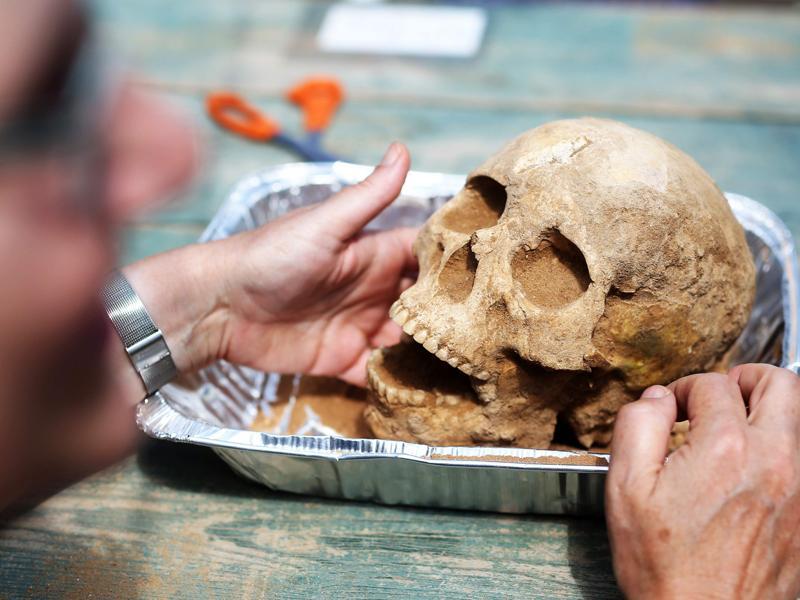
The Philistines left behind plenty of pottery. But part of the mystery surrounding the ancient people was that very little biological trace of them had been found - until 2013.
Who are Philistines?
In the Bible, the Philistines are depicted as the ancient Israelites’ arch-enemy, a foreign people who migrated from lands to the west and settled in five main cities in Philistia, in today’s southern Israel and the Gaza Strip.
The most famous Philistine was Goliath, the fearsome warrior who was slain by a young King David.
The Philistines’ legacy lives on in the name Palestine, the term the Romans gave to the region in the 2nd century, and which is used today by Palestinians.
Origins a mystery
Archaeologists and biblical scholars have long believed the Philistines came from the Aegean region, based on pottery found in excavations of Philistine sites.
But scholars have debated where exactly in the Aegean region the Philistines came from: mainland Greece, the islands of Crete or Cyprus, or even Anatolia, in modern-day Turkey.
The discovery
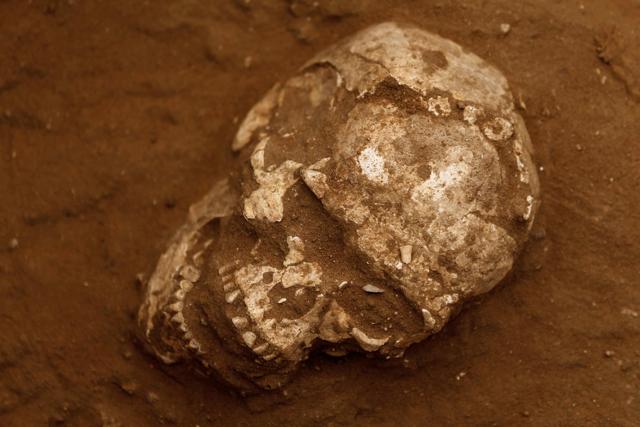
In 2013, archaeologists excavating the site of the biblical city of Ashkelon found what they say is the first Philistine cemetery ever discovered.
They say they have uncovered the remains of more than 200 people there.
The discovery was finally unveiled Sunday.
The Philistines buried their dead with perfume bottles, placed near the face. Near the legs were jars that likely held oil, wine or food. In some cases, archaeologists found the dead were buried wearing necklaces, bracelets, earrings, and even toe rings. Some were buried with their weapons.
“This is how Philistines treated their dead, and it’s the code book to decoding everything,” said archaeologist Adam Aja, a participant in the dig.

Study underway
The team is now performing DNA, radiocarbon and other tests on bone samples uncovered at the cemetery, dating back to between the 11th and the 8th centuries B.C., to help resolve the debate about the Philistines’ geographical origins.
“After decades of studying what Philistines left behind, we have finally come face to face with the people themselves,” said Daniel M Master, professor of archaeology at Wheaton College and one of the leaders of the excavation. “With this discovery we are close to unlocking the secrets of their origins.”
No conclusion yet
The archaeologists have not announced any conclusions, saying they are taking advantage of recent advances in DNA testing to get the most accurate results.


