
 E-Paper



China switches into covert mode in Nepal, has team of 3 to continue mission
The assignment has been handed to three officials of the Chinese communist party, who were part of the team that quietly travelled by road into Nepal before Guo Yezhou landed at Kathmandu’s international airport on Sunday last.

 Prefer HTon Google


President Xi Jinping’s Communist Party of China hasn’t given up on efforts to influence the course of Nepali politics and has positioned a three-member team in Kathmandu that is continuing to reach out to prominent politicians in the Himalayan nation, people familiar with the matter said.
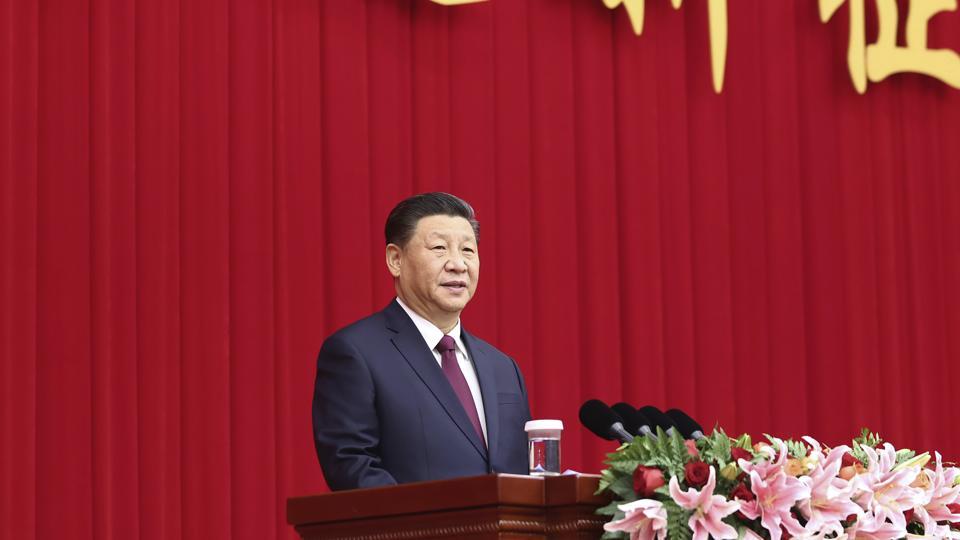
President Xi had sent a four-member team led by Guo Yezhou, vice-minister of the international department of the Chinese communist party’s central committee that made a high-profile visit to Nepal that was closely tracked by the media.
The team wrapped up its visit on Wednesday, unable to deliver on its primary objective of uniting the two rival factions of the Nepal Communist Party led by Prime Minister KP Sharma Oli and former prime ministers Pushpa Kamal Dahal and Madhav Nepal.
Also Read: Chinese team in Nepal makes a peace offering to PM Oli. He doesn’t bite
Guo Yezhou’s delegation, which had targeted persuading PM Oli to roll back the December 20 presidential order dissolving Nepal’s 275-member House of Representatives, had also explored the possibility of getting the two warring factions to jointly contest the national elections on April 30 and May 10 if the presidential order can’t be rescinded. A third option believed to have been pursued by Guo Yezhou was designed to address the possibility of the Supreme Court rolling back the presidential order and involved the formation of a communist-led government with the support of opposition parties such as the Nepali Congress minus PM Oli.
Nepal watchers said the high-profile Guo Yezhou’s delegation was, however, only the public face of the Chinese effort.
“The covert aspect continues,” one of them said.
For now, this assignment has been handed to three officials of the Chinese communist party, who were part of the second team that had quietly travelled by road from China to Nepal before Guo Yezhou landed at Kathmandu’s international airport on Sunday last.
The three - Zekun Lai, Dongme Huang and Yonglin Zhong - are the Chinese communist party’s points persons on Nepal politics who have cultivated political leaders for years. “This is what you might call the backchannel effort that stays under the radar,” a diplomat based in Nepal said.
The change in the Chinese approach to keep its intervention a secret comes against the backdrop of resentment in some quarters in Nepal over its attempt to influence politics and politicians.
A day before Guo Yezhou’s delegation returned to China on Wednesday, dozens of people had hit the streets of Kathmandu holding a torch rally on Tuesday night to protest against the visit that was aimed at interfering in Nepal’s internal political matters.
To be sure, China denies that Guo Yezhou’s team was tasked to influence Nepal’s politics but underlines that it wants Nepal’s politicians to “properly manage internal differences”.
“As the country’s friend and close neighbour, we hope relevant parties in Nepal can take into account the national interests and the big picture, properly manage internal differences and commit themselves to political stability and national development,” the Chinese foreign ministry spokesperson said last week.


