
 E-Paper



China holds hard talks with Pak generals over CPEC projects security
Beijing has warned Pakistan that future terror attacks on Chinese nationals working on CPEC projects will have an adverse impact on “all weather friendship.”

 Prefer HTon Google


After investing upwards of USD 48 billion in 52 China-Pakistan Economic Corridor (CPEC) projects, Beijing has decided to do hard talk with visiting Pakistan military leadership this month and warned that there would be serious repercussions on “milk and honey” ties if Islamabad failed to prevent attacks Chinese nationals and interests in the Islamic Republic. This blunt message was delivered to Pak ISI Chief Lt. Gen. Nadeem Anjum in Beijing earlier this month and has been underscored during the on-going visit of Army Chief Gen Asim Munir to China.
With the security situation worsening in Pakistan, coupled with political and economic chaos, there have been regular terror attacks on Chinese nationals and CPEC projects particularly in Gilgit-Baltistan in Occupied Kashmir as well as Balochistan. Despite China investing huge amounts of US dollars into CPEC and holding Islamabad’s hands during on-going political and economic crisis, there is a growing apprehension among the Chinese leadership including President Xi Jinping that repeated security reversals and consequent delays in CPEC projects execution will not only impact the image of much flaunted global Belt Road Initiatives (BRI) but also portray Beijing leadership in negative light. Of late the Chinese propaganda media has raised concerns over security of CPEC projects and lack of fiscal discipline as well as gobbling of huge funds of state-run Chinese firms at the Pakistan end. The situation has turned grim with Chinese leadership mulling over the hard option of deploying PLA contingents in Balochistan and Gilgit-Baltistan as a last resort to ensure security of Chinese nationals and CPEC projects.
It is understood that the rattled Pakistan political leadership led by Prime Minister Shehbaz Sharif is trying its best to accommodate Chinese security concerns and have set up multiple high-level committees to review security measures related to Chinese nationals and CPEC projects so that Beijing’s projects see the light of the day in future. There are indications that Pakistan may even attempt to list extremist Balochistan Liberation Army (BLA) in the 1267 Sanctions Committee of the UNSC in order to assuage Chinese concerns as this terror outfit has taken on the Chinese national working on CPEC projects in the restive region of Balochistan.
The CPEC challenges have been emanating not only from the worsening security scenario in Pakistan but also due to the unprecedented surge in anti-Chinese sentiments especially in Gilgit-Baltistan and Balochistan regions. The prevailing uncertainty in Afghanistan and Tehreek-e-Taliban Pakistan (TTP)’s withdrawal from ceasefire agreement with Rawalpindi in November 2022 have led to terrorists not only attacking Chinese nationals but also high value CPEC projects with impunity. Result is that majority of CPEC projects are delayed as Chinese nationals are disinclined to work on these projects with extremist groups like BLA, Islamic State and Taliban affiliates active in the region and making it a sovereignty issue among the locals who have already been on the receiving end of brutal tactics of Pakistani state and ineffective political leadership.
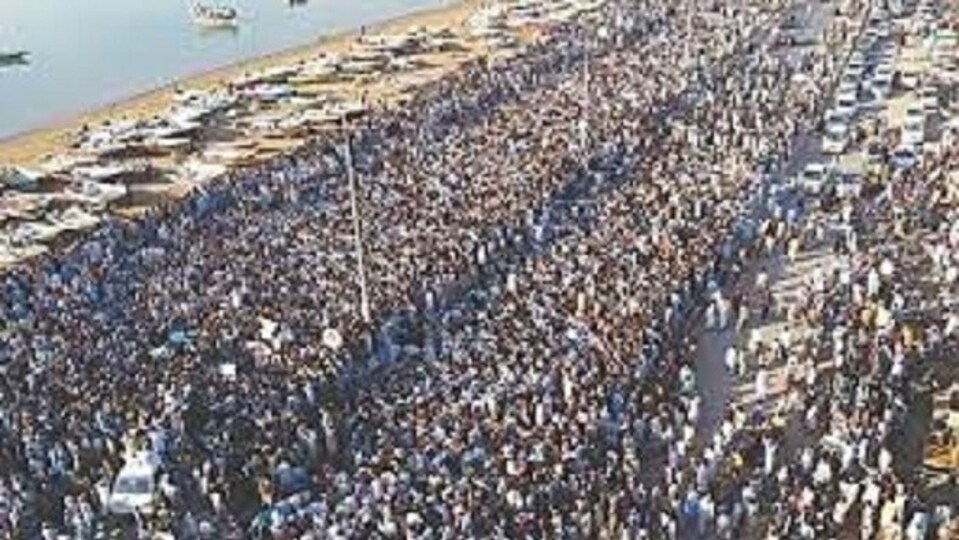
Majority of these attacks on Chinese nationals and CPEC projects are taken place in Balochistan, where Beijing has invested heavily with focus on special economic zone around Gwadar port. The much-neglected Balochistan province is not only hot bed of terror activities of sundry Balochistan extremist groups, but the region nurtures a strong resentment against Chinese expansion in the province as Beijing is seen as a symbol of subjugation in support of Punjabi Pakistan. The “Haq Do Tehreek” demonstrations in Gwadar in December 2022, in which thousands of women and children participated, was an outburst of growing resentment of Balochistan population against what was seen as Chinese and Pakistan exploitation in the name of CPEC projects.
The security reversals, terror attacks and growing resentment has led to global and Chinese investors staying out of funding CPEC projects in Pakistan including Special Economic Zone in Gwadar. Many foreign countries including Pakistan’s close allies in the Middle East have decided to stay out of investing in CPEC projects due to deteriorating security climate and rising terror activities against the projects and their developers.
While CPEC projects will always face the challenge from Islamic State and their affiliates in the littoral states in future, the Chinese investment is actually injecting instability into the region rather than bring infrastructure and peace into Balochistan and Gilgit-Baltistan. The rise of Balochistan, Sindh, and Pashtun nationalism in Pakistan as a result of exploitation of natural resources by CPEC projects is ominous for Islamabad and Rawalpindi GHQ. And President Xi Jinping knows that a sinking CPEC will claw out all the shine from what was intended to be a flagship program of an aspiring super-power.


