
 E-Paper





Follow the latest breaking news, major developments and agenda-setting stories from India and around the world with the newsdesk at Hindustan Times. Operating round the clock, the desk brings together experienced editors, reporters and correspondents to deliver fast, accurate and contextual reporting across subjects that influence public policy, governance, business, society and international affairs. The HT News Desk covers politics, elections, government policies, the economy, business and markets, science and technology, the environment, law and order, infrastructure, education, climate issues and geopolitics, while closely tracking developments across states, institutions and global capitals. The team also leads coverage of major breaking news events, policy announcements, court proceedings, natural disasters, public emergencies and significant international developments. Reports published by the newsdesk are based on information gathered from reporters on the ground, official statements, government agencies, court records, regulatory filings, recognised institutions and other authoritative sources. Stories undergo editorial scrutiny and verification processes to ensure accuracy, fairness and relevance, and are updated as events evolve and additional information becomes available. Whether covering a key political decision in New Delhi, an economic policy shift affecting millions, a landmark court ruling or a major global event, the HT News Desk aims to provide readers with reliable, fact-based journalism that delivers not only the latest developments but also the context and analysis needed to understand their wider implications.
 Trending News
China, Pakistan ink 6 agreements for development of Gwadar port
Prime Minister Shahid Abbasi inaugurated the Gwadar Free Zone, with state media describing it as “another milestone” in efforts to transform the China-Pakistan Economic Corridor into reality.


Pakistan and China signed six agreements on Monday for the development of Gwadar port as Islamabad formally inaugurated an economic free zone in Balochistan province that will be a key part of a multi-billion dollar transit corridor.
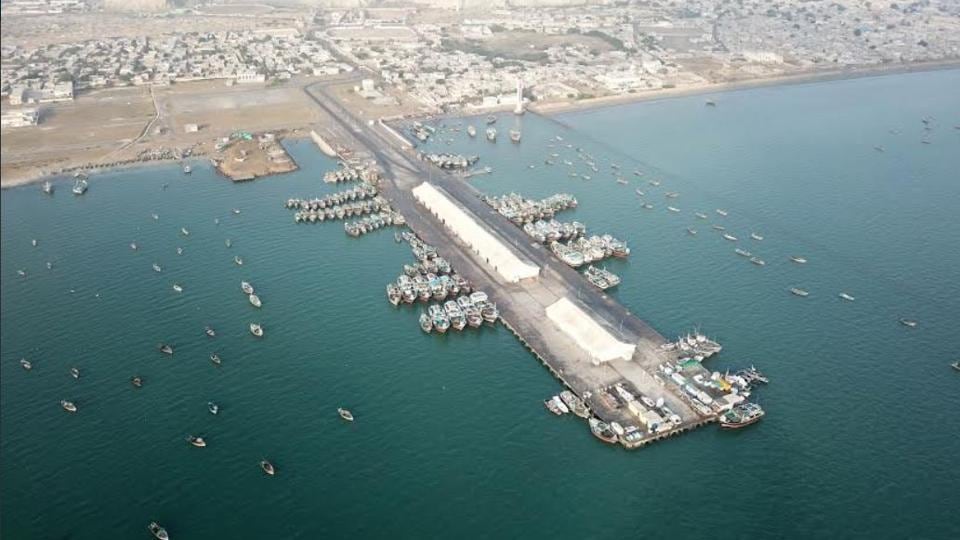
Representatives from the two countries signed five agreements and a memorandum of understanding in the presence of Prime Minister Shahid Khaqan Abbasi after the inauguration of the first phase of the Gwadar Free Zone, state-run Radio Pakistan reported.
Two agreements declared Pakistan’s Gwadar and China’s Tianjin as sister ports, and Gwadar and Piung as sister cities. Another agreement was for cooperation between Pakistan State Oil, Gwadar International Terminals Limited and Gwadar port.
The Securities and Exchange Commission of Pakistan and China’s Free Trade Zone Company and Gwadar port and HATA Trade City inked two agreements on cooperation. An MoU for a poverty alleviation initiative was signed by the Gwadar district government and China Overseas Ports Holding Company.
Abbasi also inaugurated the Gwadar Free Zone, with state media describing it as “another milestone” in efforts to transform the China-Pakistan Economic Corridor into reality. “CPEC is turning into a reality today which will change the fate of the region,” he said.
The corridor will connect Kashgar in northwestern China with Gwadar in southwestern Pakistan through a network of roads, railway lines, oil and gas pipelines and a fibre-optic cable. India has opposed the project as the corridor passes through Pakistan-occupied Kashmir.
Abbasi described CPEC as a “game changer” and said the potential of Gwadar had been fully realised because of the vision of President Xi Jinping and former premier Nawaz Sharif.
Connectivity through Gwadar will bring prosperity not only to Pakistan but also to the Central Asian states, western China and Afghanistan, he said. Projects that are part of CPEC are based on financial viability and environmental sustainability, he added.
The modernisation of the railway line from Karachi to Peshawar and Khunjerab to Gwadar, upgrading of the road network, building of infrastructure and power projects and setting up of special economic zones will bring prosperity to the people, he said.
Abbasi also spoke of the “urgent need to transform Gwadar into an international city”. Ongoing policies for economic development will continue, no matter which party forms the government when elections are held in July after the PML-N government completes its term, he said.
The Chinese ambassador, Yao Jing, said his country will continue to support Pakistan for further progress and prosperity. Chinese firms are being encouraged to invest in Pakistan and projects in Gwadar will contribute to the prosperity of the region, he said.


