
 E-Paper



China ready to sign Southeast Asia nuclear ban treaty, expresses ‘firm support’
The nuclear ban treaty, established in 1997, limits the member nations' use of nuclear weapons to peaceful purposes, like power generation.

 Prefer HTon Google


China is ready to sign a Southeast Asian treaty banning nuclear weapons in the region, confirmed Malaysia's foreign minister on Thursday. The treaty is likely to act as a shield for the area from the rising global security tensions and threats.
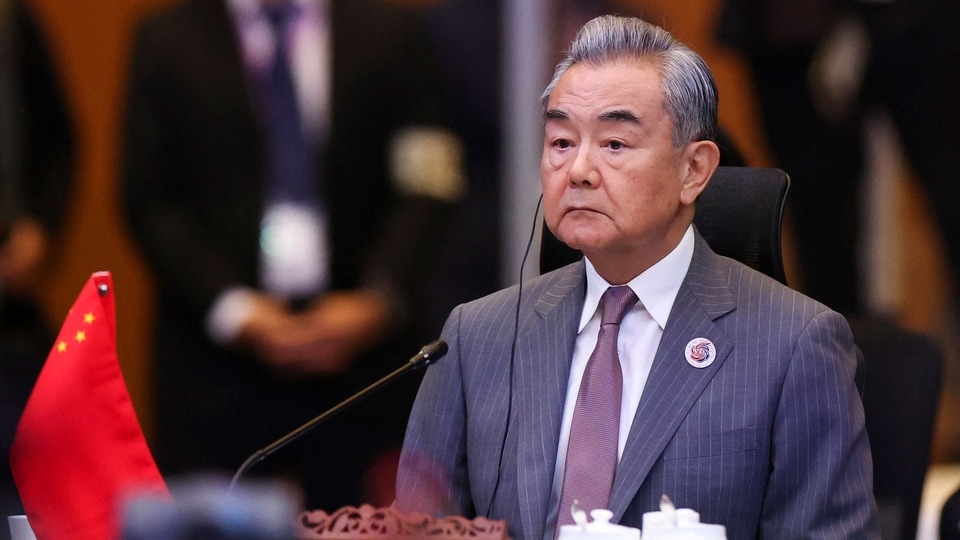
Beijing's move to agree on the treaty was welcomed as top diplomats met in Kuala Lumpur on Thursday for the Association of Southeast Asian Nations (ASEAN) foreign ministers' meeting.
Malaysian foreign minister Mohamad Hasan, while speaking to reporters on the sidelines of the ASEAN meeting, said, "China made a commitment to ensure that they will sign the treaty without reservation."
ALSO READ | India may consider terminating Asean pact as FTA review drags
The Southeast Asian Nuclear Weapons Free Zone (SEANWFZ) was established in 1997, limiting member nations' use of nuclear weapons to peaceful purposes, such as electricity generation, Reuters reported.
ASEAN's objective is for the world's five major nuclear powers, China, the United States, Russia, France, and the United Kingdom, to sign the treaty and commit to non-use or movement of nuclear weapons in the region, including nations' exclusive economic zones and continental shelves.
Meanwhile, the Chinese foreign ministry said that it is in communication with ASEAN countries regarding the signing of the treaty.
"China has always firmly supported the establishment of a nuclear-weapon-free zone in Southeast Asia, and has repeatedly expressed its willingness to take the lead in signing the protocol to the treaty," Mao Ning, ministry spokesperson, said during a regular press briefing.
ALSO READ | ASEAN must deepen integration and stay united to tackle US tariffs, Malaysia says
China's foreign minister Wang Yi is also present in Kuala Lumpur to attend the meeting his ASEAN counterparts.
US and Southeast Asia
With regard to ASEAN, US State Secretary Marco Rubio, on his first visit to Asia in his post, is also in Malaysia to attend the meeting. He said on Thursday that Asian countries might get "better" tariff rates than the rest of the world.
His remarks come against the backdrop of US President Donald Trump's threat to impose punitive tariffs on over 20 countries if they did not make a deal with Washington by August 1.
ALSO READ | Singapore PM calls for zero tariffs in ASEAN to take on Trump’s trade duties: ‘We are better resourced’
"I would say that when all is said and done, many of the countries in Southeast Asia are going to have tariff rates that are actually better than countries in other parts of the world," Rubio said on the sidelines of the ASEAN meeting.
"But these talks continue. There'll be talks next week with Japan. There's ongoing talks with virtually every country represented here," he added.
Rubio also assured that the US has "no intention of abandoning" the East and Southeast Asia region. "Not only we're not going to walk away from them, we seek to expand them and build upon them with a part of the world that is essential," he added.
His statement came after a meeting with Russian foreign minister Sergei Lavrov, who was also in Malaysia for the ASEAN meeting. In their meeting, Rubio expressed 'disappointment and frustration' about the lack of progress on ending the war in Ukraine.
Marco Rubio is also likely to meet his Chinese counterpart Wang Yi on the sidelines of the ASEAN meeting.


