
 E-Paper



Chinese military holds drill in Tibet to test factors that influenced 1962 war with India
Analysts hailed Tuesday’s military drill, which was held in cooperation with local companies and the Chinese government, as an ‘important move toward military-civilian integration’, a strategy to realise the country’s goal of building a strong military in the new era.

 Prefer HTon Google


China’s People’s Liberation Army (PLA) staged a military drill in the Tibet Autonomous Region (TAR) this week to test civilian-military integration and logistics, two factors that experts said had influenced the 1962 war with India.
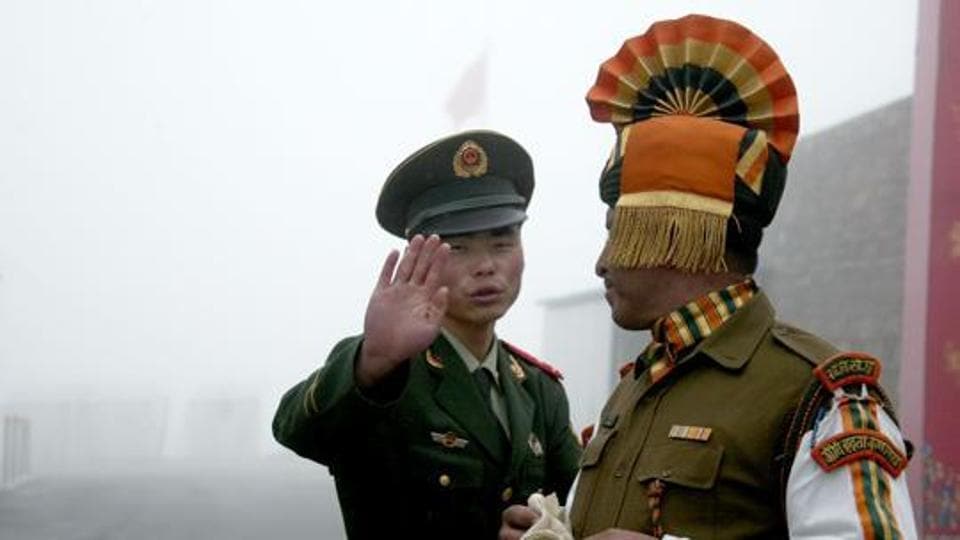
Experts told state media the drill was important in the context of the war of 1962, when China was unable to protect its “fruits of victory” — despite support from local Tibetans — because of the lack of sustained logistical support for the military.
The drill was the latest in a series of military exercises the PLA has conducted in Tibet following last year’s military standoff at Doklam near the Sikkim border that sent ties with India into a tailspin. Since then, the two sides have moved to put their relationship on an even keel.
Zhang Wenlong, head of the command logistics support department, told the official Xinhua news agency that the manoeuvre was aimed at assessing a new civilian-military integration strategy in the region after a reshuffle of the military system. The PLA has adopted this strategy to overcome problems in personnel survival, material supply, rescue and emergency maintenance and improved logistics support capabilities, he said.
Xinhua reported that a “local petroleum company supplied fuel immediately when the armoured unit ran out of fuel and the city government of Lhasa delivered a steady flow of food to soldiers after a day of mock battle”.
“The biggest challenge of battle at the high altitude is to provide sustainable logistics and armament support. In the 1962 China-India border conflict, China failed to protect its fruits of victory due to poor logistics support. Although local Tibetan residents provided soldiers with temporary support, it was not sustainable,” Song Zhongping, a military expert, was quoted as saying by Global Times tabloid.
“The drill showed that military-civilian integration is a feasible strategy and could help form stronger combat power,” he added.
A state media report said, “Analysts hailed the drill, which cooperated with local companies and government, as an important move toward military-civilian integration, a strategy to realise the country’s goal of building a strong military in the new era.”
It added, “The Qinghai-Tibet Plateau has an adverse climate and complex topography. Over a long period of time, it is very difficult to provide soldiers with logistics and armament support.”
The recent drills have focussed on the combat-readiness of the PLA, which hasn’t fought a war in decades.
PLA troops from the Tibet Military Command conducted a 13-hour drill at an elevation of 4,600 metres last August, which was a follow-up of another exercise last July.


