
 E-Paper



Covid cases rise in Shanghai, other cities in China make preps for possible outbreaks
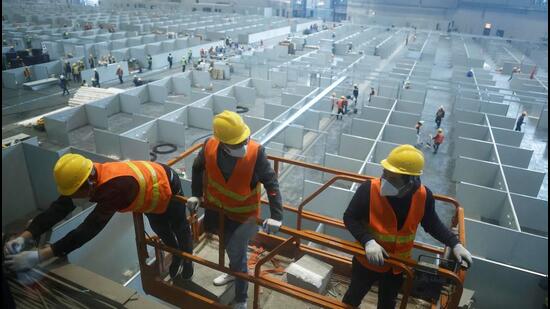
Given that the majority of the cases in Shanghai are asymptomatic or mild, calls are growing for home quarantine instead of those infected being isolated in hastily built makeshift centralised quarantine centres.


BEIJING: Shanghai, China’s financial hub, on Friday continued to grapple with rising Covid-19 cases with a record 21,222 fresh infections including 824 symptomatic ones being reported for the day before amid persisting food supply problems for its locked down 25 million residents.
Overall, the mainland reported 24,101 new local Covid-19 cases including 1,540 symptomatic ones for Thursday, the national health commission said in its daily bulletin on Friday.
Besides the 824 symptomatic infections in Shanghai, 617 were reported from the northeastern Jilin province and the remaining from 18 provincial-level regions of China.
Friday brought no sign of the lockdown easing in Shanghai with local health authorities ordering another round of mass tests.
Vice-premier Sun Chunlan, stationed in the city for nearly a week, called for volunteers to step in to ease delivery bottlenecks during an inspection tour on Thursday.
The shortage of necessities has been partly compounded because thousands of delivery workers are themselves locked down and unable to work.
Given that the majority of the cases in Shanghai are asymptomatic or mild, calls are growing for home quarantine instead of those infected being isolated in hastily built makeshift centralised quarantine centres.
Authorities, however, insist that China will stick to its “zero Covid” policy that they argue is essential to keep death rates low and prevent the medical system from crumbling.
At least three local officials in Shanghai have been sacked over a slack response to the Covid-19 outbreak in the city, an official notice on Friday said but gave no details of the allegations against them.
Reports quoted the statement as saying their failure to fulfil allotted duties in epidemic prevention and control had allowed the virus to spread, leading to a “serious impact” on efforts to control it.
Meanwhile, according to a Reuters report, many bankers and traders have hunkered down in their offices, living off instant noodles, to somehow keep the wheels of China’s financial centre turning.
The negative economic impact, however, will show sooner than later, a report by Nomura financial services indicated earlier this week.
“Though vaccinations, rounds of PCR tests, increased use of rapid antigen tests, the construction of many isolation facilities and the massive mobilisation of human and other resources in containing the coronavirus could, in theory, increase GDP, we believe the rapidly worsening of the Covid-19 situation and escalating lockdowns will act to suppress a wide range of sectors, including in-person services, travel, logistics, construction and some manufacturing,” the Nomura report said.
Taking a cue from Shanghai’s grim situation, other cities in China are taking preemptive action in imposing restrictions on movements, carrying out nucleic acid tests on residents, and creating makeshift quarantine centres even if there are no or just a few cases.
China’s capital, Beijing, for example, has strengthened regular screening for employees in the city’s key sectors, requiring all staff at elderly care agencies, schools and institutions handling imported goods to take tests at least once a week.
The northwestern city of Xian, which was locked down for days just months ago over a local outbreak, announced on Friday it would not allow its citizens to return from or visit areas where the virus is still highly prevalent without making arrangements with pandemic control departments first.


