
 E-Paper



Cuba says US talks are frozen as island faces ‘war without bombs’
Cuba’s top diplomat, Lianys Torres Rivera, revealed that official channels for dialogue have completely frozen.

 Prefer HTon Google


President Donald Trump’s administration is unwilling to discuss commerce, diplomacy or any other issue that might help relieve the suffering caused by US sanctions, Cuba’s leaders say, as infant mortality and preventable deaths rise.
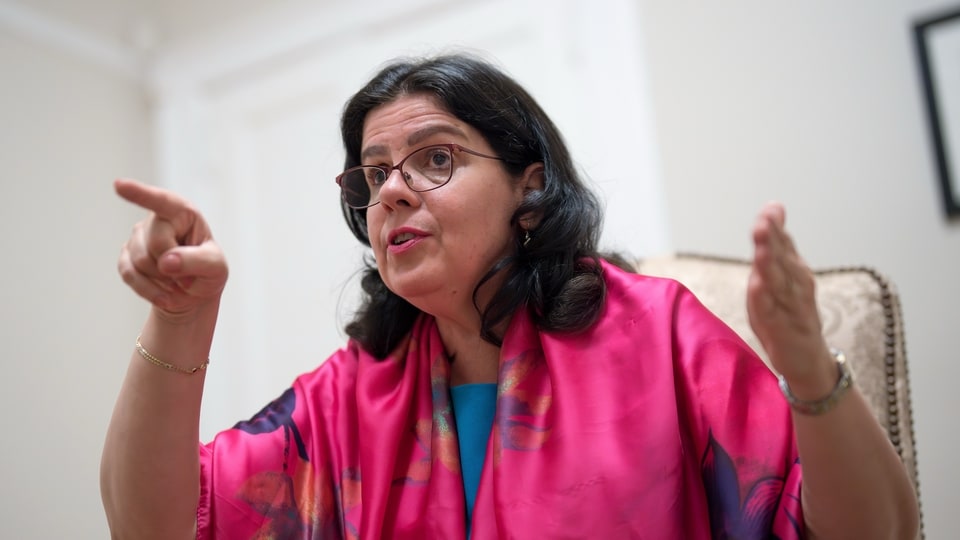
“The channel for dialogue is at a complete standstill,” Lianys Torres Rivera, Cuba’s top diplomat in Washington, said in an interview. The two sides are unable to even settle on a basic agenda, she added. “There are no negotiations.”
Despite Trump’s pressure campaign, which includes a de facto fuel blockade and squeezing foreign companies that operate on the island, the diplomat said her government wants a good relationship with its powerful neighbor. Torres Rivera also rejected accusations that Cuba poses a national security risk and uses its influence to foment anti-American dissent within the US and abroad.
“Cuba is not a threat to the United States,” she said. “Cuba wants a relationship of respect with the United States where we can talk about our shared priorities.”
Asked about the ambassador’s remarks, a US official described Cuba as a failed state that’s been mismanaged for years. The main impediment to better ties with Washington, the official said, is a ruling class in Havana that controls the island for its own gain.
Also Read | Pentagon chief visits Guantanamo, warns Cuba against threatening US
A State Department spokesperson said the Cuban government has been so far unwilling to agree to anything that would help its own people. The Trump administration will use all available tools to counter security threats and help the country recover, the spokesperson said.
Trump and Secretary of State Marco Rubio are seeking to force Cuba’s communist leadership to relinquish power after more than 67 years of one-party rule. Though military options have been pushed to the back burner, the administration is steadily ratcheting up sanctions on the island in hopes of bringing about economic and political change.
Also Read | Cuba opens more sectors to private business
In January, US commandos captured Cuba’s top regional ally, Venezuelan President Nicolás Maduro, and cut off the South American nation’s critical fuel supplies to the island. Trump then threatened any country that tried to send oil to the island’s government with punitive tariffs.
As a result, only a single Russian tanker has delivered fuel in recent months and energy cuts often run 20 hours a day — although the US permits fuel deliveries to Cuba’s small but growing private sector.
“What country can function normally when they’ve only received one fuel shipment in 200 days,” Torres Rivera said. “This is collective punishment. This is a war without bombs.”
Also Read | Donald Trump could be the man to save Cuba
The diplomat said more than 100,000 people are waiting for surgeries, 34,000 women are waiting for ultrasounds, and more than 3,000 dialysis patients are missing sessions due to sweeping power outages that have been exacerbated by Trump’s fuel restrictions.
According to the State Department, the US also has provided $100 million in assistance for the Cuban people via the Catholic church. That relief is meant to stave off a crisis heightened by US pressure that’s repeatedly knocked out electricity, affecting hospitals, public sanitation, water delivery and food distribution.
Earlier this year, it appeared progress was being made. US and Cuban officials acknowledged that talks were taking place, and Rubio’s team held meetings with Raúl Guillermo Rodríguez Castro, the grandson of former President Raúl Castro, who’s still seen as the island’s main power broker.
Cuba has repeatedly said that it’s willing to make economic changes — and unveiled a package of 176 free-market reforms earlier this year — but insists that its form of government and political leadership aren’t negotiable.
That’s proved to be a sticking point for the US, which sees the island as being run by an authoritarian regime. While Cuba holds elections to choose representatives to its legislature, only members of the Communist Party are eligible and political dissent can lead to prison, exile or worse.
Torres Rivera said it wasn’t up to the US to approve the political systems of other nations.
“Cuba has its own system of democracy that was chosen by Cubans,” she said. “We have elections every five years where the people vote and, unlike the United States, it’s not money that decides who the best candidate is.”


